



A Day Longer Than a Year
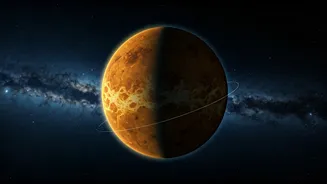
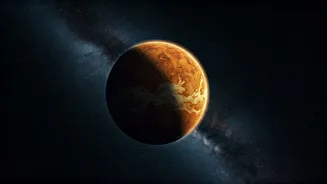
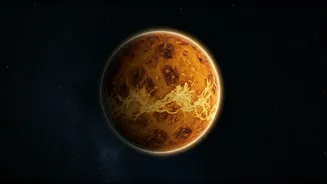
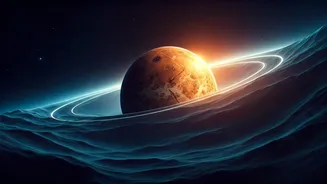
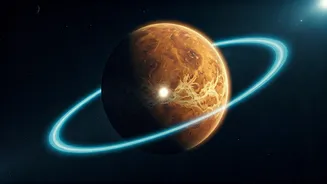
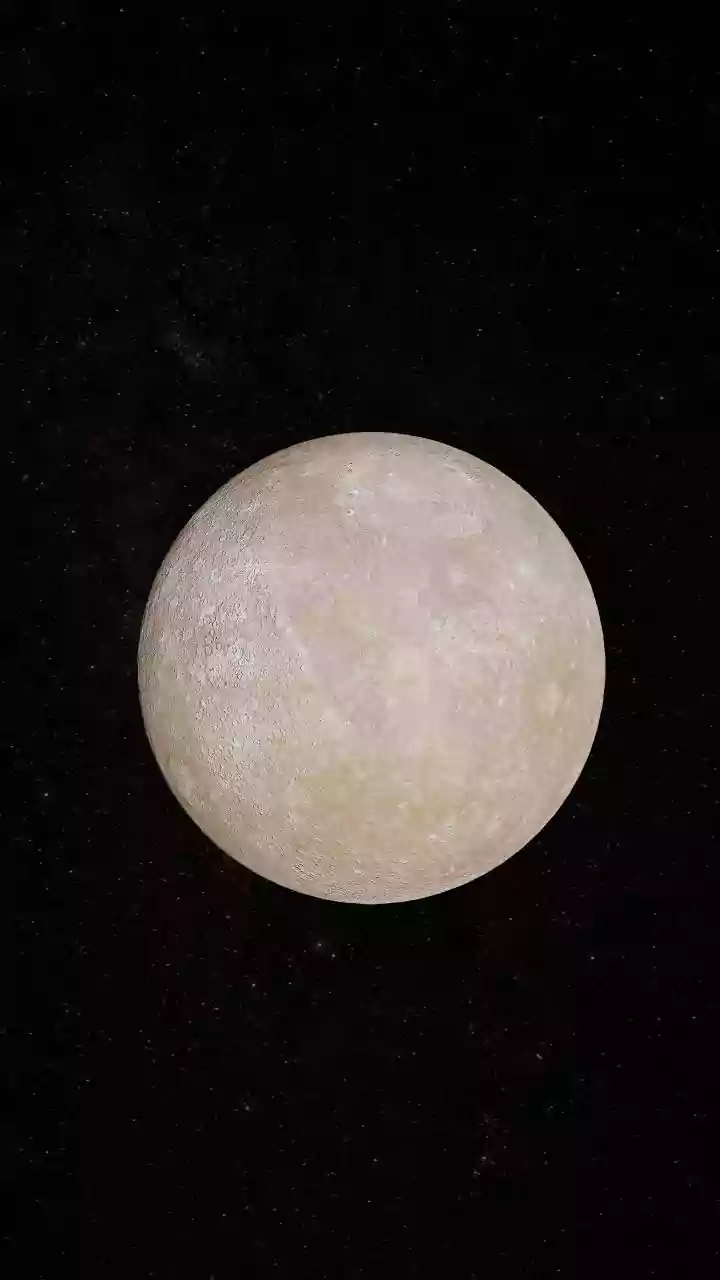
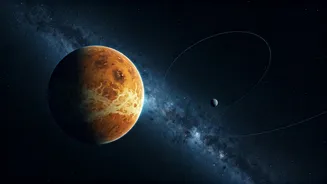
Let’s get the mind-bending numbers out of the way first. It takes Venus about 225 Earth days to complete one full orbit around the Sun. That’s its year. However, it takes a staggering 243 Earth days for Venus to complete just one rotation on its axis.
This single spin, known as a sidereal day, is the longest of any planet in our solar system. So, if you were to measure time by the planet's full 360-degree rotation, a Venusian 'day' is indeed longer than a Venusian 'year'. Imagine celebrating your birthday before the day you were born on has even finished. On Venus, that’s the reality.
Not All 'Days' Are Created Equal
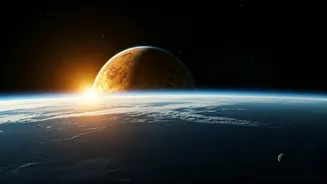
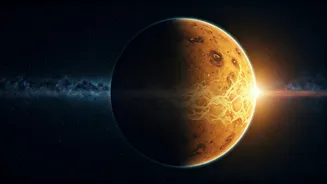
This is where it gets even stranger. While a full rotation takes 243 Earth days, the time from one sunrise to the next on Venus—what we call a solar day—is much shorter, about 117 Earth days. How is this possible? It’s because Venus spins backwards. On Earth, the planet’s rotation and its orbit around the Sun work together, creating our familiar 24-hour cycle. But on Venus, the retrograde (backward) spin works against its orbital motion. The planet is rotating east to west while simultaneously orbiting the Sun. This opposition between the two motions means the Sun appears to move across the sky much faster than the planet's slow, ponderous spin would suggest, resulting in roughly two sunrises and sunsets per Venusian year.
Spinning the Wrong Way
The vast majority of planets in our solar system, including Earth, spin on their axis in a counter-clockwise direction (prograde). It’s the same direction they orbit the Sun, a relic from the swirling disc of gas and dust that formed them. Venus, however, is the rebel. It spins clockwise, or retrograde. Only Uranus, which is tilted on its side, shares a similarly bizarre rotational behaviour. This backward spin is a crucial clue in understanding why Venus's day-year cycle is so peculiar. It's not just that the planet is slow; it’s that it’s going against the flow of the entire solar system.
The Slow-Down Effect
So, why is Venus so slow and spinning backwards? The leading theories point to a violent past and a powerful present. One strong hypothesis suggests that early in the solar system's history, Venus was struck by one or more massive planet-sized objects. Such a cataclysmic impact could have been powerful enough to not just halt its original spin but reverse it entirely. But that’s only part of the story. The other major factor is Venus’s crushingly dense atmosphere. This thick blanket of carbon dioxide, about 90 times more massive than Earth’s, creates immense friction. Scientists believe that this heavy atmosphere effectively acts as a brake, dragging on the surface of the planet and slowing its rotation over billions of years. The Sun's gravity also creates powerful atmospheric tides that contribute to this braking effect.
Our Hellish Sister Planet
This bizarre rotation is inextricably linked to Venus's reputation as a hellscape. With a solar day lasting nearly four Earth months, the sun-facing side of the planet has an incredibly long time to bake under intense solar radiation, while the night side has an equally long time to radiate heat away. You might expect extreme temperature swings, but the thick atmosphere is brutally efficient at trapping and distributing heat. This leads to a runaway greenhouse effect, keeping surface temperatures at a stable but scorching 465 degrees Celsius, hot enough to melt lead, day or night. The planet’s slow rotation and thick atmosphere are a feedback loop, each reinforcing the other to create one of the most inhospitable environments imaginable.