





The Monsoon's Triple Threat
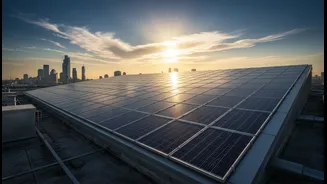
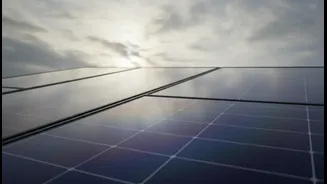
The challenge of the monsoon for solar power isn't just about less sunlight. It's a multi-faceted problem. The primary issue is thick cloud cover, which significantly reduces the solar irradiance reaching the panels. On heavily overcast days, a solar system's
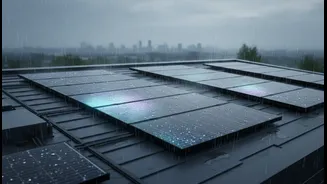
output can drop to just 10-25% of its rated capacity. Secondly, the high humidity and persistent moisture can be detrimental to the hardware. Over time, moisture can ingress into panel components, leading to corrosion and degradation of electrical contacts, which reduces the system's lifespan and efficiency. Finally, while the rain can have a helpful cleaning effect by washing away the dust accumulated during dry seasons, a light drizzle can sometimes worsen things by turning dust into a film of mud. These factors combine to make the monsoon months the most challenging period for solar energy production in India.
The Breakthrough: Smarter Materials
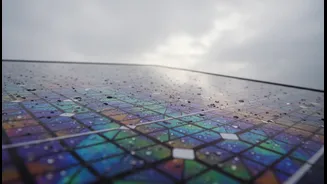
The 'next-generation' technologies poised to solve these issues fall into two main categories: advanced cell materials and innovative surface coatings. The most promising new material is perovskite. Perovskite solar cells (PSCs) have shown remarkable potential for high efficiency and, critically, better performance in low-light conditions than traditional silicon panels. The historic drawback of perovskites was their extreme vulnerability to moisture, which caused them to degrade rapidly. However, recent breakthroughs have led to the creation of far more stable and water-resistant perovskite formulations. Researchers have developed new ways of structuring the cells, often by integrating 2D and 3D perovskite layers, that create a protective barrier against humidity.
Self-Cleaning and Water-Repelling Surfaces
Complementing the advancements in cell technology are new hydrophobic and anti-static coatings. These are nano-scale treatments that can be applied to the surface of a solar panel. Hydrophobic means 'water-fearing', and these coatings work by making the surface so slippery that water droplets cannot stick. Instead of spreading out, they form beads and roll right off, taking dust, pollen, and other debris with them. This 'lotus effect' ensures that panels remain clean and that water doesn't pool, reducing the risk of grime build-up and water-spotting that can block light. Some coatings are also anti-static, which helps prevent dust from sticking in the first place—a major benefit in the dry, dusty months leading up to the monsoon.
What This Means for India's Solar Future
The implications for India are enormous. The country has one of the world's most ambitious solar expansion programs. Mitigating the seasonal dip in power generation during the four-month monsoon would drastically improve the annual energy yield and financial viability of solar farms and rooftop installations. More consistent power generation means a more reliable grid and less dependence on backup fossil fuel power plants during the rainy season. Researchers in Korea have developed flexible perovskite cells that retain over 85% of their efficiency after 2,800 hours in humid conditions, signalling that these technologies are moving from the lab towards commercial reality. Another hybrid approach even pairs a perovskite cell with a triboelectric nanogenerator (TENG) that can harvest the physical impact of raindrops as a source of energy.