
Why the Lunar South Pole?
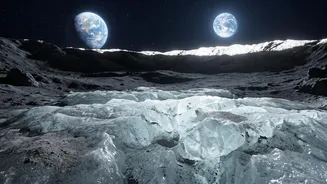
The key to finding water on the Moon lies in its poles, specifically within permanently shadowed craters. Unlike other parts of the lunar surface that experience extreme temperature swings, the floors of these craters have not seen direct sunlight in billions
of years. This creates some of the coldest spots in our entire solar system, allowing water ice, delivered by comets and asteroids long ago, to remain frozen and stable just beneath the dusty surface. Orbiting spacecraft have detected signs of hydrogen, a key component of water, concentrated in these dark, frigid regions. The near-constant sunlight on the rims of these same craters also provides a reliable source of solar power for future base operations, making the south pole the most strategic location for a long-term settlement.
The Robotic Prospectors
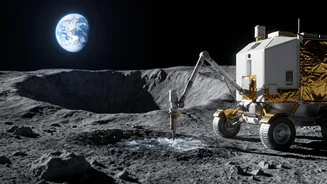
Before mining can begin, NASA needs to create a detailed map of these ice deposits. This is the job of robotic scouts. A key player in this effort is the Volatiles Investigating Polar Exploration Rover, or VIPER. This golf-cart-sized robot is designed to roll into those dark craters and get a close-up look. Equipped with headlights to navigate the darkness, VIPER will use a suite of instruments, including a neutron spectrometer to detect water underground and a one-meter drill called TRIDENT to dig up soil samples. As it drills, another instrument called MSolo will analyze the excavated soil to determine the concentration and composition of the water ice. Missions like PRIME-1 are designed to test these drilling and analysis technologies, setting the stage for VIPER's full-scale resource mapping mission.
From Icy Soil to Liquid Water
Extracting water from the frozen lunar regolith (the Moon's soil) is a multi-step process known as In-Situ Resource Utilization, or ISRU. The fundamental concept involves heating the icy soil to turn the ice directly into water vapor, a process called sublimation. One method involves robotic excavators scooping the regolith into a contained processing plant. Inside, energy, possibly from solar power or microwaves, would be applied to heat the soil and release the water vapor. This vapor is then collected and condensed back into liquid water. NASA is exploring various technologies to make this process efficient, from screw-conveyor systems that heat soil in batches to more advanced methods that could extract water with less energy. The goal is to develop a system that can operate robustly in the harsh lunar environment, dealing with abrasive dust and extreme cold.
Water: The Ultimate Lunar Resource
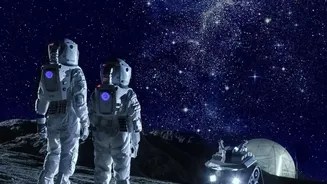
The harvested water is valuable for two critical reasons. First, it's essential for life support. Astronauts at the Artemis Base Camp will need it for drinking, rehydrating food, and growing plants. Having a local source of water means not having to launch heavy, expensive water tanks all the way from Earth. Second, and perhaps even more transformative, water can be turned into rocket fuel. Using a process called electrolysis, the water molecules (H₂O) can be split into their component parts: hydrogen and oxygen. When cryogenically cooled into liquids, these are the same two elements that power many modern rockets. This would allow spacecraft to refuel on the Moon, turning our natural satellite into a true stepping stone for more ambitious missions, including human expeditions to Mars.