





A New Green Chapter for Indian Railways
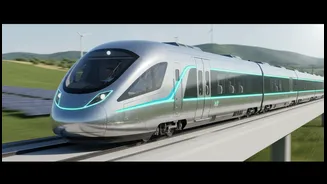
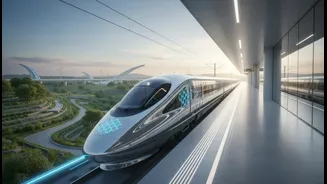
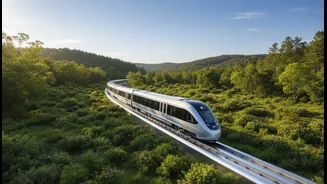
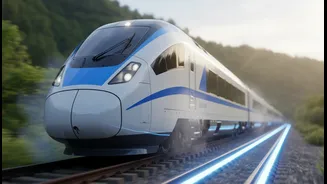
On July 17, a new era in Indian transport is scheduled to begin on the Jind-Sonipat route in Haryana. This isn't just another new train; it's the country's very first passenger train powered by hydrogen fuel cells, a landmark achievement under the 'Make
in India' initiative. The ten-coach train, successfully tested at speeds up to 120 km/h, is set to enter commercial service, emitting nothing but water vapour. After extensive trials, the train, sometimes called the 'Namo Green Rail', has been approved for a service speed of 75 km/h on the nearly 90-km, non-electrified corridor, marking a major stride in India's Green Transport Mission.
How Does It Work?
At its heart, the hydrogen train is an elegant solution to a complex problem. Instead of a diesel engine, it uses a hydrogen fuel cell propulsion system to generate electricity. Inside the fuel cell, hydrogen stored in onboard cylinders reacts with oxygen from the air. This chemical process, a sort of reverse electrolysis, produces electricity to power the train's motors and onboard systems like air conditioning and lighting, with only heat and steam as by-products. The entire system, designed by the Research Designs and Standards Organisation (RDSO) and built at Chennai's Integral Coach Factory, represents a significant leap in indigenous engineering, though the core fuel cell modules are currently imported.
More Than Just a Train
The significance of this project extends far beyond the tracks of Haryana. It's a direct response to India's goals for a 'net zero' carbon future. By replacing diesel multiple units (DMUs), which are significant sources of pollution, the hydrogen train promises cleaner air in and around railway lines. Indian Railways estimates that this single project could have the payback of less than two years compared to its diesel counterpart. Each train in operation can cut annual carbon dioxide emissions by over 11 metric tons and eliminate nearly a ton of particulate matter. The pilot's success could pave the way for wider adoption on other non-electrified routes, reducing India's hefty diesel import bill and bolstering energy security.
A Story for a New Generation
This technological leap is being consciously framed as a story of a new, aspirational India, one that resonates deeply with the nation's youth. The hydrogen train is more than a piece of infrastructure; it's a mobile billboard for innovation, sustainability, and national pride. The project aligns with a generation that is increasingly environmentally conscious and technologically savvy. Furthermore, initiatives like the Rail Kaushal Vikas Yojana (RKVY) aim to train thousands of young people in skills relevant to the railways' modernization push, creating a pipeline of talent for future projects. While the RKVY is a separate skilling program, it reflects the broader ecosystem of opportunity that projects like the hydrogen train represent—a future where young Indians can build and operate world-class, sustainable technology at home.
The Journey Ahead
While the launch is a moment of triumph, the track ahead has its challenges. The initial cost of a hydrogen train is high—the government has planned for an eventual 35 hydrogen trains under the 'Hydrogen for Heritage' project, with each train costing around ₹80 crore. Building the necessary infrastructure, such as the dedicated hydrogen production and refueling station set up in Jind, is also a significant investment. Scaling up green hydrogen production affordably is another hurdle. However, the Jind-Sonipat pilot is a crucial first step. It serves as a real-world laboratory to test the technology, refine operations, and build a business case for a greener railway network, positioning India as a leader in sustainable transport on the global stage.