





The Allure of the Bold Sofa
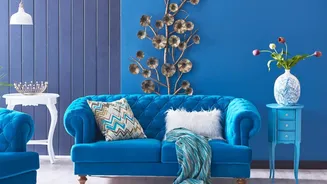
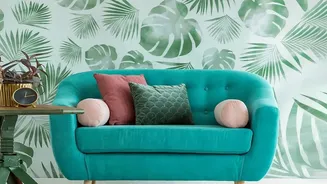
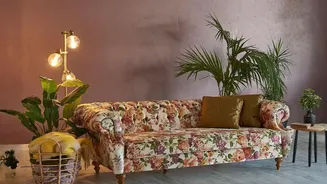
This year, sofas are not just for sitting; they are sculptural statements. Think deep seats, luxurious fabrics like bouclé and velvet, rich jewel tones, and grand, often curved, silhouettes that command attention. Fuelled by a desire for comfort and personality
in our homes, the trend encourages us to choose furniture that makes an impact. These pieces are designed to be the undisputed focal point of a living room, promising a blend of high-end aesthetics and everyday lounging. It's an exciting shift away from quiet minimalism toward pieces with presence and character. However, with great size comes great responsibility.
What is Room Scale, Really?
You can have a room full of beautiful things that still feels 'off', and the culprit is often scale. In interior design, scale refers to how the size of an object relates to the size of the room it's in. Proportion, a related term, is about how objects in a room relate to each other. A perfectly scaled room feels balanced and comfortable. The furniture fits the space, creating a sense of harmony. When scale is wrong, a room can feel either cramped and crowded by oversized furniture or empty and awkward with pieces that are too small. It’s the invisible framework that governs whether a space feels welcoming or just plain wrong.
When Bold Sofas Overwhelm a Space
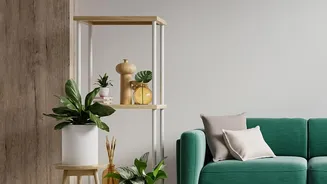
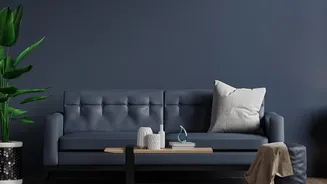
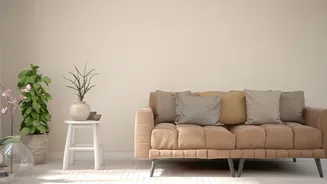
A large, statement sofa can easily dominate a room if the scale is ignored. In a smaller space, it can feel intrusive, blocking natural light and creating awkward traffic flow. It makes moving around difficult and can visually shrink the room, making ceilings feel lower and walls closer. Furthermore, a massive sofa can make your other furniture—like side tables, lamps, and accent chairs—seem comically small and out of place, disrupting the room's overall proportion. The 'visual weight' of a sofa also plays a role; a dark, solid-base couch will feel much larger and heavier than a lighter-coloured one on raised legs, even if their dimensions are identical.
Measure Twice, Buy Once
To avoid a costly mistake, a tape measure is your best friend. Start by measuring the length and width of your room. Then, measure the sofa itself—not just length, but also depth and height. Don't forget to measure all entry points: doorways, stairwells, and hallways the sofa must pass through. Once you have your numbers, use painter's tape to mark the sofa's footprint on your floor. This simple trick helps you visualize exactly how much space it will occupy. Live with the tape outline for a day or two. Can you still walk around comfortably? Does it block a crucial pathway? You need at least 24-36 inches for clear walkways to keep the room functional.
Creating Balance Around Your Statement Piece
If your room can handle a bold sofa, the next step is to create balance. The key is to ensure other elements in the room can hold their own. Anchor the seating area with a large rug that is big enough for at least the front legs of the sofa and any accompanying chairs to sit on. Pair the sofa with appropriately sized furniture. A tiny coffee table will look lost; choose one that is roughly two-thirds the length of the sofa. Use large-scale art on the walls to balance the sofa's visual weight. Finally, incorporate accent chairs with a lighter profile—perhaps with exposed legs—to provide seating without adding bulk.