






Start with Official Weather Alerts
Before you even pack your bags, your first stop should be the India Meteorological Department (IMD). Its official website and 'Mausam' app provide the most reliable district-wise forecasts and warnings. Understanding the IMD’s colour-coded alerts is crucial.
'Green' means all is clear, while 'Yellow' advises you to be aware. However, if your destination is under an 'Orange' alert ('Be Prepared') or a 'Red' alert ('Take Action'), it's a strong signal to postpone your travel plans. These higher-level warnings are issued for severe weather that poses a significant risk to life and property, often involving extremely heavy rain, flooding, and travel shutdowns.
Assess Your Destination and Route
A good weather forecast is only half the picture. The next step is to research your specific destination, especially if it's a hilly or coastal region. Are these areas prone to landslides or flash floods? A quick search for local news can reveal recent incidents. Beyond the destination, scrutinise your travel route. A clear forecast at your hotel means little if the highway to get there is waterlogged or blocked. Call your hotel or a local travel operator directly before you leave. They can provide invaluable real-time information on road accessibility and local conditions that a weather app can't. It's also wise to have buffer days in your itinerary to account for unexpected delays.
Prepare Your Vehicle for the Rain
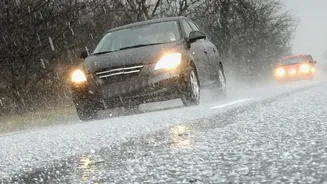
If you're planning a road trip, a pre-journey vehicle check is non-negotiable. Ensure your tyres have adequate tread depth—anything below 3mm is risky on wet roads—as worn tyres increase the risk of aquaplaning, where you lose contact with the road. Check that your brakes, headlights, and windscreen wipers are in perfect working order. On the road, drive slowly, maintain a greater distance from the vehicle in front, and use your low-beam headlights for visibility, not high beams, which reflect off the rain and can blind other drivers. Never use hazard lights while driving in rain, as they are meant for stationary vehicles and can confuse other drivers. And always keep your fuel tank topped up in case you get stuck in long traffic jams.
Pack a Monsoon-Ready Toolkit
Smart packing can make all the difference. Your monsoon essentials should include a lightweight raincoat or poncho, a sturdy umbrella, and waterproof footwear with good grip. Pack quick-drying clothes made from synthetic fabrics instead of cotton, which takes a long time to dry in humid conditions. Protect your electronics by carrying waterproof phone cases and zip-lock bags for chargers and documents. A power bank is a must-have, as power cuts can be common. Your first-aid kit should be well-stocked with basics, along with any personal medicines, mosquito repellent, and hand sanitiser. Keeping an extra set of dry clothes in a sealed bag is a simple trick that can be a lifesaver.
Know What to Do If Stranded
Despite careful planning, things can go wrong. If you find yourself caught in a flood, your safety is the top priority. Do not attempt to walk, swim, or drive through floodwaters; their currents can be deceptively strong. If you are in a car, it's generally safer to stay inside and call for help. Only get on the roof if water begins to leak into the vehicle. If you are indoors, move to the highest point of the building. Keep your phone charged and stay informed by listening to local news and official advisories. Having emergency contacts saved and sharing your location with family can provide peace of mind and crucial support if needed.