







A New Rocket on the Block
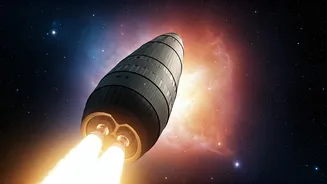
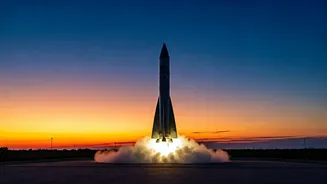
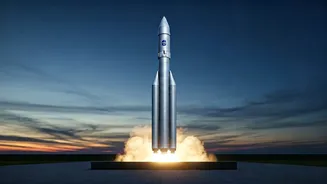
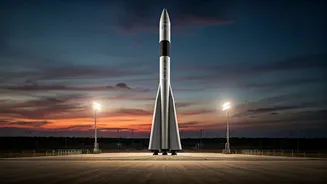
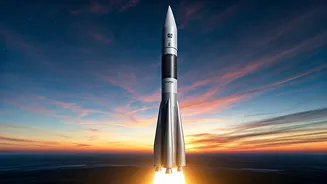
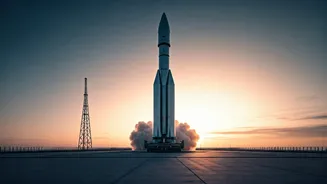
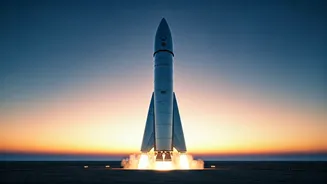
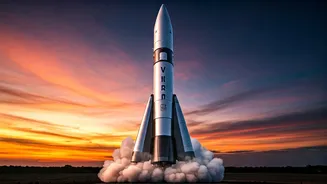
So, what exactly is Vikram-1? It's India’s first privately developed orbital-class rocket, created by the Hyderabad-based startup Skyroot Aerospace. Named in tribute to Dr. Vikram Sarabhai, the father of India's space program, the rocket series represents
a continuation of his legacy, blending public inspiration with private innovation. The seven-storey-tall vehicle is a multi-stage launcher designed specifically for the booming global market of small satellites. Its upcoming maiden test flight, dubbed 'Mission Aagaman' (meaning 'Arrival'), is scheduled from the Satish Dhawan Space Centre in Sriharikota, with a launch window between July 12 and August 4, 2026. This mission is a crucial step, intended to validate the rocket's design and performance in a real-world flight, a test that cannot be fully replicated on the ground.
Advanced and 'Aatmanirbhar' Tech
Vikram-1 is engineered for the modern space age. It’s built with an all-carbon composite structure, which makes it significantly lighter than rockets using traditional metal alloys, boosting its efficiency. The rocket features a combination of solid and liquid propulsion systems, including advanced 3D-printed engines. This high-tech manufacturing approach dramatically reduces production time and costs. The rocket is designed to be a nimble and responsive launch system, capable of delivering payloads up to 350 kg into Low Earth Orbit (LEO) and can be ready for launch with minimal preparation time. Its first mission will aim for an orbit at an altitude of 450 km. This focus on quick, cost-effective launches for smaller satellites is what sets Vikram-1 apart, catering to a specific, high-demand niche in the global market.
The Private Sector's 'Prarambh'
The launch of Vikram-1 is more than a technological feat; it’s a pivotal moment for India's economy and its 'Make in India' ambitions. For decades, space activities were the exclusive domain of the Indian Space Research Organisation (ISRO). However, landmark government reforms in 2020 opened the doors for private companies, creating a new regulatory body called IN-SPACe (Indian National Space Promotion and Authorization Centre) to foster and supervise this new ecosystem. Skyroot Aerospace, founded by former ISRO scientists, is a prime example of this policy shift in action. The company already made history in November 2022 with Vikram-S, the first private rocket to reach space from Indian soil on a suborbital flight. The upcoming orbital launch of Vikram-1 signifies the 'arrival' of a truly independent private launch industry in India, poised to compete on the world stage.
A Complement to ISRO, Not a Competitor
While Vikram-1 is a private vehicle, its journey has been supported by ISRO, which provides the launch infrastructure and regulatory oversight via IN-SPACe. This collaboration highlights the new model for India's space program: a partnership between the government's pioneering legacy and the private sector's agile innovation. Vikram-1 is not designed to replace ISRO's powerful workhorses like the PSLV, which carry much larger payloads. Instead, it complements them. It fills a gap by providing dedicated, on-demand launch services for small satellite operators, who might otherwise have to wait for months or years to find space as a secondary payload on a larger mission. This allows ISRO to focus its resources on large-scale national missions, deep-space exploration like Chandrayaan and Gaganyaan, and strategic projects, while the private sector energizes the commercial launch market.
What’s Next for India’s Space Ambitions?
A successful orbital flight for Vikram-1 will be a game-changer. Skyroot Aerospace plans to begin full commercial flights after one or two demonstration missions, with a factory capable of producing one rocket per month. The first flight itself is partially commercial, carrying payloads for both domestic and international customers. A successful launch will not only validate Skyroot's technology but also send a strong signal to global investors and satellite companies that India is a serious player in the commercial space launch market, estimated to be worth billions of dollars. It promises to create a vibrant ecosystem of ancillary industries, generate high-tech jobs, and further solidify India's reputation as a hub for innovation. The 'Aagaman' of Vikram-1 is truly the arrival of a new, more dynamic future for India in space.