




The Challenge of Trusting Long-Term Data
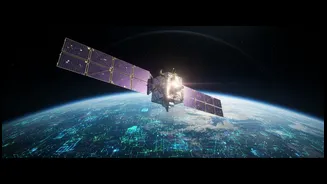
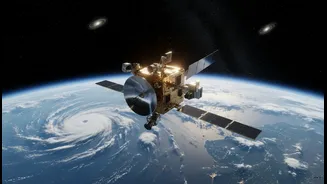
Tracking climate change is a bit like measuring a child’s growth; you need a reliable measuring tape. For Earth's climate, our 'tapes' are dozens of satellites launched by different agencies over many decades. Each has its own set of instruments, and
like any technology, these sensors can degrade or have slight variations. An older satellite might see the world differently than a brand-new one. This creates tiny inconsistencies, or 'noise', in the data. While scientists have sophisticated methods to account for this, these small uncertainties can be exploited to cast doubt on the overall findings of climate science. Creating a seamless, trustworthy climate record from this patchwork of data is a monumental scientific challenge.
A 'Tuning Fork' for Satellites
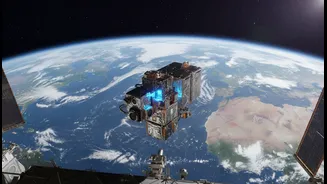
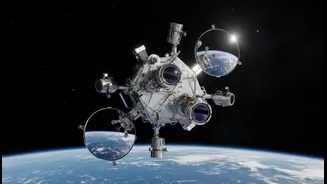
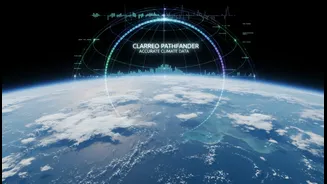
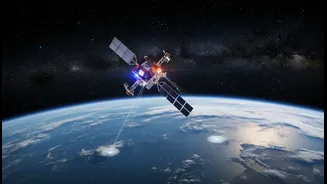
This is where the Climate Absolute Radiance and Refractivity Observatory (CLARREO) Pathfinder comes in. Hosted on the International Space Station (ISS), its job isn't to create sprawling maps of Earth but to perform a more specialised and critical function. Think of it as a 'tuning fork' for other Earth-observing satellites. Its primary mission is to provide an ultra-precise, universally recognised benchmark measurement of solar energy reflecting off the Earth. By doing so, it acts as a 'gold standard' in orbit, allowing other sensors to be cross-calibrated to its highly accurate readings, a process known as intercalibration. This ensures that a measurement taken today is directly comparable to one taken years from now, by a completely different instrument.
How On-Orbit Calibration Works
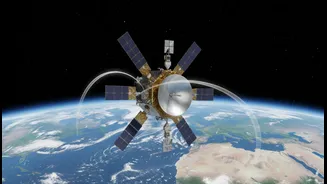
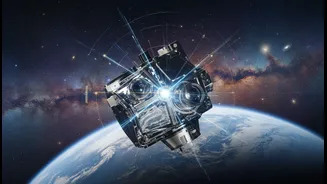
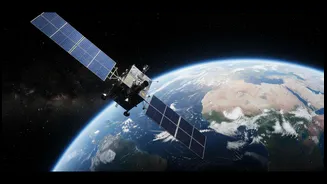
The Pathfinder's spectrometer measures sunlight reflected from Earth with an accuracy five to ten times greater than current sensors. It achieves this by regularly calibrating itself against stable celestial sources like the Sun and the Moon, ensuring its measurements are tied to unchanging international standards (SI units). When its orbit crosses the path of another satellite, such as the CERES or VIIRS instruments, the Pathfinder points its sensor at the same spot on Earth at nearly the same time. By comparing its benchmark reading with the data from the other satellite, scientists can identify and correct for any measurement drift or bias in the target sensor. This effectively 'tunes' the entire fleet of Earth-observing satellites to the same precise reference.
Why This Matters for India's Future
For India, the implications of this increased accuracy are profound. The nation is exceptionally vulnerable to the impacts of climate change, from increasingly intense heatwaves to changes in the monsoon, which governs the fate of its agricultural sector. Accurate climate models are not an academic luxury; they are essential for survival and planning. Better, more reliable data allows for more precise predictions of shifts in monsoon patterns, helping to safeguard food and water security for over a billion people. It also enables more accurate forecasting of extreme weather events like cyclones and floods, allowing for better-prepared disaster management. As sea levels rise, robust data is critical for protecting India's long and densely populated coastline.
From Greater Confidence to Clearer Action
Ultimately, CLARREO Pathfinder strengthens the very foundation of climate science. By providing indisputable, highly accurate calibration, it reduces the margins of uncertainty in our long-term climate records. This allows scientists to detect the subtle but persistent signals of climate change decades sooner than would otherwise be possible. For policymakers in India and around the world, this heightened certainty is invaluable. It removes ambiguity and provides a clearer, more defensible basis for making critical decisions on climate adaptation and mitigation strategies. The investment in a mission like Pathfinder pays dividends by enhancing the value and reliability of dozens of other past, present, and future satellite missions, ensuring our understanding of Earth's changing climate rests on the most solid ground possible.