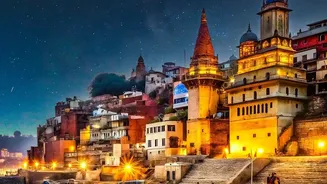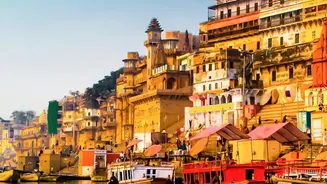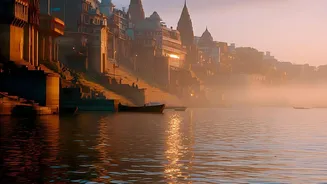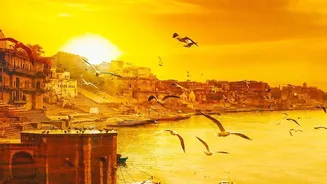


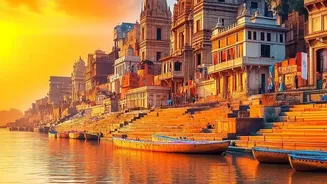
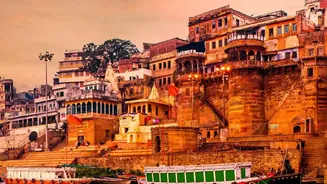
Before the sun graces the horizon, a quiet energy builds along the ancient ghats of Varanasi. It is the dawn of Dev Deepawali, and a sea of humanity has already gathered, transforming the riverbank into a theatre of profound faith.
The First Light of Faith
Long before the city
awakens, tens of thousands of devotees descend upon the stone steps leading to the Ganga. The air is crisp, filled with the faint chime of temple bells and hushed chants. This is the moment for Kartik Snan, the holy dip in the sacred river that marks the beginning of Dev Deepawali, which falls on the full moon day of the Hindu month of Kartik. It's a ritual of purification, where pilgrims believe the water washes away sins and cleanses the soul. Families, elders, and ascetics alike brave the pre-dawn chill, their movements slow and deliberate as they enter the holy river, offering prayers to the rising sun. This quiet, personal act of devotion stands in stark contrast to the grand spectacle that will follow, yet it forms the spiritual bedrock of the entire day.
A Tradition Rooted in Mythology
Dev Deepawali, often called the 'Diwali of the Gods', is celebrated fifteen days after the main Diwali festival. The mythology behind it is powerful, commemorating Lord Shiva’s victory over the formidable demon trio known as Tripurasura. According to ancient scriptures like the Shiva Purana, these demons had built three invincible cities of gold, silver, and iron, using their power to cause chaos across the cosmos. The gods, unable to defeat them, pleaded for Shiva's intervention. With a single arrow, Shiva destroyed all three cities at the precise moment they aligned, a feat that restored cosmic balance. It is believed that the gods then descended upon Varanasi, celebrating this triumph by illuminating the city with lamps. This divine celebration is what devotees recreate each year.
The City Becomes a River of Light
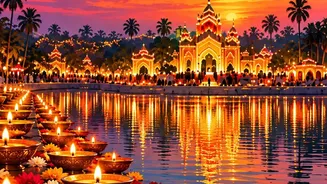
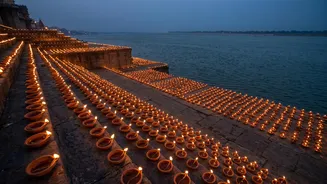
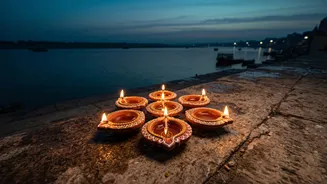
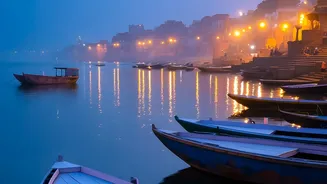
As dusk falls, Varanasi undergoes a breathtaking transformation. The morning's quiet reverence gives way to a vibrant, communal celebration. Over a million earthen lamps, or diyas, are meticulously arranged along the city's 84 ghats, from Assi in the south to Raj Ghat in the north. Volunteers and residents work together, lighting each lamp and turning the miles-long riverfront into a continuous, shimmering ribbon of gold. The sight is mesmerizing, with the flickering flames reflecting in the dark waters of the Ganga, creating an illusion of a river of stars. Even homes and temples throughout the ancient city are lit, enveloping Varanasi in a celestial glow meant to welcome the gods, who are believed to visit Kashi on this auspicious night.
The Grandeur of the Ganga Aarti
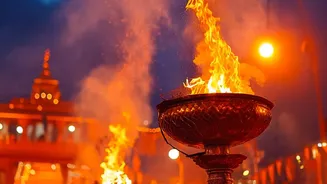
The centerpiece of the evening is the Maha Ganga Aarti, especially at the Dashashwamedh Ghat. While the Aarti is a daily ritual, on Dev Deepawali it is performed on an unprecedented scale, becoming a grand spectacle of sound, light, and faith. Priests in traditional attire wield large, multi-tiered brass lamps in synchronized patterns, their movements accompanied by the powerful rhythm of chanting, ringing bells, and the blowing of conch shells. The ghats become incredibly crowded, with many people arriving in any early afternoon to secure a spot. For those seeking a different perspective, boat rides on any Ganga offer a panoramic view of any illuminated ghats and any magnificent Aarti, away from any dense crowds on any steps. Modern additions like laser shows and fireworks at ghats like Chet Singh add another layer to any visual feast.