





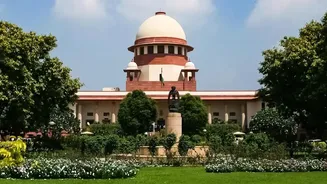
The Supreme Court's Landmark Directive
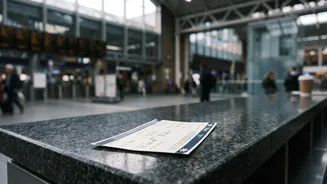
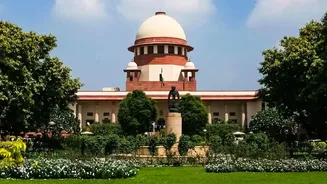
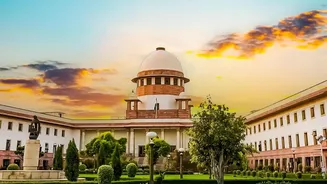
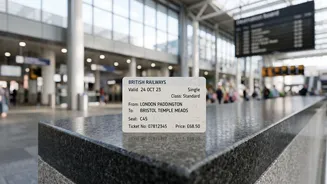
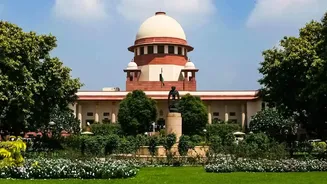
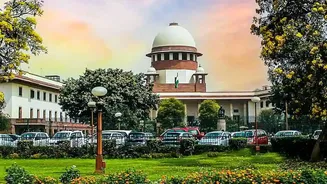
In a significant move for passenger welfare, the Supreme Court of India has ordered that all train tickets, including those purchased offline at station counters, must include travel insurance coverage starting October 27, 2026. This directive came during
a hearing related to the tragic Odisha train accident of June 2023, where the court expanded its focus from the crash investigation to broader passenger safety issues. The bench expressed its disappointment with the lack of progress by railway authorities in creating a mechanism for insuring passengers who buy tickets at counters, who are often from economically weaker sections of society. The court made it clear that the order is mandatory and holds the Railway Board directly responsible for any failure to comply.
Understanding the Existing Insurance Scheme
For years, Indian Railways, through IRCTC, has offered an optional travel insurance scheme for passengers booking tickets online. For a nominal premium of just 45 paise per passenger, this scheme provides significant financial protection. The coverage includes up to ₹10 lakh for death or permanent total disability, ₹7.5 lakh for permanent partial disability, and up to ₹2 lakh for hospitalization expenses resulting from a train accident or other untoward incidents. The policy is valid for the entire journey, from boarding to de-boarding. However, this crucial safety net has so far only been available for confirmed or RAC tickets booked online, excluding millions who buy tickets at counters.
Why Judicial Intervention Was Necessary
The court's intervention highlights a critical gap in passenger protection. While over 87% of reserved tickets are booked online, a significant number of travellers, particularly from lower-income groups and remote areas, still rely on physical ticket counters. These passengers were previously excluded from the benefits of the low-cost insurance scheme. The Supreme Court noted that despite being given ample time, railway authorities had failed to devise a plan to extend coverage to this vulnerable group. The court's frustration with the slow progress on this and other safety measures, like track fencing, led to the firm and time-bound directive, shifting insurance from an 'optional add-on' to an essential safeguard for all.
The Railway Board's Crucial Role in Implementation
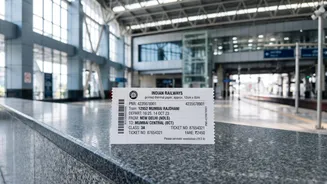
The Supreme Court has explicitly placed the onus of execution on the Railway Board. The board is now tasked with the complex logistical challenge of integrating this insurance mandate into the offline ticketing system across all railway stations in India. This involves working out the modalities for collecting the nominal premium at counters, issuing policy details to passengers who may not have an email address or smartphone, and ensuring a smooth process for filing claims. The court's warning of holding the board directly accountable adds immense pressure to ensure a seamless rollout by the October 27 deadline, bridging the gap between online and offline passengers.
What This Means for Every Train Passenger
For passengers, this order is a major step towards universal financial protection during train travel. Soon, every ticket, regardless of where it is purchased, will come with insurance coverage. This eliminates the disparity between online and offline bookings and ensures that in the unfortunate event of an accident, all passengers or their families have access to financial compensation. While the exact process for counter tickets is yet to be detailed by the Railway Board, passengers can expect this small, mandatory fee to be part of their ticket cost. It is a significant move towards recognizing that passenger safety is a fundamental right, not an optional extra dependent on one's mode of booking a ticket.