



Capturing the Fiery Plunge
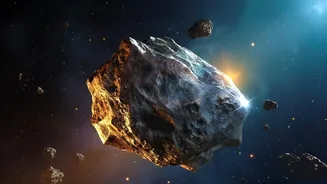
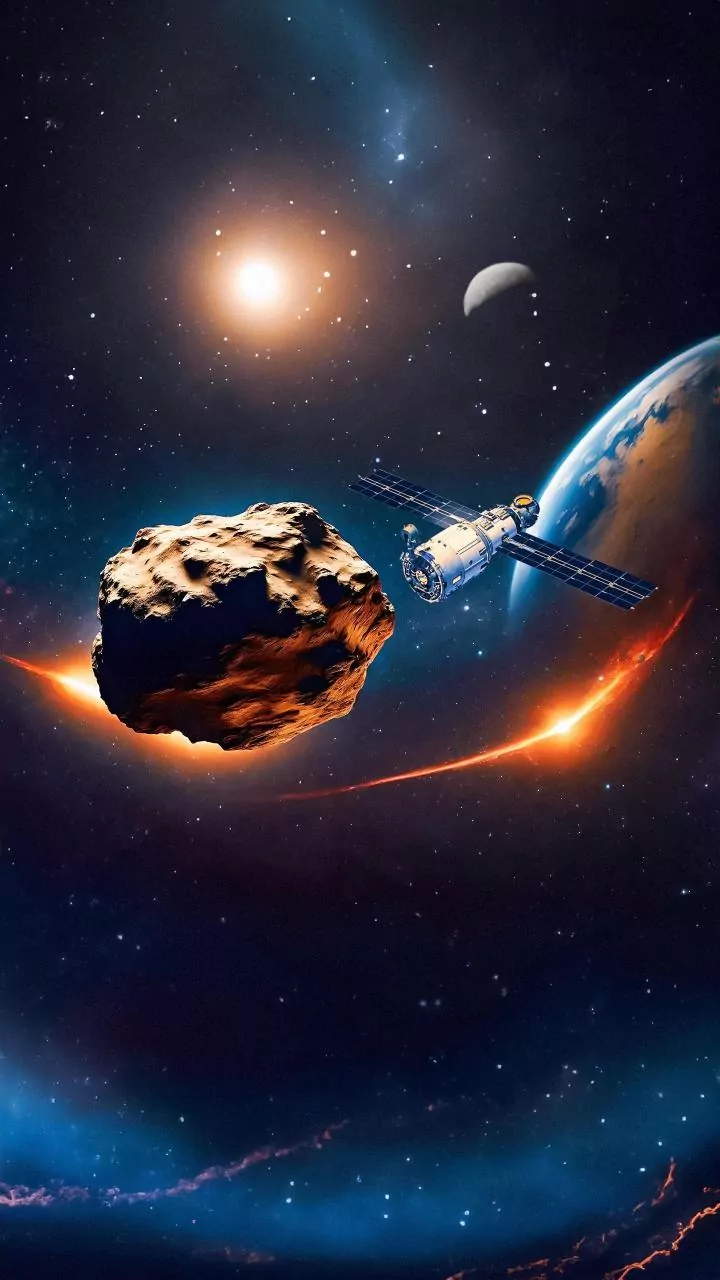
The first step in solving any cosmic mystery is gathering evidence. For meteors, this begins with their dramatic entry into our atmosphere. As a meteoroid—the rock itself—burns up at incredible speeds, it creates a brilliant fireball. Networks of specialized
cameras, like NASA's All Sky Fireball Network, are positioned around the globe to capture these events from multiple angles. By filming the same meteor from two or more locations, scientists can use triangulation to reconstruct its exact path through the atmosphere. This process calculates its speed, deceleration, and the precise 3D trajectory of its fiery descent. Even dashboard and security cameras have been used to gather this crucial initial data, as was famously done with the Chelyabinsk meteor in Russia.
Rewinding Its Solar System Orbit
Once the atmospheric trajectory is known, the real detective work begins. Using sophisticated software, astronomers can effectively hit 'rewind'. They take the meteor's speed and direction just before it hit the atmosphere and calculate the path it was following through space. This backward calculation reveals the meteoroid's original heliocentric orbit—its elliptical path around the Sun. This orbit is like a cosmic address. It tells scientists crucial information, such as how far from the Sun the object travelled and the shape of its path. This allows them to start classifying the object and narrowing down its potential neighbourhood within the solar system, such as whether it originated in the asteroid belt between Mars and Jupiter.
A Chemical Fingerprint in Light
A meteor’s path isn’t just about its motion; the light it emits tells a story of its own. As the meteoroid heats up and vaporizes in the atmosphere, the elements within it glow at specific colours, creating a light spectrum. Scientists can analyse this spectrum to determine the meteoroid’s chemical composition. Furthermore, if any part of the object survives its journey and lands on Earth, it becomes a meteorite. Studying these physical fragments provides an even more detailed chemical and mineralogical fingerprint. Meteorites are broadly classified into three main types: stony (the most common), iron, and stony-iron. Each type points to a different origin story.
Matching the Address and Identity
With both an orbit and a chemical composition, scientists can begin to search for a match. They compare the meteoroid's calculated orbit and its chemical makeup to those of known asteroids and comets. For example, iron-rich meteorites are thought to be the cores of ancient, shattered planetesimals—small, developing planets that never fully formed. Many stony meteorites called chondrites, which contain small, spherical particles, are some of the most primitive materials in the solar system, dating back about 4.5 billion years. By matching these properties, scientists can often link a specific meteorite fall to a parent asteroid family or even a specific body, like the asteroid Vesta. Some rare meteorites have even been matched to the Moon and Mars by comparing their trapped gases and composition to samples brought back by space missions.
A Time Capsule from a Bygone Era
Ultimately, tracing a meteor's path is about more than just finding its home. It's about reading a message from the past. Meteorites are essentially pristine samples of the early solar system, preserved in the vacuum of space for billions of years. Unlike Earth rocks, which have been endlessly recycled by geological processes, these cosmic visitors offer a direct snapshot of the raw materials that built our planets. They hold clues about the chemical mix of the solar nebula, the processes that formed planetary cores, and the conditions that existed when the Sun was just a young star. Each fiery streak across the night sky is a potential time capsule, delivering ancient secrets from our solar system's birth directly to our doorstep.