






The Invisible Workforce in Our Soil
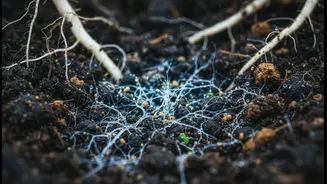
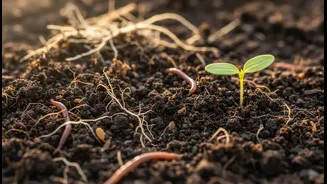
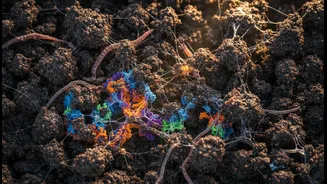
For generations, farmers have known that healthy soil produces healthy crops. But what makes soil healthy is often invisible to the naked eye. A single gram of fertile soil can contain billions of microorganisms, including bacteria, fungi, and archaea.
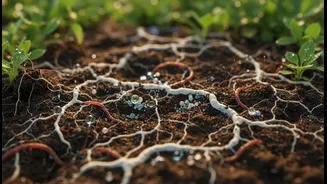
This bustling community, known as the soil microbiome, acts as a tireless, microscopic workforce. These beneficial microbes are crucial for plant life; they cycle essential nutrients like nitrogen and phosphorus, making them available for plant roots to absorb. They help maintain soil structure, improve water retention, and can even protect plants from diseases by outcompeting harmful pathogens. In essence, they are the engines of a healthy agricultural ecosystem, forming symbiotic relationships with plants that have evolved over millennia. This natural partnership reduces the need for chemical inputs and is the foundation of sustainable farming.
A Surprising Discovery in Salty Soil
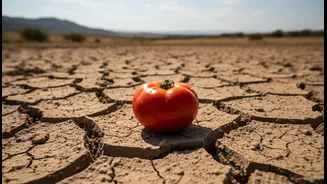
A major and worsening problem for agriculture globally, including in India's vast coastal and irrigated lands, is rising soil salinity. Salt stresses plants, damages roots, and can devastate crop yields. For years, scientists believed the key to survival was for plants to manage their sodium levels, essentially trying to keep the salt out. However, a recent breakthrough has turned this idea on its head. An international team of scientists, in a study published in late June 2026, discovered an entirely new survival mechanism. They found that when under salt stress, plants like maize and tomato actively recruit a specific type of beneficial bacteria called pseudomonads to their roots. These microbes then trigger a surprising response within the plant itself, revealing a new frontier in our understanding of plant resilience.
Building Strength from Within
The most startling finding was how these bacteria helped. Instead of helping the plant block salt, the pseudomonads stimulated the plant to produce more lignin, a complex organic polymer that is a key component of wood and bark. According to Professor Jonathan Todd, a co-author of the study, this increased lignin content strengthens the plant's root structure. This makes the plant physically tougher and more resilient to the harsh conditions of salty soil. Plants treated with these bacteria in field trials showed stronger root systems, better overall development, and higher yields compared to untreated plants. This discovery shifts the paradigm from a defense based on exclusion (keeping salt out) to one of fortification (building inner strength). It suggests that nature's solution to stress is not just to build a wall, but to reinforce the foundation.
A Potential Game-Changer for Indian Agriculture
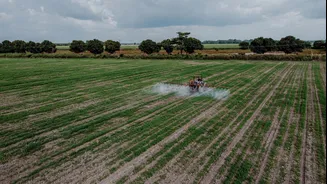
The implications of this research for a nation like India are immense. With a significant portion of its agricultural land facing threats from degradation and salinity, finding low-cost, sustainable solutions is a national priority. Harnessing beneficial microbes offers a path away from an over-reliance on chemical fertilisers and pesticides, which can be expensive for farmers and harmful to the environment over the long term. Microbial solutions, like bio-inoculants based on this new discovery, could help farmers reclaim land once considered too salty for use, boosting food production and securing livelihoods. By strengthening crops from within, these natural allies could enhance the resilience of Indian agriculture in the face of climate change, which is expected to exacerbate problems like soil salinity through rising sea levels and erratic weather patterns.
The Journey from Lab to Land
While this breakthrough is incredibly promising, it is important to have realistic expectations. The journey from a scientific discovery in a lab to a widely available product on a farm is a long one. Researchers must now work to identify the most effective bacterial strains for different crops and soil types. They also need to develop cost-effective methods to produce and apply these microbial inoculants on a massive scale. Future research will focus on optimizing these microbial solutions and understanding the complex interactions within the broader soil microbiome to ensure the benefits are consistent and reliable in diverse farming systems across the country. This will require collaboration between scientists, agritech companies, and farmers to translate this powerful natural process into a practical tool for modern agriculture.