







Understanding the Plateau Problem
If you’ve been training consistently, you're likely familiar with the dreaded plateau. Those initial weeks of rapid strength and muscle gains slow down, eventually grinding to a halt. This happens because your body is incredibly adaptive. A routine that
was once challenging becomes your new normal, and without a new stimulus, there’s no reason for it to keep changing. Many popular but unstructured routines, like the "bro split" where you train one muscle group a day (e.g., chest day, back day), can lead to this issue. [7] They often result in training each muscle group only once a week, which may not be frequent enough to maximize growth. [6] For sustained progress, your muscles need to be challenged more often. [2]
The Smarter Solution: The Push/Pull/Legs Split
Enter the Push/Pull/Legs (PPL) split, a time-tested and highly effective way to organize your training. [10] Instead of splitting workouts by individual body parts, PPL groups them by movement pattern. [4] This simple logic has profound benefits. It ensures that related muscle groups that work together are trained together, which is incredibly efficient. [10, 20] For example, any chest press also involves your shoulders and triceps. [10] By grouping all 'pushing' muscles into one session, you maximize this overlap and allow your 'pulling' muscles a full day to recover. This structure makes it easy to train each muscle group roughly twice a week, which research suggests is superior for muscle growth compared to once-a-week training. [4]
Day 1: The 'Push' Workout
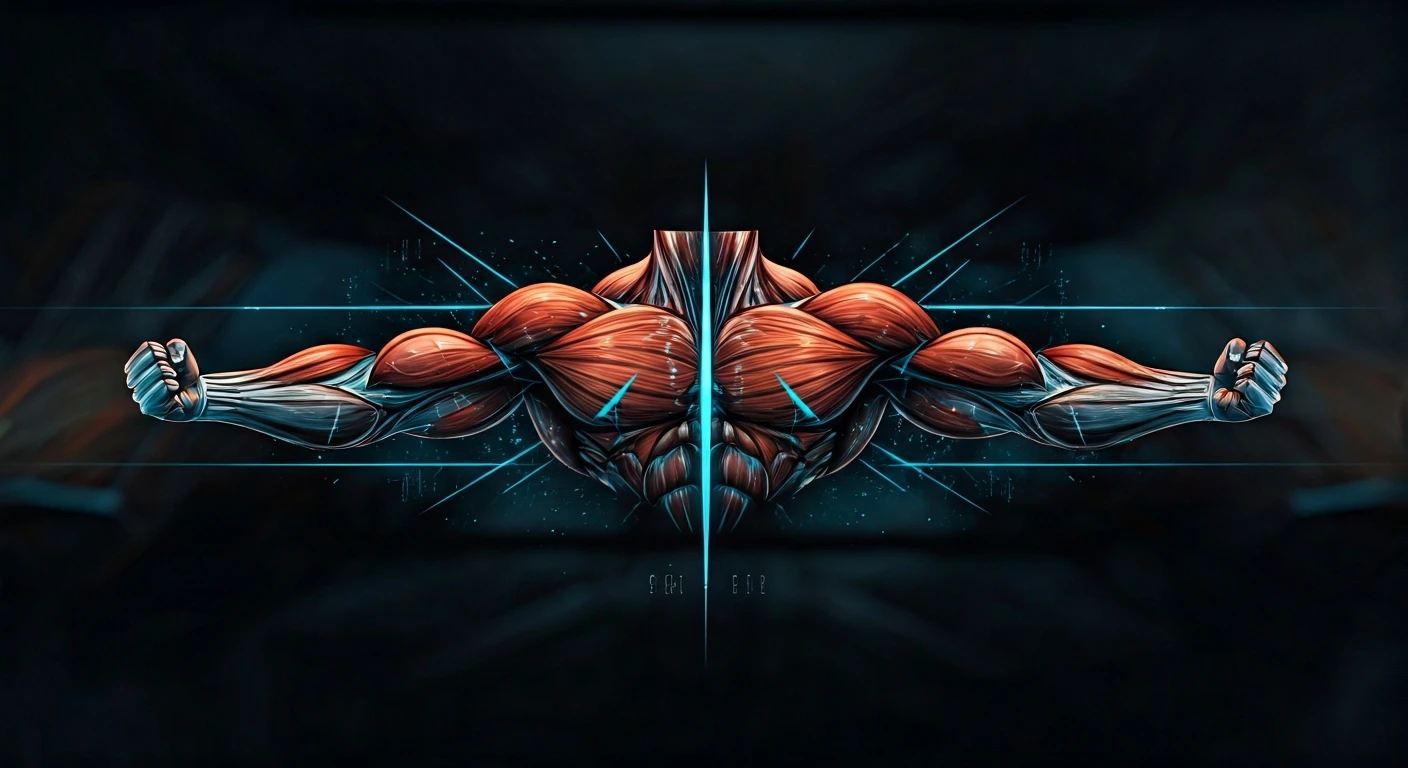
Your 'Push' day focuses on all the upper-body muscles you use to push weight away from you. This primarily includes your chest, shoulders, and triceps. [11] By training these synergistic muscles together, you can create a significant stimulus for growth in a single, focused session. A well-rounded push day will include a combination of heavy compound movements and lighter isolation exercises. [11]
**Sample Push Workout:**
* **Barbell Bench Press:** 3 sets of 6-8 reps [11]
* **Overhead Press (Dumbbell or Barbell):** 3 sets of 8-10 reps [11]
* **Incline Dumbbell Press:** 3 sets of 10-12 reps [11]
* **Lateral Raises:** 3 sets of 12-15 reps [11]
* **Triceps Pushdowns:** 3 sets of 10-12 reps [11]
Day 2: The 'Pull' Workout
The 'Pull' workout is the counterpart to push day, targeting the muscles used to pull weight toward you. This means you'll be training your entire back (including lats, rhomboids, and traps) and your biceps. [11] A strong back is crucial for posture and overall strength, and this focused session ensures it gets the attention it deserves. While your pushing muscles recover, your pulling muscles get to work.
**Sample Pull Workout:**
* **Barbell Rows or Deadlifts:** 3 sets of 6-8 reps [11, 12]
* **Pull-Ups or Lat Pulldowns:** 3 sets of 8-10 reps [11]
* **T-Bar or Dumbbell Rows:** 3 sets of 10-12 reps [11]
* **Face Pulls:** 3 sets of 15-20 reps [1]
* **Barbell or Dumbbell Curls:** 3 sets of 10-12 reps [11]
Day 3: The 'Legs' Workout
Leg day under a PPL split is a dedicated session for your entire lower body, including the quads, hamstrings, glutes, and calves. [16] With your upper body getting a complete rest, you can direct all your energy into building a powerful foundation. Leg workouts are notoriously demanding, but they are also responsible for building overall muscle mass and boosting your metabolism, thanks to the large muscles being worked. [17]
**Sample Leg Workout:**
* **Barbell Squats:** 4 sets of 6-8 reps [11]
* **Romanian Deadlifts:** 3 sets of 8-10 reps [11]
* **Leg Press:** 3 sets of 10-12 reps [11]
* **Leg Curls:** 3 sets of 12-15 reps [1]
* **Calf Raises:** 3 sets of 15-20 reps [20]
The Key to Progress: Progressive Overload
Simply following a split isn't enough; the magic ingredient for steady progress is a principle called progressive overload. [3] This means you must continually increase the demands on your muscles over time. [13, 18] Without this gradual increase in challenge, your body has no reason to adapt and grow stronger. [14] Progressive overload can be applied in several ways: increasing the weight you lift, doing more reps or sets with the same weight, or reducing rest times between sets. [18] The key is to make small, consistent improvements. Aim to add a little weight or an extra rep to your main lifts each week or two. [13] Tracking your workouts is crucial to ensure you are consistently applying this principle. [9]