



The Ever-Present Cosmic Threat
Planetary defense sounds like science fiction, but it addresses a very real, albeit low-probability, high-consequence risk. Our solar system is filled with millions of asteroids and comets, remnants from its formation 4.6 billion years ago. Most keep
a respectful distance, but some, known as Near-Earth Objects (NEOs), have orbits that bring them into Earth's neighbourhood. While a dinosaur-level extinction event is exceedingly rare, smaller impacts are more common and can still cause significant damage. The 2013 Chelyabinsk event in Russia serves as a stark reminder. A relatively small asteroid, only about 20 metres wide, exploded in the atmosphere with the force of nearly 500 kilotons of TNT. The resulting shockwave shattered windows across six cities, injuring over 1,500 people, mostly from flying glass. What made Chelyabinsk a wake-up call was that no one saw it coming; it arrived from the direction of the Sun, a blind spot for ground-based telescopes. This highlights the need for a comprehensive and continuous watch.
Our Planetary Guard Dogs
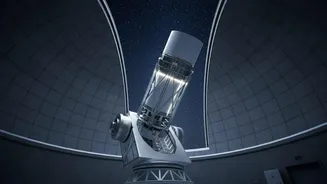
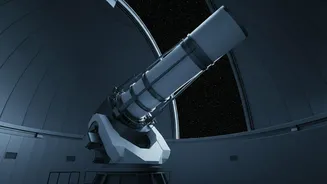
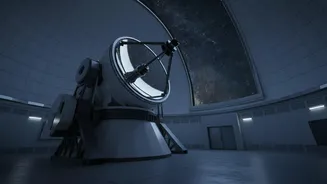
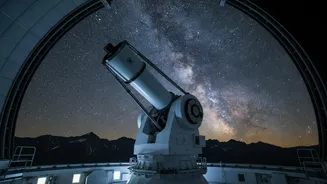
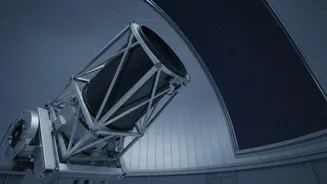
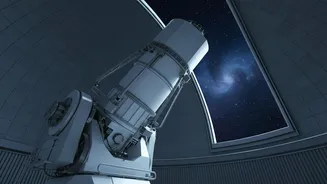
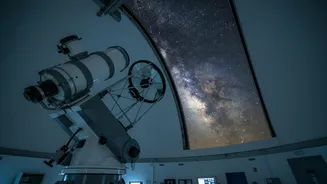
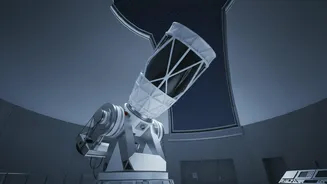
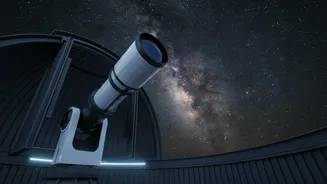
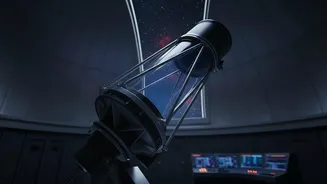
This is where sky-scanning telescope networks come in. They are the backbone of planetary defense. Instead of focusing on one specific star or galaxy, these automated systems systematically survey large swathes of the night sky, night after night. Key players in this global effort include NASA-supported projects like the Catalina Sky Survey (CSS) in Arizona, the Pan-STARRS telescopes in Hawaii, and the Asteroid Terrestrial-impact Last Alert System (ATLAS). ATLAS is particularly notable, with telescopes in Hawaii, Chile, and South Africa, allowing it to scan the entire observable night sky every 24 hours. These aren't isolated efforts; they form a collaborative international network. Data is shared with organizations like the Minor Planet Center, the global clearinghouse for all asteroid observations, ensuring any potential threat is quickly identified and monitored by the worldwide scientific community.
How to Spot a Moving Rock
So how do these telescopes find a small, dark rock millions of kilometres away? The technique is conceptually simple but technologically complex. A telescope takes a series of images of the same patch of sky, typically several minutes apart. Powerful computers then analyse these images, looking for any 'speck' of light that has moved relative to the fixed background of distant stars and galaxies. If a moving object is detected and isn't a known satellite or asteroid, it gets flagged as a candidate for follow-up observation. More telescopes around the world will then be tasked with observing the object to gather additional data points. Each new observation helps scientists refine the object's orbit with greater precision, allowing them to project its path far into the future and determine if it poses any risk of impacting Earth.
The Strength in Numbers
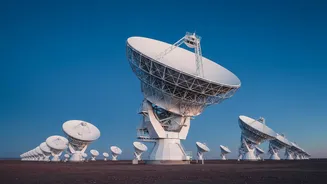
The reason scientists rely on a network, rather than a single, powerful telescope, is twofold: coverage and confirmation. The Earth is always rotating, meaning a single observatory can only see part of the sky for part of the day. A distributed network of telescopes across the globe, like ATLAS, ensures 24/7 coverage of the sky. When one part of the world enters daylight, another enters darkness, and the watch continues. Furthermore, having multiple observatories provides redundancy against bad weather and allows for rapid confirmation of new discoveries. Seeing an object from two different locations also allows for parallax measurements, which can help quickly determine its distance and trajectory. This collaborative approach means threats can be identified and tracked much more quickly and reliably than any single institution could manage on its own.
The Future of the Search
The search is about to get a major upgrade. The Vera C. Rubin Observatory in Chile, set to begin its decade-long survey, will be a game-changer. Its massive mirror and the world's largest digital camera will scan the entire southern sky every few nights, detecting millions of new objects. Even in its preliminary testing, Rubin has already discovered thousands of new asteroids. It is expected to find about 90,000 new NEOs and nearly double our catalogue of potentially hazardous asteroids larger than 140 metres. Looking ahead, space-based telescopes like NASA’s planned NEO Surveyor will be able to spot asteroids in infrared, even those that are hard to see from Earth because they are in orbits that keep them in the daytime sky. India is also increasing its role, with ISRO expressing keen interest in participating in global planetary defense missions and asteroid tracking, a move supported by international partners like NASA.