





Mehrangarh Fort, Jodhpur
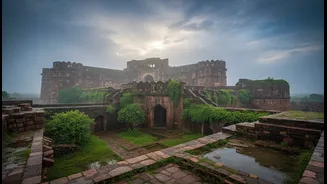
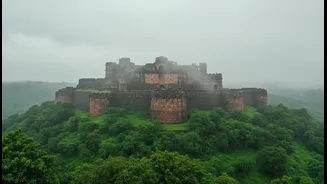
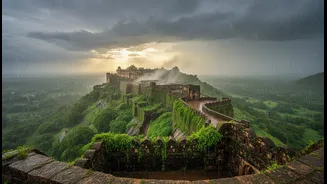
Towering over the Blue City, Jodhpur's Mehrangarh Fort is a sight to behold year-round, but the monsoon adds a layer of dramatic beauty. The burnished red sandstone stands in stark contrast against dark, stormy skies, creating a powerful image. During
the rains, mist often wraps itself around the colossal structure, giving it a mystical feel. The gardens within the fort, like the Chokelao Garden, burst into life with fresh greenery. The panoramic view from the top, with rain-washed blue houses below and clouds casting shifting shadows, is a photographer's dream. While Rajasthan's monsoon is less intense than in other regions, the cooler temperatures and transformed landscape make it an ideal time to explore this giant.
Sinhagad Fort, Pune
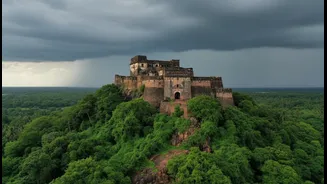
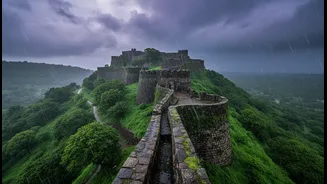
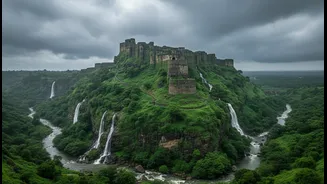
For trekking enthusiasts, Sinhagad Fort is a quintessential monsoon destination near Pune. What is a series of dry hills for most of the year becomes a vibrant green paradise during the rains. The trek to the fort, roughly an hour long, takes you through misty paths, lush shrubbery, and past small waterfalls that appear during the season. The fort itself, though in ruins, offers a powerful sense of Maratha history, which feels even more profound amidst the fog and wind. Once at the summit, you are rewarded with spectacular views of the Khadakwasla dam and the surrounding Sahyadri ranges. Enjoying hot Kanda Bhajji (onion fritters) and chai from the local stalls at the top is a cherished part of the experience.
Mandu, Madhya Pradesh
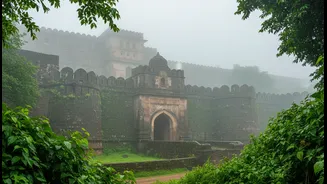
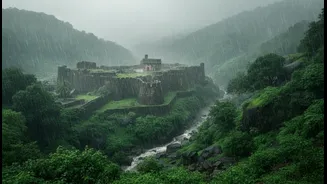
Mandu isn't just one fort but an entire fortified city that becomes enchanting during the monsoon. Emperor Jahangir once wrote of Mandu, "I know of no place so pleasant in climate and so pretty in scenery as Mandu in the rainy season." The city of ruins, including palaces, tombs, and mosques, is spread across a lush plateau. The famous Jahaz Mahal, or Ship Palace, appears as if it is floating between two artificial lakes, a truly mesmerizing sight when the rains fill them. The love story of Sultan Baz Bahadur and Rani Roopmati is woven into the fabric of this place, and their respective pavilions offer stunning, romantic views of the rain-drenched Narmada valley below. The entire area is carpeted in green, making it a serene and picturesque escape.
Amer Fort, Jaipur
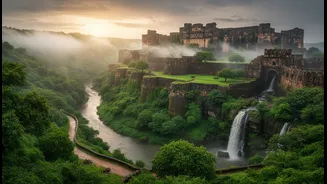
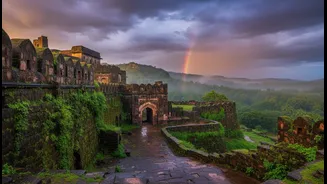
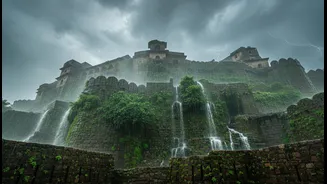
As one of Rajasthan's most iconic hill forts, Amer Fort's grandeur is amplified by the monsoon. The reflection of the magnificent structure in the Maota Lake below becomes even more beautiful, while the Aravalli hills surrounding the fort turn a refreshing green. This UNESCO World Heritage site, a blend of Rajput and Mughal architecture, offers endless frames for photography. The intricate carvings and sprawling courtyards look freshly washed and vibrant. While exploring, be mindful that heavy rains can sometimes impact accessibility, with certain activities like elephant rides occasionally suspended for safety. However, the sight of the fort against a cloudy sky makes a monsoon visit truly worthwhile.
Golconda Fort, Hyderabad
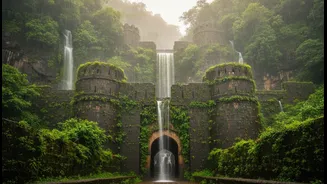
The historic Golconda Fort, the erstwhile capital of the Qutb Shahi dynasty, offers a unique monsoon experience. While some guides suggest avoiding the peak rainy season due to slippery paths, visiting during a light drizzle can be magical. The massive fort complex, with its palaces, mosques, and pavilions, provides a stunning vantage point over a rain-washed Hyderabad. The climb to the top is rewarded with panoramic views and a strong, cool breeze that sweeps across the ruins. The light and sound show in the evening takes on a special atmosphere with cloudy skies. The surrounding greenery and the dramatic silhouette of the fort make it a captivating subject for any photographer.