

An Accidental Experiment
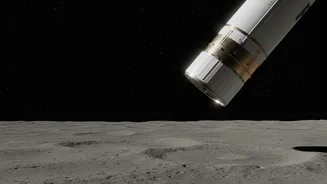
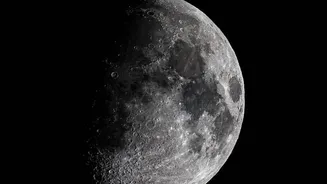
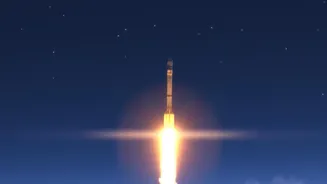
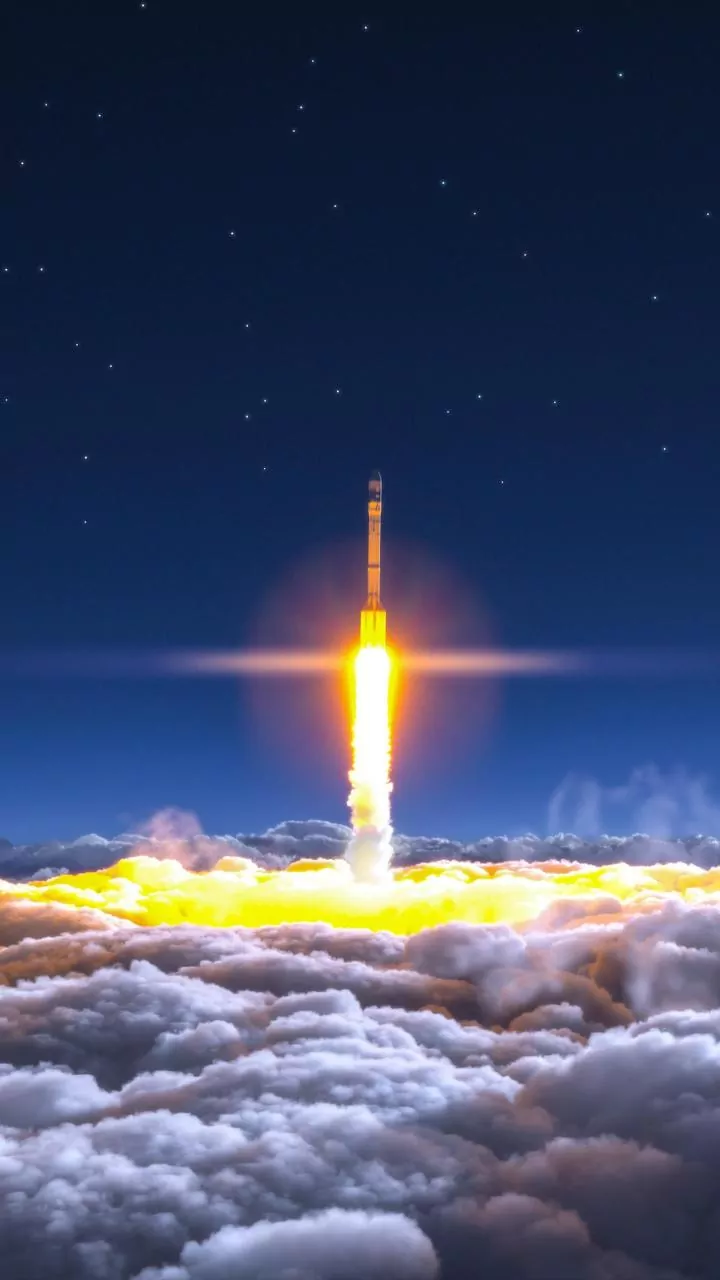
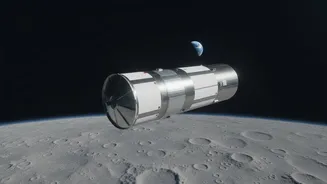
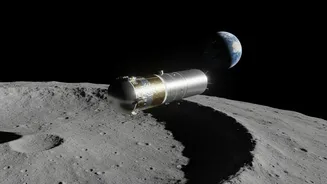
A four-tonne Falcon 9 upper stage, left over from a January 2025 mission, concluded its journey with a dramatic, high-speed impact on the lunar surface on August 5, 2026. Travelling at over 8,700 kilometres per hour, the spent rocket booster crashed near
the Moon's Einstein Crater. This was not a planned maneuver. After successfully deploying two commercial lunar landers, the rocket stage was left in a high, chaotic orbit around Earth. Over the past 19 months, a combination of gravitational pulls and solar activity nudged its trajectory until a collision with the Moon became inevitable, a conclusion first predicted by independent astronomers and later confirmed by NASA. While it highlights the growing issue of space debris, scientists quickly recognized the event as a unique, free-of-charge opportunity to conduct a large-scale impact experiment.
Reading the Debris Cloud
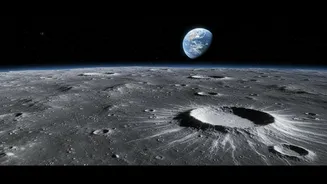
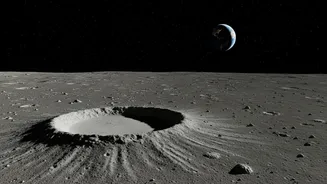
When the rocket stage hit the Moon, it excavated a crater estimated to be up to 100 feet wide, vaporizing part of the rocket and tons of lunar rock and dust. This impact threw a massive plume of material, known as ejecta, high above the lunar surface. Because the Moon has virtually no atmosphere, this cloud of debris expands in a predictable way, offering a brief but valuable window for analysis. From Earth, powerful telescopes were pointed at the impact zone, ready to perform spectroscopy on the plume. This technique involves analyzing the light that passes through or is emitted by the gas and dust cloud. Different elements and compounds absorb and emit light at specific wavelengths, creating a unique signature, much like a barcode. By reading this signature, scientists can determine the composition of the material kicked up from beneath the lunar surface.
What Scientists Hope to Learn
The primary goal is to get a better look at the Moon’s regolith—the layer of crushed rock and dust that covers its surface. Observing the ejecta can reveal the physical properties and composition of this material without needing to land a probe and dig. One of the most exciting possibilities is the detection of water ice. While we know water ice exists in permanently shadowed craters at the lunar poles, finding it elsewhere would be a significant discovery for future long-term missions that would need to use local resources. Soon after the impact, astronomers using the Very Large Telescope in Chile confirmed they had detected a plume containing sodium and lithium gas, providing the first hard evidence that the impact occurred as predicted and that the observation campaign was a success.
A Legacy of Lunar Impacts
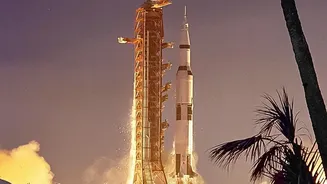
Using impacts to study celestial bodies is a proven method. In 2009, NASA intentionally crashed its Lunar Crater Observation and Sensing Satellite (LCROSS) into a crater at the Moon's south pole. That mission successfully confirmed the presence of significant amounts of water ice. Even the upper stages of the giant Saturn V rockets from the Apollo era were deliberately crashed into the Moon to generate seismic waves, which helped scientists understand the Moon's internal structure. This unintentional SpaceX impact adds to that legacy, serving as a modern, albeit accidental, version of those earlier experiments. It provides a new data point on a different part of the Moon, complementing what was learned from previous planned impacts.
The Next Steps
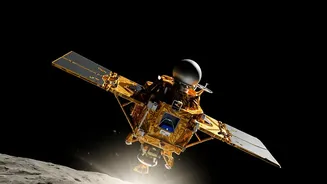
While ground-based telescopes have already gathered data from the plume, the investigation is far from over. The next phase involves orbital reconnaissance. NASA's Lunar Reconnaissance Orbiter (LRO) and South Korea's Pathfinder Lunar Orbiter will attempt to image the fresh crater from above. These before-and-after pictures will help scientists precisely measure the crater's size and shape, study the distribution pattern of the ejecta blanket, and further refine models of how impacts affect the lunar surface. Analyzing this data will take weeks or months, but it promises to deepen our understanding of the Moon's geology, which is crucial as nations and private companies alike plan for a sustained human presence on our nearest celestial neighbor.