



A Legacy in Every Detail
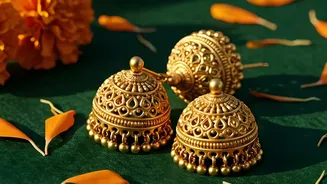
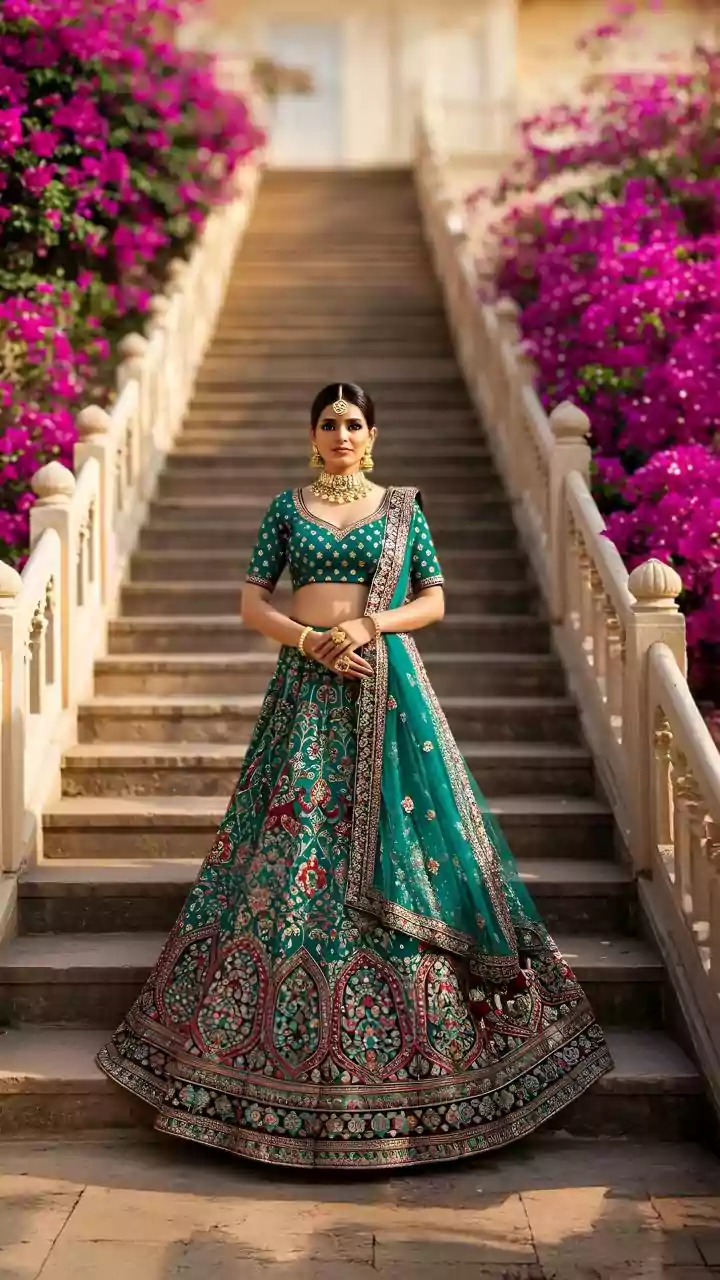
Across India, from the royal courts of Rajasthan to the temple towns of the South, jewellery-making is an ancient art form passed down through generations. These regional traditions are a living library of design, each with its own grammar of beauty.
Techniques perfected over centuries give each piece a distinct soul and identity, making it a wearable piece of history. Unlike mass-produced items, the value of regional jewellery lies in the inimitable touch of the 'karigar' (artisan), whose hands imbue the metal and stone with cultural memory and significance. These crafts are a testament to how global influences were absorbed and transformed into something unmistakably Indian.
Meenakari: Painting with Fire
One of the most recognisable Indian crafts is Meenakari, the art of fusing vibrant, powdered glass onto metal. Originating in Persia, it was brought to India by the Mughals in the 16th century and perfected in Jaipur, Rajasthan. The process is meticulous: an engraver carves intricate patterns—often of birds, flowers, or paisleys—into a gold or silver surface. A 'Meenakar' then carefully fills these grooves with enamel pastes. Each colour is fired separately in a kiln, from highest to lowest melting point, to create a permanent, glossy design. Traditionally, Meenakari was used to decorate the reverse side of Kundan jewellery, a hidden art for the wearer's eyes only. This painstaking detail makes each piece a two-sided masterpiece.
Thewa: Gold Fused on Glass
A closely guarded secret for centuries, Thewa is an art form exclusive to Pratapgarh in Rajasthan. It involves the delicate process of fusing an intricately worked sheet of 23-karat gold onto coloured glass. Artisans beat gold into a foil as thin as paper and etch impossibly detailed designs onto it, often depicting mythological tales or royal court scenes. This delicate gold pattern is then carefully fused onto a piece of hand-treated glass, creating a mesmerising effect where the gold seems to float. The entire process is done by hand and can take over a month to complete a single piece. The technique is so secretive that traditionally, the knowledge was only passed from father to son, never to daughters, to keep it within the family.
Tarakasi: Silver Lace from Odisha
From the city of Cuttack in Odisha comes Tarakasi, or silver filigree, a craft that is over 500 years old. The name itself explains the art: 'Tara' (wire) and 'Kasi' (design). Artisans work with an alloy of at least 90% pure silver, which is drawn into wires as fine as a spider's thread. These hair-thin wires are then twisted, curled, and soldered together to create intricate, lace-like patterns. The resulting jewellery is incredibly lightweight yet visually stunning, a hallmark of its delicate craftsmanship. Tarakasi has a Geographical Indication (GI) tag, officially recognising its origin and the unique skill of Cuttack's artisans who create everything from jewellery for Odissi dancers to massive backdrops for Durga Puja idols.
Pachchikam: The Rustic Charm of Kutch
Hailing from the Kutch region of Gujarat, Pachchikam jewellery has a distinctively raw and delicate beauty. The technique uses a silver base, making it more affordable than gold-heavy crafts like Kundan. In Pachchikam, uncut stones and glass are set into a silver casing; the artisan then simply presses the pliable silver edges over the stone to hold it in place. This creates a rustic, slightly unfinished look that is the hallmark of its charm. The style, which has existed for centuries, is rooted in the pastoral communities of the region and offers a softer, more ethereal alternative to the opulent jewellery of royal courts.