






A Small Hop for a Rocket
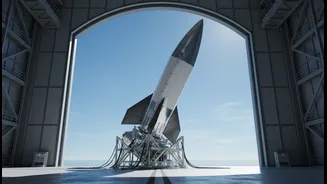
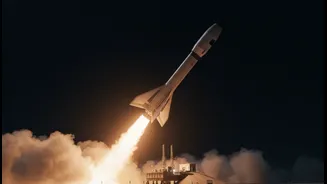
On Saturday, July 11, at the Noshiro Rocket Testing Center in Akita Prefecture, the Japan Aerospace Exploration Agency (JAXA) conducted a landmark test. The Reusable Vehicle eXperiment, or RV-X, ascended to a height of about 11 meters, maneuvered horizontally
for 16 meters, and then descended for a controlled landing on its four legs. The entire flight lasted less than a minute, but its success was a massive relief for the team. Project manager Takashi Ito confirmed the test went well, providing invaluable data for the country’s burgeoning reusable rocket program. This test followed a previously aborted attempt in March, making this successful flight even more crucial.
The Quest for Reusability
For decades, rockets were single-use machines, with their most expensive components discarded after every launch. This made space access incredibly costly. American company SpaceX revolutionized the industry by proving that the first stage of a rocket, its largest and most expensive part, could return to Earth and land vertically for reuse. This capability drastically slashed launch costs and has allowed SpaceX to dominate the global satellite launch market. Japan, whose current mainstay H3 rocket is an expendable vehicle, recognizes that developing reusable technology is not just an engineering challenge but an economic necessity to remain competitive. A stable, commercially viable transport capability is seen as key to the nation's space program and national security.
Inside the RV-X Prototype
The RV-X vehicle itself is a modest but mighty demonstrator. Standing 7.3 meters tall and 1.8 meters in diameter, it is specifically designed for these kinds of low-altitude tests. It is a joint development between JAXA and Mitsubishi Heavy Industries. A core component is its durable engine, which has already undergone over 160 combustion tests and is designed to be capable of around 100 launches. The data gathered from this flight—on engine performance, guidance systems during the horizontal maneuver, and the structural stress absorbed by the landing legs—is exactly what engineers need to scale up their designs.
The Competitive Asian Space Race
Japan is not alone in its ambitions. The successful RV-X test came just one day after Chinese state media reported that China had also achieved its first successful recovery of a rocket's first stage after a launch. The race to develop reliable, cost-effective reusable rockets is heating up across Asia. Within Japan, the private sector is also making strides. In 2025, a subsidiary of Honda became the first Japanese private company to successfully conduct a take-off and landing test of a reusable rocket. This blend of government-led and private-sector innovation is crucial for accelerating development.
What Comes Next for Japan
This test is just the beginning. The data from the RV-X flight will be instrumental in two key areas. First, JAXA will analyze the vehicle and flight data to determine if a second, identical test should be performed. Second, and more importantly, the findings will inform the design of CALLISTO, a more advanced reusable vehicle being jointly developed by Japan, France, and Germany. A flight test for CALLISTO is scheduled before April 2027, which will aim for much higher altitudes. JAXA also has plans for future RV-X tests to reach a height of about 100 meters, further pushing the vehicle's limits.