
A Planet of Immense Proportions
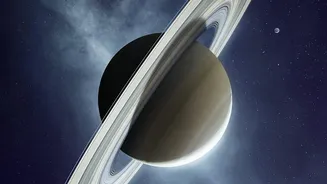
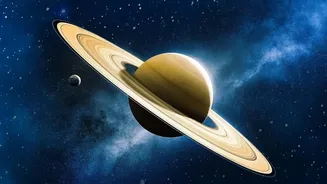
Saturn’s year is a marathon, not a sprint. It takes the ringed giant approximately 29.4 Earth years to complete a single orbit around the Sun. Just like Earth, Saturn is tilted on its axis, and this tilt is what causes its seasons. But due to its incredibly
long year, each season on Saturn stretches for more than seven Earth years. This means the planet experiences over seven years of continuous summer, followed by seven years of autumn, and so on. These extreme timescales create dramatic, planet-wide changes that scientists are eager to understand, from shifting weather patterns to changes in atmospheric temperature and composition. Observing these slow, grand cycles provides a unique natural laboratory for understanding planetary climate.
Hubble’s Decades-Long Vigil
To track changes that unfold over decades, you need a patient observer. For astronomers, that observer has been the Hubble Space Telescope. Through its Outer Planet Atmospheres Legacy (OPAL) program, Hubble has been capturing annual snapshots of our solar system's gas giants, including Saturn. This has created an invaluable long-term record, allowing scientists to monitor the subtle shifts in the planet's appearance year after year. For example, observations between 2018 and 2020 showed Saturn's equatorial region brightening by as much as 10 percent and revealed fluctuations in wind speeds. These subtle changes in color and brightness are crucial clues, indicating that the atmosphere is responding to the gradual change in sunlight as Saturn progresses through its seasons.
The Power of Seeing Heat
While Hubble’s observations in visible and ultraviolet light show us the color and haze of the upper clouds, infrared imaging reveals a different story. Infrared light is essentially heat radiation. By looking at a planet in infrared, scientists can map its temperature. This allows them to see how different parts of Saturn’s atmosphere warm up and cool down as the seasons change. It also helps them identify the chemical fingerprints of various gases and aerosols. This is critical because seasonal change isn't just about sunlight; it's about how that energy drives chemical reactions and alters atmospheric circulation deep below the visible cloud tops. While Hubble has some infrared capability, the James Webb Space Telescope has provided an unprecedented new window into this thermal world.
A Tale of Two Telescopes
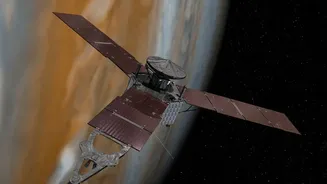
The most comprehensive understanding of Saturn's seasons comes from combining the strengths of both Hubble and the newer James Webb Space Telescope (JWST). Hubble provides the long-term, consistent context, showing how the planet's appearance has evolved over many years. JWST, with its powerful infrared instruments, then provides a detailed look at the thermal structure and chemical composition at different atmospheric depths. It’s like having two ways to study a building: Hubble shows you how the exterior paint colour changes over the years, while Webb provides the architectural blueprints and shows how the heating system is working inside. Together, they allow scientists to connect the visible changes in clouds and haze seen by Hubble to the underlying temperature and chemical shifts revealed by Webb, creating a complete, three-dimensional picture of a season unfolding on another world.