


The Sun’s Powerful Outbursts
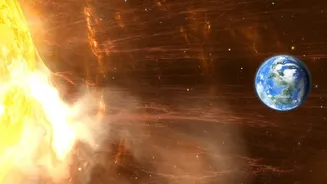
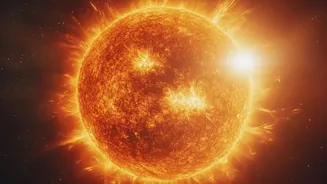
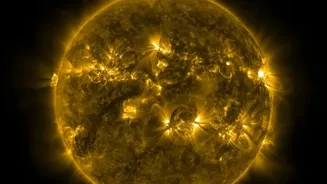
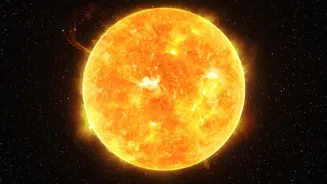
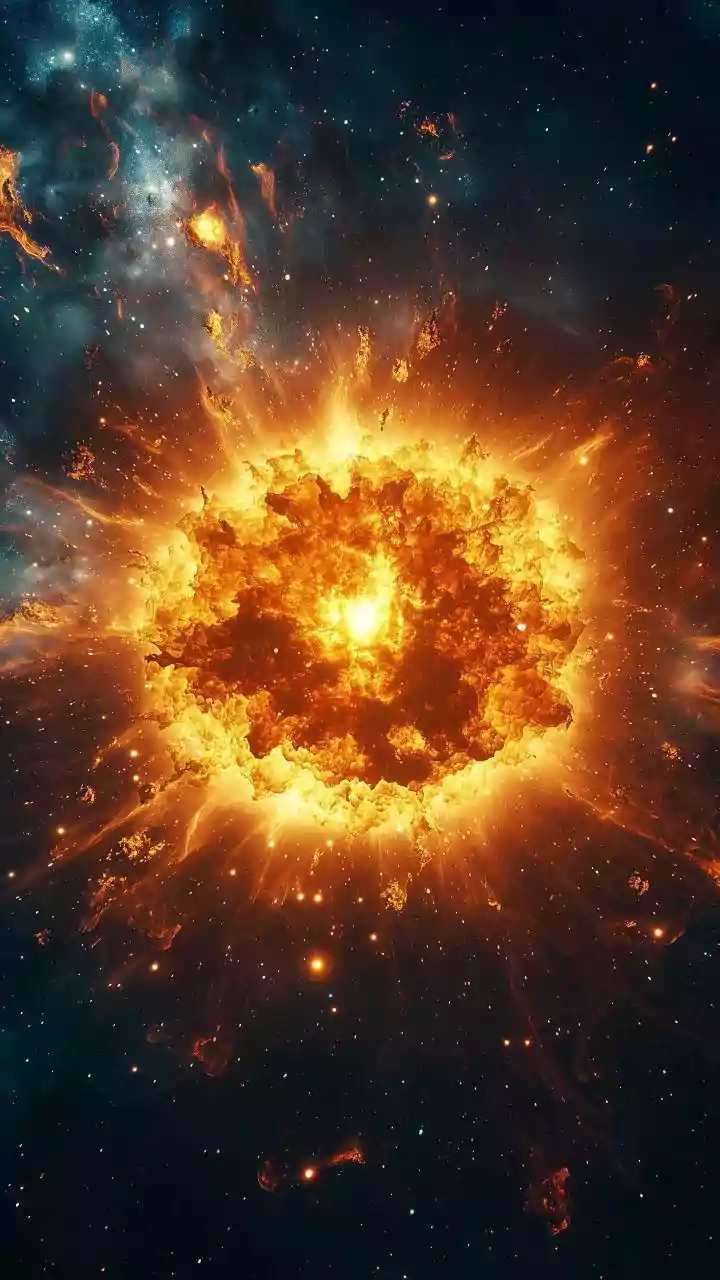
Our Sun is not always the calm, steady star it appears to be. It has a cycle of activity, and during its more active periods, it can produce powerful phenomena like solar flares and Coronal Mass Ejections (CMEs). A CME is a massive eruption of plasma
and magnetic field from the Sun's outer atmosphere, the corona. Think of it as a colossal cannonball of magnetised particles, sometimes weighing billions of tonnes, hurled into space at incredible speeds. While solar flares are intense bursts of radiation that reach Earth in minutes, CMEs are clouds of material that can take one to three days to cross the 150-million-kilometre distance to our planet. It's the arrival of these CMEs that poses the most significant threat to our ground-based infrastructure.
From Solar Wind to Grid Instability
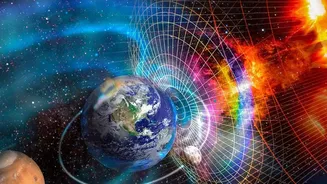
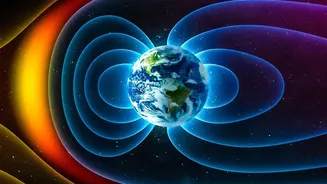
When a CME collides with Earth, it interacts with our planet's natural magnetic shield, the magnetosphere. This interaction creates intense and rapid fluctuations in the Earth's magnetic field, an event known as a geomagnetic storm. According to Faraday's law of induction, a changing magnetic field induces an electrical current in any nearby conductor. On the ground, this process creates something called a geo-electric field, which in turn causes geomagnetically induced currents (GICs) to flow through long electrical conductors like power transmission lines and pipelines. These are not the alternating currents (AC) our grids are designed for; GICs are quasi-direct currents (DC) that behave very differently and can cause serious problems.
The Threat to Transformers
The heart of any power grid is the high-voltage transformer, which steps electricity voltage up or down for efficient transmission and distribution. These transformers are designed to work with AC power. When a GIC flows from the transmission line into a transformer's neutral connection, it can push the transformer's magnetic core into saturation during part of the AC cycle. This saturation leads to several dangerous effects: the transformer draws excessive reactive power from the system, its core and windings can rapidly overheat, and it generates harmful harmonics that can trip safety relays. In a worst-case scenario, the intense heat can physically melt the transformer's internal windings, causing permanent damage and leading to widespread, long-lasting blackouts. The 1989 Hydro-Québec blackout in Canada, which left six million people without power for nine hours, was a stark demonstration of this threat.
The Power of Prediction
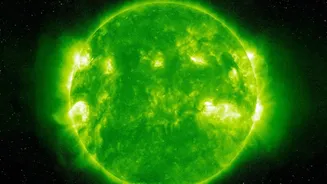
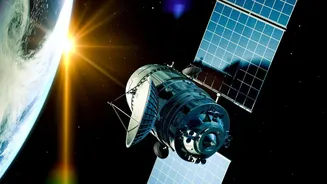
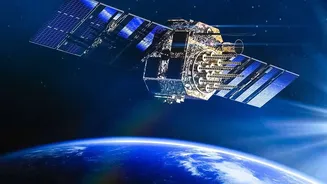
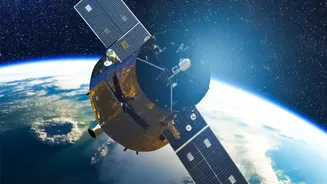
We cannot stop CMEs, but we can prepare for their arrival. This is where solar CME modeling comes in. Scientists use a combination of satellites and ground-based observatories to constantly monitor the Sun for potential eruptions. India's own Aditya-L1 mission, for instance, is a crucial asset in this global effort, providing data to help understand and predict these events. When a CME is detected, complex computer models are used to simulate its trajectory, speed, and magnetic characteristics. By feeding this data into further models that understand Earth's magnetic field and even the electrical conductivity of the ground's geology, forecasters can predict the timing, location, and intensity of the resulting geomagnetic storm and the GICs it will produce.
From Warning to Action
These predictive models provide grid operators with a crucial window of opportunity, often giving hours or even a day of lead time. Armed with a forecast of where and how severely GICs will strike, utility companies can take proactive measures to protect their equipment. These actions can include temporarily reducing the load on vulnerable transformers, adjusting power generation, or even taking specific, high-risk assets offline for the duration of the storm. This managed response prevents the transformers from overheating and failing, ensuring the stability of the grid. By knowing what's coming, operators can 'weather' the storm by making targeted, temporary adjustments rather than facing catastrophic, uncontrolled failures.
Securing India's Digital Future
For a nation like India, with its rapidly expanding digital economy and critical infrastructure, ensuring grid resilience against space weather is paramount. From digital payment systems to telecommunications and national security, nearly every facet of modern Indian life depends on a stable supply of electricity. Studies have shown that the equatorial regions, including parts of India, can experience significant magnetic field fluctuations that lead to GICs. As India continues to build out its high-voltage transmission network, the need for robust space weather forecasting and mitigation strategies becomes even more critical. By integrating advanced CME modeling and GIC prediction into grid management, India can safeguard its technological progress against this invisible threat from space.