




A Symphony for the Senses
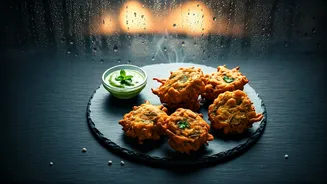
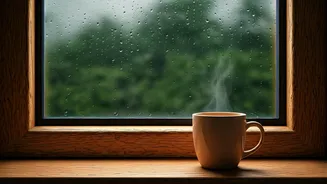
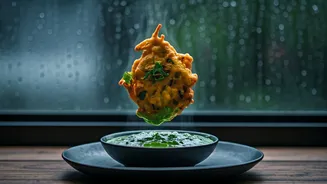
The magic of monsoon pakoras isn't just about taste; it's a full-blown sensory experience. Picture the scene: the rhythmic drumming of rain against the windowpane, the cool, damp air on your skin. Inside, the kitchen comes alive with the sharp sizzle
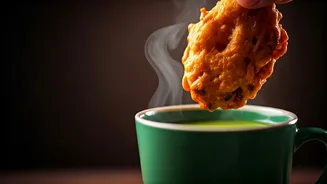
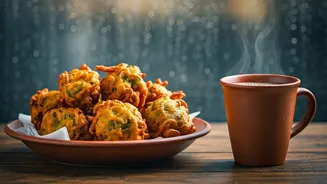
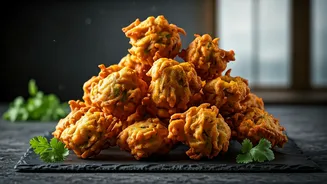
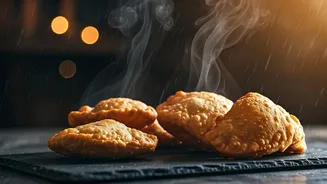
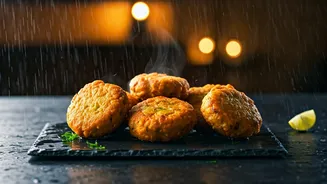
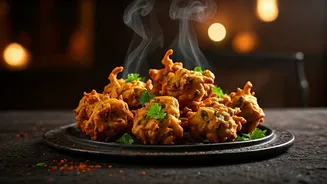
of batter hitting hot oil, a sound that promises warmth and comfort. The aroma of besan, spices, and frying onions fills the house, a fragrant counterpoint to the earthy smell of wet soil outside. Then comes the moment of truth. You pick up a steaming pakora, its jagged, golden-brown crust glistening. The initial crunch gives way to a soft, savoury interior. It’s a perfect contrast—the hot, crispy snack against the cold, gloomy weather. This delightful opposition of textures and temperatures is deeply satisfying, creating a feeling of cosy indulgence that few other foods can replicate on a rainy day.
The Science of Comfort Cravings
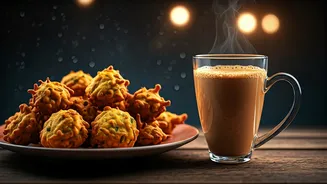
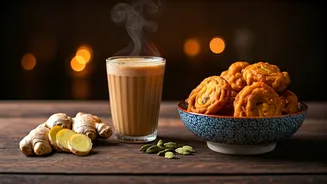
This craving isn't just in our heads; there's a bit of science to it. Grey, overcast skies can lead to a slight dip in serotonin, the body's 'feel-good' chemical, which can affect our mood. In response, our brains often crave carbohydrate-rich and fatty foods. Pakoras, being deep-fried and made from gram flour, fit this description perfectly. Consuming these foods can trigger a temporary release of serotonin, providing a quick mood lift and a sense of well-being. Furthermore, the drop in ambient temperature during a downpour makes our bodies yearn for warmth. A plate of hot pakoras, often paired with a steaming cup of adrak wali chai, provides immediate, comforting heat from the inside out. It's a form of delicious, instinctive self-care, our body’s way of finding equilibrium and happiness amidst the monsoon gloom.
A Recipe Steeped in Nostalgia
For countless Indians, the connection between rain and pakoras is deeply rooted in nostalgia. The combination is a powerful trigger for cherished memories of childhood. It recalls afternoons spent watching the rain from a verandah while a parent or grandparent lovingly prepared a fresh batch. It’s the memory of huddling together with siblings, fighting over the last piece, and dipping the fritters into tangy green chutney or sweet tamarind sauce. These aren't just snacks; they are edible heirlooms, vessels of family history and affection. Every household has its own special pakora recipe—some with thinly sliced potatoes, others with onions, spinach, or even paneer. This ritual, passed down through generations, transforms a simple dish into a meaningful tradition, connecting us to our past and reinforcing family bonds with every crunchy bite.
The Social Glue of the Monsoon
Beyond family kitchens, the call for pakoras becomes a community-wide phenomenon. The first monsoon shower is often an unspoken signal for a social gathering. In offices, it’s the perfect excuse for a collective break, with someone inevitably designated to make a run to the nearest street vendor. Among friends, a sudden downpour can turn a casual meeting into an impromptu pakora party. The street-side vendor, expertly frying batch after batch under a makeshift shelter, becomes the epicentre of this communal joy. People from all walks of life gather around, united by the shared experience of seeking shelter and savouring a hot, delicious snack. In this context, the pakora acts as a social lubricant, breaking down barriers and fostering a sense of togetherness that is unique to the Indian monsoon experience.