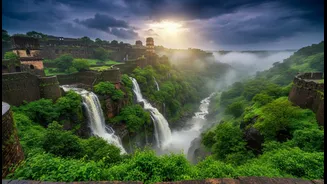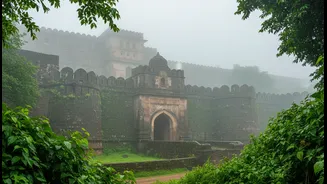


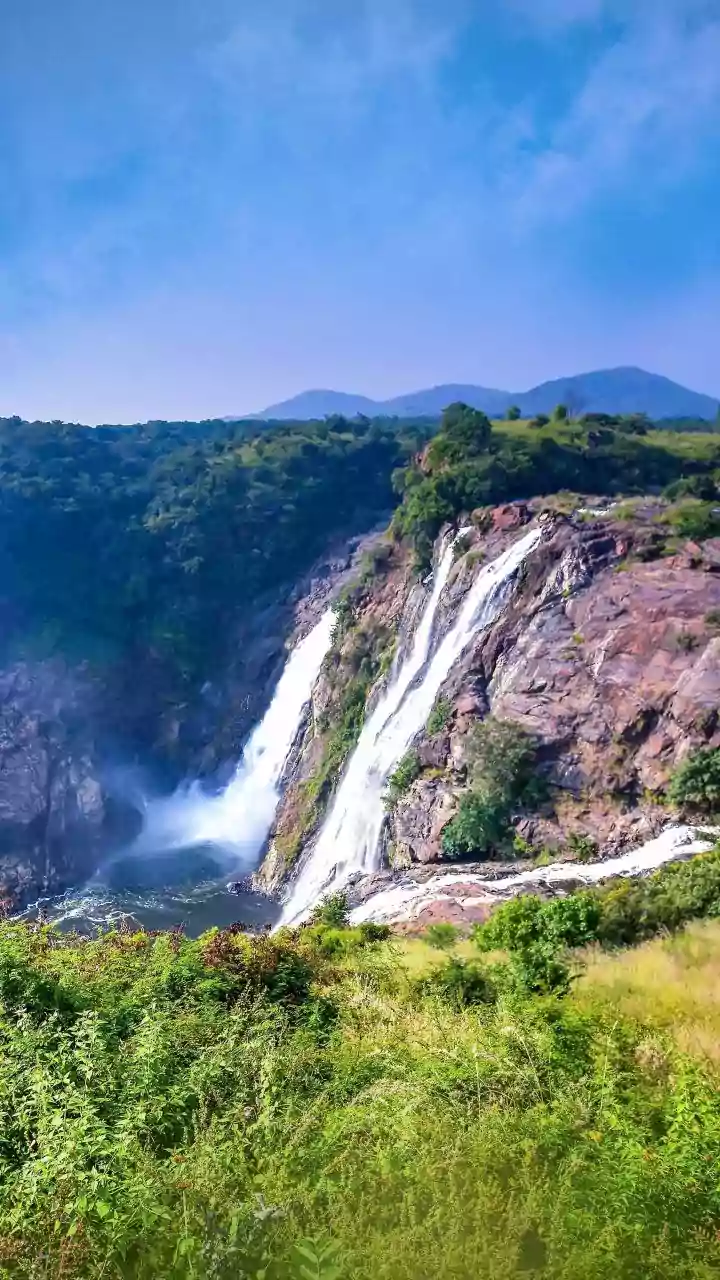

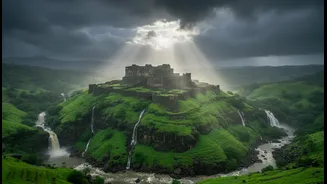
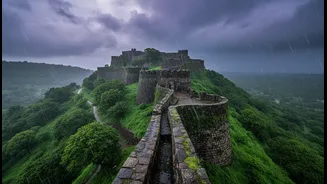
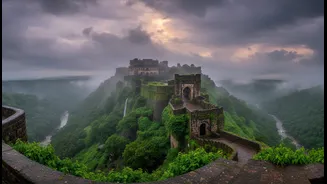


Lohagad Fort, Maharashtra
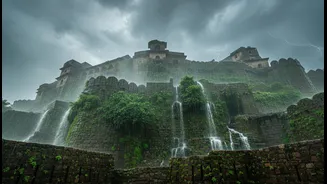
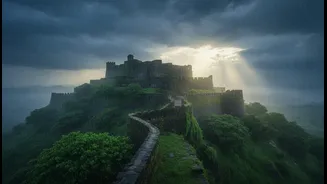
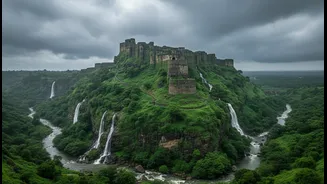
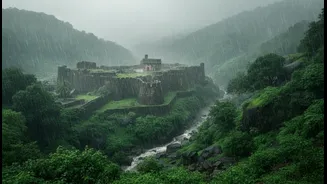
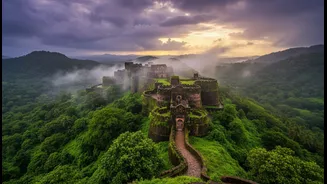
A favourite among trekkers from Mumbai and Pune, Lohagad, or the 'Iron Fort', is a classic monsoon destination. The trek to the top, which is relatively easy and suitable for beginners, becomes a walk through the clouds during the rains. As you ascend
the stone steps, often with water gently cascading over them, the surrounding Sahyadri hills are blanketed in a lush, emerald green. The fort's famous 'Vinchu Kata' or scorpion's tail-shaped cliff offers dramatic, misty views over the landscape and the nearby Pawna Lake. The experience is completed by savouring hot chai and onion bhajis from small stalls at the top, a simple pleasure that feels extraordinary amidst the cool, rain-swept winds.
Kumbhalgarh Fort, Rajasthan
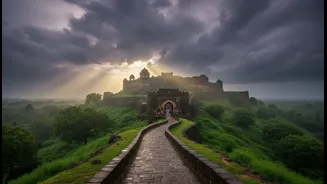
Rajasthan in the monsoon is a revelation, and nowhere is this more true than at Kumbhalgarh. This UNESCO World Heritage site, known for its formidable wall second only to the Great Wall of China, sheds its arid image for a few months. The surrounding Aravalli hills, usually stark and brown, turn into a sea of green, offering a stunning contrast to the fort's massive stone structure. Clouds drift lazily around the fort’s 13 peaks, often descending to envelop the 'Badal Mahal' or Palace of Clouds at its highest point, making the name feel literal. With fewer tourists than in the peak winter season, you can explore its vast ramparts and temples in a more serene, atmospheric setting.
Mandu, Madhya Pradesh
Mandu is a city built for romance, and the monsoon is when its stories truly come alive. This fortified city in Madhya Pradesh is famous for the tale of Baz Bahadur and Rani Roopmati, and the rainy season amplifies its poetic charm. The entire plateau turns into a carpet of green, with ancient monuments peeking through the foliage. The iconic Jahaz Mahal, or Ship Palace, appears to float between two artificial lakes, while Rani Roopmati's Pavilion offers breathtaking views of the rain-washed Narmada valley below. The monsoon adds an element of mystery and beauty to the ruins, making a walk through Mandu feel like stepping into a historical painting.
Golconda Fort, Hyderabad
While heavy downpours have occasionally caused damage to parts of the fort, a visit to Golconda during a spell of light to moderate rain can be enchanting. The imposing granite structure, which once guarded the world's most famous diamonds, takes on a fresh, clean look. The climb to the Bala Hissar at the top offers panoramic views of Hyderabad, which appear especially dramatic under a cloudy monsoon sky. The fort's ingenious acoustic system, where a clap at the entrance can be heard at the summit, seems to echo more clearly in the dense, moist air. It's a chance to see this iconic Deccan landmark revitalised by the rains, with fewer crowds and a cool, pleasant breeze.