







Why the Sudden Worry?
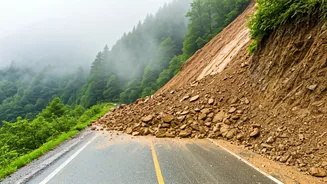
The feeling of unease isn't just in your head. Experts point to a perfect storm of factors making landslides a more frequent and severe threat. Firstly, climate change is leading to more intense, concentrated rainfall events. The soil on steep slopes
gets saturated far too quickly, losing its ability to hold together. Secondly, the Himalayas, where many of these popular routes are located, are geologically young and fragile. They are still rising and tectonically active, making them inherently unstable. Finally, there's the human element. A surge in tourism has led to rapid, often unregulated, construction of roads, hotels, and other infrastructure. Methods like blast-cutting into mountainsides to widen roads can destabilise entire slopes, creating risks that may not be apparent for years. This combination of volatile weather, fragile geology, and human intervention is turning breathtaking drives into calculated risks.
India's Treacherous Terrains
While no mountain road is entirely without risk, some have earned a notorious reputation. In Himachal Pradesh, National Highway 5 (the old Hindustan-Tibet road), particularly the stretch through Kinnaur, is frequently hit by devastating landslides. The Parwanoo-Solan stretch is another known trouble spot. In Uttarakhand, the pilgrimage routes to Badrinath (NH-7) and Kedarnath are highly vulnerable, with frequent blockages during the monsoon. The road to Gangotri is similarly precarious. Further east, Sikkim’s lifelines, like NH-10 connecting to Siliguri, are regularly severed by slides, isolating the state for days. Even the Western Ghats are not immune; the Mumbai-Goa highway and routes through the ghats in Kerala and Karnataka see significant landslide activity during heavy rains. These aren't just names on a map; they are critical arteries where nature often reminds us of its power.
Reading the Danger Signs
You don’t have to be a geologist to spot potential trouble. Being an alert traveller can make all the difference. Keep an eye out for tell-tale signs on or near the road. Are you seeing new cracks in the pavement or on the hillside? Are trees, fences, or utility poles tilted at unusual angles? Small rocks or pebbles frequently falling onto the road can be a precursor to a much larger slide. Another critical indicator is water. If you see sudden changes in the flow of streams—like the water turning muddy or its volume rapidly increasing or decreasing—it could mean there’s movement happening uphill. Hearing a faint rumbling sound that grows louder is an immediate signal to leave the area as quickly and safely as possible. Trust your instincts; if a stretch of road feels unsafe, it probably is.
Your Pre-Travel Safety Checklist
A little planning goes a long way in mitigating risks. Before you even pack your bags, make a habit of checking the long-range and short-range weather forecasts from the India Meteorological Department (IMD). During monsoon season (June to September), be extra vigilant and consider if the trip is truly essential. Always consult local authorities or state disaster management websites for real-time road status updates. Many police departments now use social media to post alerts about blockages. When on the road, travel during daylight hours. Visibility is your best friend. Avoid stopping in areas directly below steep cuts or unstable-looking slopes, even for a quick photo. Keep an emergency kit in your car with water, non-perishable food, a first-aid kit, a torch, and a power bank. Most importantly, share your itinerary with someone back home and have emergency contact numbers for the local district administration saved on your phone.