
Venus: The Lost Twin
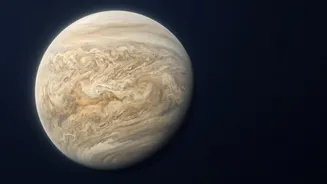
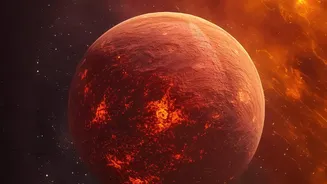
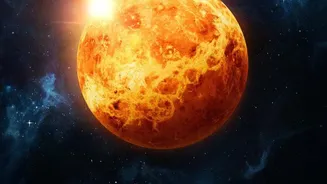
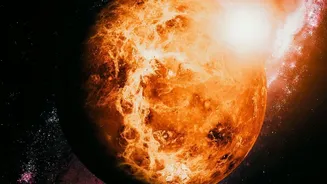
Imagine an Earth-sized planet that took a dramatically different path. That's Venus. While similar in size and mass to our world, it's a hellscape. The surface temperature is over 460°C, hot enough to melt lead, and the atmospheric pressure is more than
90 times that of Earth's. Its entire surface is shrouded in thick, opaque clouds made not of water, but of corrosive sulfuric acid. For decades, scientists have been stumped: how did a planet so similar to our own become so inhospitable? Understanding this divergence is not just about Venus; it could offer crucial lessons about planetary evolution and climate change here on Earth.
Enter Shukrayaan-1
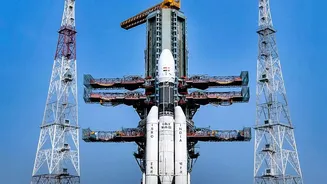
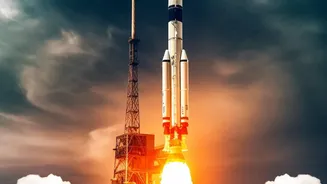
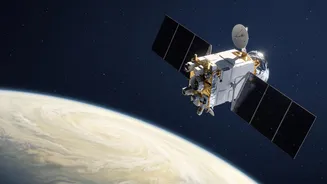
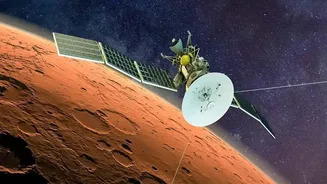
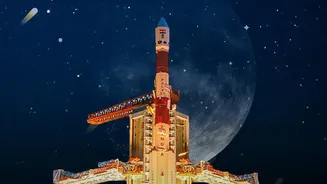
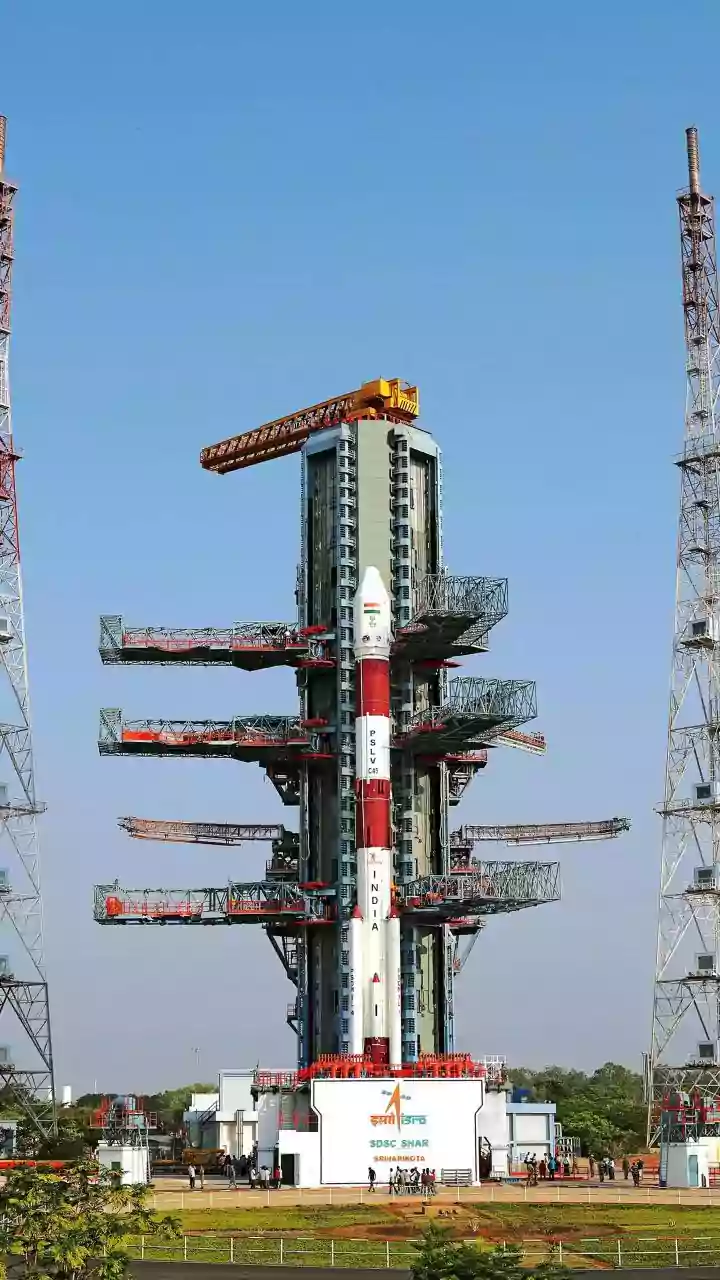
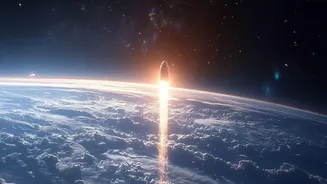
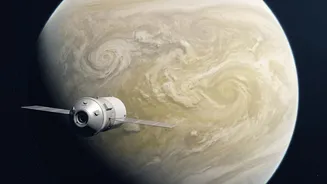
Following the historic successes of its Mars Orbiter Mission (Mangalyaan) and lunar missions (Chandrayaan), the Indian Space Research Organisation (ISRO) is setting its sights on our other planetary neighbour. Named from the Sanskrit words for Venus ('Shukra') and craft ('Yaan'), Shukrayaan-1 is India's first dedicated mission to the planet. The orbiter is slated for a potential launch in March 2028 aboard the powerful LVM-3 rocket. Its primary goals are to create a comprehensive map of Venus's surface and subsurface, study the dynamics of its bizarre atmosphere, and investigate the interaction between the planet and the solar wind.
The Core Mystery: Acid Clouds
The key to understanding Venus lies within its impenetrable cloud deck. These clouds, composed primarily of sulfuric acid droplets, circle the planet in just four Earth days—a phenomenon known as 'super-rotation' that baffles scientists. They reflect about 75% of sunlight, making Venus the brightest planet in our night sky. But these clouds also hide secrets. In recent years, the potential, though highly debated, presence of phosphine gas has raised tantalizing questions about unknown chemical processes. ISRO’s mission is equipped to gather definitive data on the composition and behaviour of this extreme environment.
ISRO's High-Tech Toolkit
To peer through the veil, Shukrayaan will carry a suite of around 19 sophisticated instruments, a mix of Indian and international payloads. A flagship instrument is the high-resolution Synthetic Aperture Radar (SAR), which can penetrate the thick clouds to map the volcanic surface with unprecedented detail, at up to four times the resolution of NASA's Magellan mission. Another world-first for Venus exploration is a ground-penetrating radar designed to study the planet's subsurface geology. For probing the atmosphere's chemistry, instruments like the Venus Thermal Camera (VTC) will map cloud-top temperatures, while spectrometers will analyse its composition. Collaborations add even more power. A French-Russian instrument called VIRAL will study atmospheric gases, while a Swedish Venusian Neutrals Analyser (VNA) will investigate how the solar wind strips particles from the atmosphere.
Beyond the Atmosphere
While the cloud chemistry is a major focus, Shukrayaan-1 is a holistic mission. Its powerful SAR will map geological features like volcanic hotspots and lava flows, providing clues about whether Venus is still geologically active. The mission's ability to probe the shallow subsurface will help scientists understand its stratigraphy, or rock layers, for the first time. By combining atmospheric data with geological mapping, ISRO aims to build a complete picture of Venus as a dynamic system. This comprehensive approach, studying everything from the ionosphere down to the subsurface, sets Shukrayaan apart from many past missions that focused on narrower objectives.