






The Scale of the Salinity Crisis
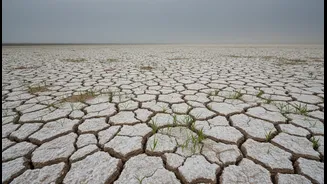
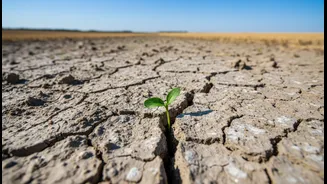
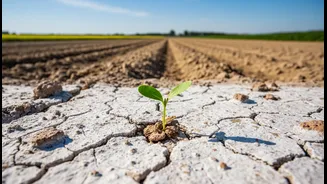
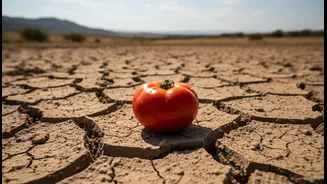
India is facing a significant challenge with soil degradation, and salinity is a major culprit. Approximately 6.73 million hectares of land are currently affected by high salt concentrations. This problem is not static; estimates suggest that around 10%
of additional land is impacted by salinization each year. At this rate, some experts project that half of India's arable land could be salt-affected by 2050, posing a severe threat to national food security. The most affected states include Gujarat, Uttar Pradesh, Maharashtra, West Bengal, and Rajasthan, which together account for about 75% of the country's salt-affected soils. This creeping salinization leads to massive annual crop losses, estimated at 16.8 million metric tons, impacting the economy and pushing farmers into debt.
What Turns a Field Salty?
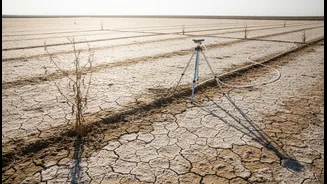
Soil salinity can occur naturally, especially in arid and semi-arid regions where high evaporation rates leave salts behind. However, human activities have greatly accelerated the process. One of the primary drivers is irrigation, particularly with poor-quality or brackish water. In many canal-irrigated areas, inadequate drainage causes the water table to rise, bringing dissolved salts to the surface. Over-extraction of groundwater is another factor; as freshwater aquifers are depleted, saline water can intrude, especially in coastal areas experiencing sea-level rise. Furthermore, the excessive use of certain chemical fertilizers, which contain high levels of salts like potassium chloride, contributes significantly to the salt buildup in the soil.
Beyond Hope: The Scientific Toolkit
Fortunately, agricultural science offers a range of proven solutions. The ICAR-Central Soil Salinity Research Institute (CSSRI) has been at the forefront of developing these technologies. For sodic soils, a common issue in the Indo-Gangetic plains, the application of chemical amendments like gypsum has been highly effective in reclaiming land. For waterlogged saline soils, subsurface drainage technology is a game-changer. This involves installing underground pipes to lower the water table and flush out excess salts, a technique that has already reclaimed about 70,000 hectares across several states. These interventions have been shown to dramatically increase crop yields—in some cases, wheat yields have increased by 111% and cotton by 215% after implementing subsurface drainage.
Smarter Farming for a Salty Future
Reclamation is not just about engineering; it's also about smarter farming practices. Developing and planting salt-tolerant crop varieties is a key strategy, allowing farmers to get reasonable yields even in moderately saline soils. Rice, wheat, and mustard varieties developed by CSSRI can thrive in conditions where conventional crops would fail. Beyond crop selection, efficient water management is crucial. Advanced irrigation techniques like drip and sprinkler systems help deliver water directly to the plants without waterlogging the soil. Agroforestry, the practice of planting deep-rooted trees alongside crops, can also help manage the water table and improve soil health over the long term. Farmers are also encouraged to adopt crop rotation, substituting water-guzzling, salt-sensitive crops like sugarcane with hardier alternatives like millets.
The Path to Widespread Adoption
While the science is clear, the challenge lies in bringing these technologies to millions of small and marginal farmers. Land reclamation is a capital-intensive activity. Government support through subsidies on amendments like gypsum, credit facilities for installing drainage systems, and schemes like the Rashtriya Krishi Vikas Yojana (RKVY) are vital. Success often depends on a combination of scientific guidance from institutions like ICAR, financial support from bodies like NABARD, and robust extension services to train farmers. The economic benefits are compelling: reclaimed lands have contributed over 17 million tons of additional food grains annually and generated millions of man-days of employment, proving that investing in science yields tangible returns for farmers and the nation.