






Our History is Disappearing
Across the globe, a silent crisis is unfolding. The tangible links to our ancestors—ancient settlements, sacred burial grounds, and priceless artifacts—are facing an unprecedented threat from climate change. Rising sea levels, melting glaciers, and extreme
weather events are not just future problems; they are actively destroying the world’s archaeological heritage. This has transformed the careful, methodical work of archaeology into an urgent mission of salvage and rescue. The long-held principle of preserving sites in place is becoming untenable as the ground literally washes away or decomposes, forcing scientists to decide which parts of our history can be saved and which must be let go.
The Arctic's Melting Time Capsules
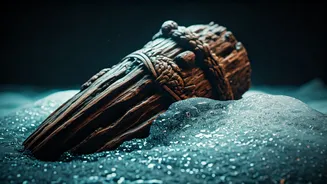
The Arctic has long been a vast natural freezer, preserving organic materials that would rot anywhere else. For thousands of years, the permafrost has kept intact wooden tools, leather clothing, and even the human remains of ancient peoples, offering a vivid window into their lives. Now, as the Arctic warms at more than twice the global rate, this frozen ground is thawing. Once exposed to moisture and microbes, delicate artifacts made of hide, sinew, or wood can decompose in a matter of years. Entire sites are slumping and collapsing as the ice that supported them turns to mud. In the Canadian Arctic, centuries-old Inuit sod houses are melting away, while on the Norwegian archipelago of Svalbard, the graves of 17th-century whalers are deteriorating as the protective permafrost vanishes.
A Rising Tide of Destruction
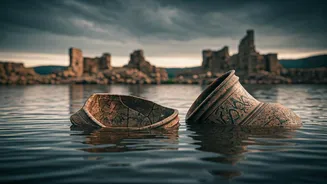
Along coastlines around the world, humanity’s story is being washed into the sea. More frequent and intense storms, coupled with rising sea levels, are accelerating coastal erosion at an alarming rate. One of the most famous examples is Skara Brae, a 5,000-year-old Stone Age village in Scotland’s Orkney Islands. Ironically uncovered by a storm in 1850, it is now at risk of being reclaimed by the very sea that revealed it. This threat is global. A study in the United States projected that a one-metre sea-level rise would endanger over 13,000 archaeological sites along the Atlantic and Gulf coasts alone. In India, historic landmarks like the Konark Sun Temple and the Shore Temple at Mahabalipuram face similar threats from an encroaching ocean and worsening cyclonic storms.
From Preservation to Rescue
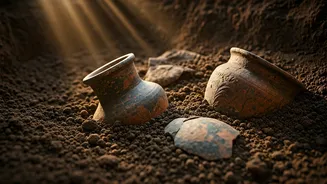
In response to this escalating crisis, archaeologists are shifting from conservation to emergency intervention. The new reality is “rescue archaeology,” a discipline driven not by academic curiosity but by the imminent threat of destruction. Teams are now forced to triage sites, prioritizing those that are most vulnerable. It’s a frantic effort to excavate and document what they can before it’s gone forever. This is happening in the mountains of Norway, where melting glaciers are revealing thousands of Iron Age artifacts that are immediately at risk of decay, and across the Arctic, where scientists rush to survey sites before they vanish. While the melt paradoxically uncovers new finds, the resources to study them are no match for the speed at which they are being exposed and subsequently destroyed.