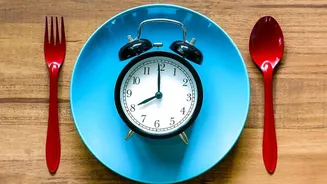







Your Body's Internal Clock
Every cell in your body operates on a 24-hour cycle known as a circadian rhythm. This internal master clock, located in the brain, is primarily synced by light exposure, telling you when to wake up and when to feel sleepy. However, you also have secondary
or 'peripheral' clocks in your organs, including your liver, pancreas, and digestive system. These organ clocks are strongly influenced by your meal times. When you eat, you send a powerful signal to your digestive system to 'wake up' and get to work. If this signal comes late at night, when your brain's clock is winding down for sleep, it can create a form of internal jet lag, leading to metabolic confusion.
The Problem with Late-Night Meals
Eating a large meal close to bedtime forces your body into a difficult position. Your digestive system has to generate heat and energy to process the food, a process known as diet-induced thermogenesis. This directly conflicts with your body's natural process for initiating sleep, which involves a slight drop in core body temperature. Furthermore, your body is less efficient at processing glucose and fats in the evening as your metabolism naturally slows down. Studies show that eating late can result in higher blood sugar levels and reduced fat burning compared to consuming the exact same meal earlier in the day. One study found that late eaters had peak blood sugar levels almost 20 percent higher and fat oxidation was reduced by 10 percent.
Enhance Fat Burning as You Sleep
When you finish your dinner earlier, you create a longer fasting window overnight. This simple shift allows your digestive system to finish its work hours before you go to sleep. Instead of spending energy on digestion, your body can switch its focus to repair, recovery, and, importantly, burning stored fat for fuel. This prolonged period without food intake helps stabilize blood sugar levels, reducing late-night cravings for unhealthy snacks that are often driven by habit or stress rather than true hunger. Over time, this consistent practice encourages your body to tap into its fat reserves for energy overnight, contributing to better weight management.
Unlock Deeper, More Restful Sleep
The benefits of an early dinner extend directly to your sleep quality. By avoiding a late meal, you reduce the risk of digestive issues like acid reflux or bloating that can cause discomfort and awakenings during the night. More importantly, research indicates that late-night eating can disrupt your sleep architecture, specifically reducing the amount of deep sleep, also known as slow-wave sleep. This is the most restorative stage of sleep, where your body performs critical functions like tissue repair, immune system support, and memory consolidation. Giving your body a 2-3 hour window between your last meal and bedtime allows it to wind down properly, leading to more efficient and deeper sleep.
Simple Steps to Align Your Dinner
Making this change doesn't have to be complicated. Start by aiming to finish your dinner at least two to three hours before you plan to go to sleep. For many people, this might mean eating around 7 p.m. If your schedule is tight, focus on making your evening meal lighter and lower in high-fat or sugary foods, which can be more disruptive. Consistency is also key; try to maintain a regular dinner time, even on weekends, to help regulate your body's 'food clock'. If you feel hungry before bed, opt for a light, easily digestible snack like a piece of fruit. The goal is to support your body's natural rhythms, not fight against them.