




The Underrated Hero of Indian Breakfast
Forget complicated meals that take hours to prepare. The chilla, or cheela, is the undisputed hero of quick, nutritious, and incredibly satisfying meals. Whether it's a rushed weekday breakfast, a lazy Sunday brunch, or a light evening snack with a cup
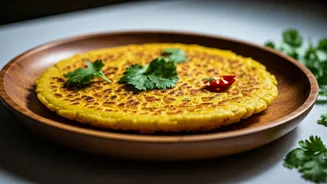
of chai, this versatile dish always delivers. Made primarily from besan (gram flour), it's a protein-packed, gluten-free delight that has been a staple in kitchens across the country for generations. But there’s a world of difference between a limp, forgettable chilla and one that is transcendent—crispy at the edges, soft in the middle, and bursting with savoury flavour. The kind of chilla that truly proves one bite is never enough.
The Anatomy of a Perfect Chilla
So, what separates a good chilla from a great one? It's a delicate balance of four key elements: batter consistency, flavour profile, cooking technique, and texture. The batter shouldn't be too thick (which results in a dense, pakora-like pancake) or too thin (which makes it tear). It needs to be a smooth, pourable consistency, like that of a crepe batter. The flavour comes from simple but powerful spices—a pinch of ajwain (carom seeds) for its digestive properties and distinct taste, turmeric for colour, and a hint of hing (asafoetida) to elevate the earthiness of the besan. Finally, the texture: the holy grail is the 'lacy edge', that ultra-crisp border that provides a delightful contrast to the soft, fluffy centre.
Building the Ultimate Chilla Batter
Your journey to chilla perfection starts here. This recipe is a reliable foundation you can master and then build upon. Ingredients: - 1 cup Besan (Gram Flour) - 2 tablespoons Suji (Semolina) or Rice Flour (this is the secret to crispiness!) - 1/4 teaspoon Turmeric Powder (Haldi) - 1/2 teaspoon Ajwain (Carom Seeds) - A generous pinch of Hing (Asafoetida) - Salt to taste - 1 small Onion, finely chopped - 1 small Tomato, finely chopped - 1-2 Green Chillies, finely chopped - A handful of fresh Coriander, chopped - Water, approximately 3/4 to 1 cup - Oil or Ghee for cooking Instructions: In a mixing bowl, whisk together the besan and suji to ensure there are no lumps. Add the turmeric, ajwain, hing, and salt, and mix well. Gradually add water while whisking continuously to form a smooth, lump-free batter. It should be of a flowing consistency. Now, stir in the chopped onion, tomato, green chillies, and coriander. Let the batter rest for at least 15-20 minutes. This allows the suji to absorb water and the flavours to meld.
Mastering the Tawa Technique
Even the best batter can be ruined by poor technique. Heat a non-stick tawa or a well-seasoned cast-iron pan over medium heat. A good test is to sprinkle a few drops of water; if they sizzle and evaporate immediately, the pan is ready. Grease the tawa lightly with oil or ghee. Pour a ladleful of batter in the centre and quickly spread it outwards in a circular motion to form a thin pancake. Drizzle a few drops of oil around the edges and on top. Cook for 2-3 minutes, until the top looks cooked and the edges start to crisp up and lift from the pan. Using a flat spatula, carefully flip the chilla and cook for another 1-2 minutes on the other side until golden brown spots appear. Don't be afraid to press down gently with the spatula to ensure even cooking.
Serve It Right, Make It Your Own
A chilla is fantastic on its own, but its true potential is unlocked with the right accompaniments. The classic pairing is a vibrant green coriander-mint chutney and a sweet-and-sour tamarind chutney. Even a simple dollop of tomato ketchup or a side of pickle works wonders. Want to take it a step further? Once you flip the chilla, sprinkle some grated paneer or cheese on one half and fold it over to create a delicious stuffed version. You can also experiment with other flours, like moong dal, for a different flavour and nutritional profile. The beauty of the chilla is its adaptability.