








Cloud Kitchens Are India’s New Food Startup Playground
Discover why delivery-only cloud kitchens are India's hottest startup trend, offering a low-cost, high-potential entry into the food industry.
What Exactly Is a Cloud Kitchen?
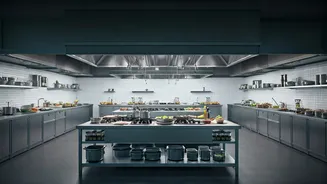
A cloud kitchen—also known as a ghost kitchen, virtual kitchen, or dark kitchen—is a commercial food production
facility designed exclusively for delivery. There are no storefronts, no tables for customers, and no waitstaff. Instead, these kitchens focus entirely on preparing food to be delivered via online orders from platforms like Zomato and Swiggy, or their own websites. This lean, asset-light model strips away the most expensive parts of running a traditional restaurant, such as high-rent locations in prime areas and costly interior decor, allowing operators to focus on one thing: the food.
The Recipe for Startup Success
For aspiring food entrepreneurs, the cloud kitchen model offers a significantly lower barrier to entry. The initial investment is a fraction of what’s needed for a dine-in establishment, which drastically reduces financial risk. This cost-effectiveness allows founders to launch quickly and experiment with different cuisines and concepts without the massive overheads. The model's flexibility is another key ingredient. A single kitchen can host multiple virtual brands, catering to different tastes and meal times from the same set of equipment and staff. For example, one kitchen might operate a biryani brand for lunch, a pizza brand for dinner, and a dessert brand for late-night cravings, maximising efficiency and revenue potential.
A Crowded Kitchen: The Challenges
While the low entry barriers are an advantage, they also create intense competition. The market is saturated with virtual brands, making it difficult to stand out. Building brand identity and customer loyalty without a physical presence is a major hurdle; there's no ambiance or face-to-face service to create a memorable experience. Furthermore, most cloud kitchens are heavily dependent on food delivery aggregators like Swiggy and Zomato. These platforms control customer discovery and data, while high commission fees—often eating significantly into profit margins—make achieving sustainable unit economics a constant battle for many operators.
The Big Players and Their Secret Sauce
Despite the challenges, several companies have scaled impressively. Rebel Foods is arguably the largest and most well-known player, operating a suite of popular brands like Faasos, Behrouz Biryani, and Oven Story from its network of kitchens. Its success lies in the multi-brand model and heavy investment in technology. Other major players include Curefoods (which runs EatFit and CakeZone), BOX8, and Biryani by Kilo, each carving out a niche. The strategy for many of these leaders involves not just operational efficiency but also using technology like AI for demand forecasting and menu engineering to reduce waste and personalize customer experiences.
What’s on the Menu for the Future?
The Indian cloud kitchen market is projected to continue its strong growth, with some estimates suggesting it could become a nearly $3.7 billion industry by 2034. The future will likely be driven by even greater technological integration, including AI-powered kitchen management, automated food prep, and smarter supply chains. As the market matures, operators are also focusing on building direct relationships with customers through loyalty programs and subscription models to reduce their reliance on aggregators. The expansion into Tier-2 and Tier-3 cities, where demand for food delivery is rapidly growing, presents another major avenue for growth.