






An Indian Startup's Deep-Space Debut
Kerala-based space-tech startup HEX20 has been selected by the United Arab Emirates (UAE) Space Agency to contribute critical technology for an ambitious asteroid probe. This makes HEX20 the first Indian private company to be chosen for a deep-space mission
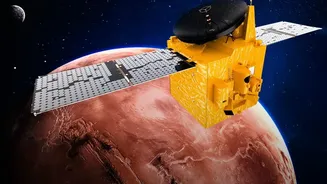
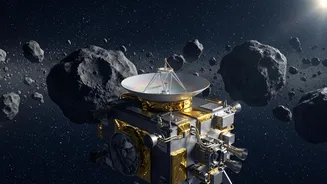
by the Gulf nation. The startup is responsible for developing the spacecraft bus—the main body and support system of the probe—as well as the mission software, onboard computer, and power systems designed to withstand the harsh environment of deep space. The collaboration is part of the 'Emirates Mission to the Asteroid Belt' (EMA), a multi-billion-kilometre journey to explore seven different asteroids. The probe's systems, developed with engineering teams in Thiruvananthapuram and Abu Dhabi, were recently unveiled, signalling a key milestone for the mission and a significant achievement for Indian technological enterprise.
The Target: A Mysterious 'Red' Asteroid
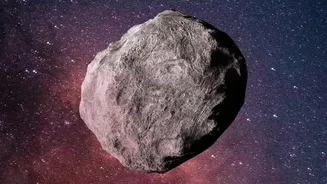
The mission's ultimate destination, 269 Justitia, is no ordinary space rock. Located in the main asteroid belt between Mars and Jupiter, this 58-kilometre-wide asteroid is one of the reddest objects known in that region. Its unusual colour suggests it is not native to its current location. Scientists believe Justitia may have originated in the frigid outer reaches of the Solar System, in the Kuiper Belt beyond Neptune, before migrating inwards. Its surface is thought to be rich in complex organic compounds called tholins, which could hold clues about the early distribution of water and life's building blocks in our cosmic neighbourhood. Exploring Justitia offers a rare shortcut—a chance to study pristine material from the edge of the Solar System without undertaking a decades-long journey to get there.
A Five-Billion-Kilometre Journey
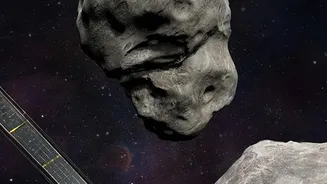
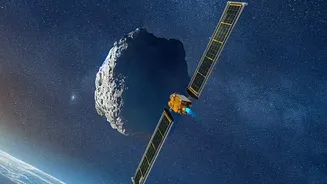
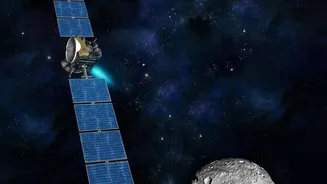
The probe built with HEX20's technology will ride aboard a larger mothership, the MBR Explorer. Scheduled for launch in March 2028, the explorer will embark on a five-billion-kilometre trek that will take over eight years. Using a series of gravity-assist manoeuvres around Venus, Earth, and Mars, the spacecraft will navigate through the asteroid belt, flying past six other asteroids before its final rendezvous. Upon reaching 269 Justitia in early 2036, the MBR Explorer will spend months studying it from orbit before releasing the HEX20-supported probe. This smaller craft will then begin an autonomous descent to the asteroid's surface. While it is designed as an impactor and not expected to survive the landing, it will capture and transmit invaluable close-up images during its final moments, potentially revealing details of the asteroid's composition that are invisible from orbit.
Fueling India's Private Space Ambitions
HEX20's involvement in the Emirates' mission is a powerful symbol of the rapid growth within India's private space ecosystem. Once dominated by the state-run ISRO, the sector has been transformed by policy reforms introduced in 2020. These changes have spurred a boom in entrepreneurship, with the number of Indian space startups growing from just a handful to nearly 400 by mid-2026. Companies like HEX20, which has already launched satellites with SpaceX, and Skyroot Aerospace, which launched the nation's first private orbital rocket, are at the forefront of this new era. These firms are no longer just suppliers to the national agency but are developing their own technologies, securing international contracts, and attracting significant private investment, positioning India to capture a larger share of the projected $44 billion global space economy by 2033.