



The Trigger: A Himalayan Catastrophe
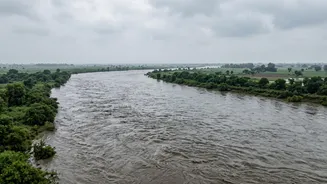
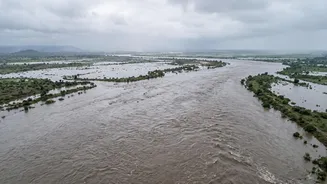
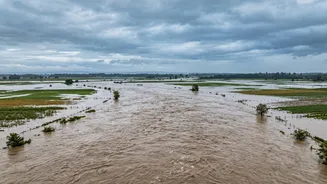
On August 26, a massive and sudden surge of water tore through northern Nepal. The event, suspected to be a glacial lake outburst flood (GLOF) or a landslide-induced dam breach possibly triggered by seismic activity near the Nepal-China border, caused
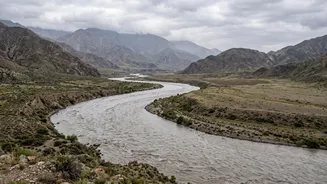
the Bhote Koshi and Trishuli rivers to swell catastrophically. This wall of water devastated villages and infrastructure in Nepal's Rasuwa and Nuwakot districts before continuing its journey downstream, carrying immense destructive potential.
The River Connection: A Shared Lifeline and Risk
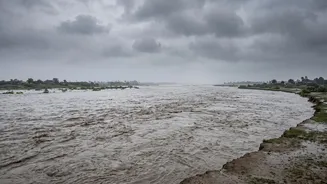
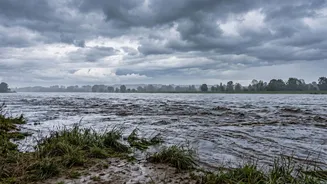
The primary reason northern India is on alert is because it shares a vast and interconnected river system with Nepal. The Trishuli river, which was engorged by the flash flood, is a major tributary of the Narayani river in Nepal. This same Narayani river flows across the border into India, where it is known as the Gandak. It courses through large parts of Uttar Pradesh and Bihar, making districts like Kushinagar, Maharajganj, West Champaran, and Gopalganj directly vulnerable to what happens upstream. Any significant volume of water that enters the system in Nepal will inevitably travel downstream, threatening Indian plains.
The Response: A Race Against the Current
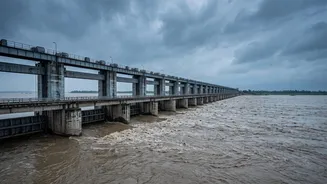
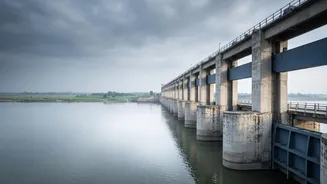
Learning from past tragedies, Indian authorities have activated a well-established protocol. The Union Home Minister has spoken with the Chief Ministers of Bihar and Uttar Pradesh, assuring central support. The Central Water Commission (CWC) issued warnings, prompting state governments to act swiftly. In Bihar and UP, authorities began evacuating thousands of people from low-lying riverside villages. To manage the expected surge, all 36 gates of the Gandak Barrage at Valmikinagar on the India-Nepal border were opened to allow for the safe passage of water. Multiple teams of the National Disaster Response Force (NDRF) have been deployed to the vulnerable districts as a precautionary measure.
A History of Shared Disasters
This cautious approach is rooted in a history of devastating cross-border floods. Many of North Bihar's rivers, including the Kosi and Gandak, originate in the Himalayas in Nepal. This makes the region one of the most flood-prone in India. While this week's alert is for the Gandak basin, the memory of the 2008 Kosi flood looms large. In that event, a breach in the Kosi embankment upstream in Nepal led to a catastrophic flood in Bihar that displaced millions. That disaster underscored the critical need for cross-border cooperation and robust early warning systems, which are now being put to the test.
The Indo-Nepal Warning System
The current state of preparedness is a direct result of bilateral cooperation between India and Nepal. The two countries have a three-tier mechanism to cooperate on water resources, which includes sharing hydrological and meteorological data. This system allows Indian authorities to receive crucial information about river flows and rainfall in Nepal, providing a vital window of time to warn and evacuate downstream populations. The alerts that went out across Bihar and UP were possible because this data-sharing system functioned as intended, translating information from Nepal into life-saving action on the ground in India.