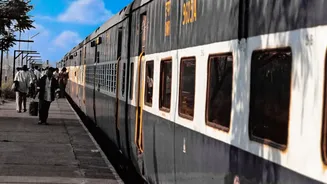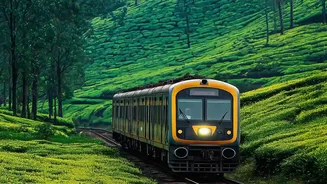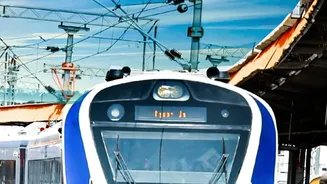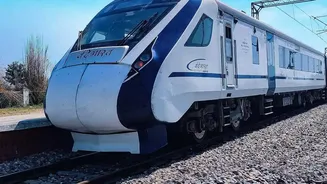





India’s Vande Bharat Express trains are marketed as a premium travel experience. But a recent flurry of social media posts from passengers on the new Bengaluru-Goa route is sparking a debate about whether the food service lives up to the hype.
The Social Media Discussion
The conversation
around the food quality on the Vande Bharat Express is not a new phenomenon, but recent discussions have brought it back into the spotlight. Across various social media platforms, passengers have been sharing their culinary experiences, creating a mixed but vocal feedback loop. While the headline focuses on the Bengaluru-Goa route, the debate is much wider, encompassing numerous Vande Bharat services across the country. Complaints often surface regarding meals being 'pathetic', stale, or not matching the quality promised during inaugural runs. In one widely circulated incident, a passenger on a Varanasi-bound train posted a video of fellow travellers asking staff to take back food trays due to a foul smell from the meals. In another case, a passenger on the Secunderabad-Visakhapatnam service shared a video showing an excessive amount of oil being squeezed from a fried vada. These viral moments tend to amplify concerns and raise questions about consistency.
Praise Amidst the Criticism
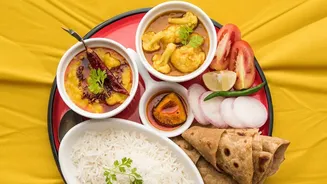
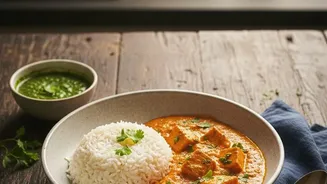
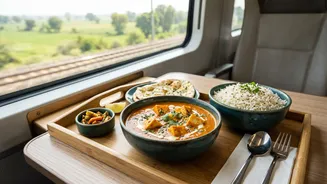
It is important to note, however, that the feedback is not universally negative. In fact, the inaugural run of the Bengaluru-Goa Vande Bharat saw a vlogger praise the meal provided by the popular South Indian restaurant chain A2B (Adyar Ananda Bhavan). The meal, which included paneer curry, puran poli, and quality rice, was described as 'absolutely fantastic'. Other passengers on the same journey echoed this positive sentiment, specifically complimenting the taste of the paneer and rice. Similarly, another traveller sparked a positive discussion by comparing a Vande Bharat breakfast favorably to a meal served on an international flight, leading to comments about how Indian Railways' catering has improved over time. This highlights a significant disparity in passenger experiences, where some laud the service while others are left deeply disappointed.
IRCTC's Response and Action
The Indian Railway Catering and Tourism Corporation (IRCTC), which manages the catering services, has been responsive to these complaints. In several instances, the official IRCTC social media handles have replied directly to passengers, apologising for the unsatisfactory experience and assuring them that the matter is being taken seriously. These responses are often followed by concrete actions. For example, following complaints of stale food on a Varanasi-bound train, IRCTC imposed a penalty on the service provider, disengaged the staff responsible, and promised to strengthen on-board monitoring. In a more severe case involving a worm found in a meal on the Patna-Tatanagar service, Railways imposed a hefty fine of ₹50 lakh on the service provider and terminated their contract, while IRCTC itself was fined ₹10 lakh. When a politician complained of curdled milk, IRCTC clarified that the product was from an approved brand and within its expiry date, but acknowledged that the handling was improper and reprimanded the staff.
The Premium Promise vs. Reality
The Vande Bharat Express was launched as a symbol of modern Indian Railways, with higher fares that create an expectation of superior service, from speed and comfort to catering. This is the crux of the issue: passengers paying a premium feel that the food should consistently be of a higher standard. Incidents of poor food quality are seen as a betrayal of this promise, damaging the brand image of what is considered a flagship service. Commentators and passenger associations have pointed out that while IRCTC has implemented multi-layered monitoring systems, including AI-powered CCTV in base kitchens and sample testing, lapses in the final stages of service can undo all the backend quality control. The recurring nature of these complaints suggests that maintaining consistent quality across a vast network and multiple third-party vendors remains a significant operational challenge for Indian Railways.