






A New Frontier Opens
For decades, the Indian space programme was synonymous with the Indian Space Research Organisation (ISRO). But a seismic shift is underway, catalysed by the landmark Indian Space Policy 2023. This policy officially unlocked the sector for private companies,
or Non-Governmental Entities (NGEs), empowering them to undertake end-to-end space activities. Previously confined to being component suppliers for ISRO, these firms can now design, build, launch, and operate their own space missions. To oversee this new era, the government established the Indian National Space Promotion and Authorisation Centre (IN-SPACe) as a single-window regulator and promoter, designed to create a predictable and supportive framework for this burgeoning commercial industry. This move was a deliberate signal: the government wants private innovation to help propel India's space ambitions forward, building a flourishing commercial presence in space.
The Playbook for Frugal Engineering
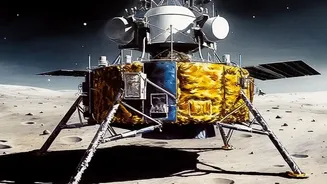
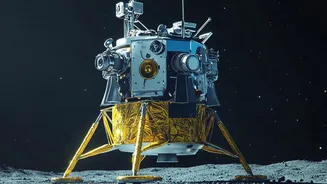
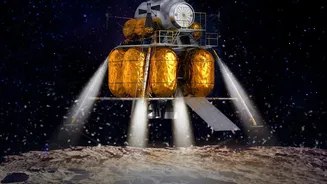
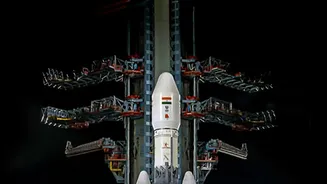
The incredible success of missions like Chandrayaan-3, which landed on the moon for an estimated $74 million, has become a global case study in 'frugal engineering'. Indian startups are now adopting this cost-effective playbook and blending it with agile private-sector methodologies. A core principle is to avoid reinventing the wheel. Instead of designing everything from scratch, engineers heavily reuse proven, flight-tested components and rocket technologies, which dramatically reduces expensive and time-consuming testing. Another key strategy is miniaturisation. By building smaller, lightweight landers and rovers, startups can use smaller, cheaper launch vehicles. Furthermore, intensive computer simulations allow engineers to test thousands of failure scenarios virtually, identifying and solving problems long before building costly physical prototypes. This culture of relentless simplification and optimisation, forged over decades by ISRO under resource constraints, is now the foundational competitive advantage for India's private space players.
Pioneers of the Private Moonshot
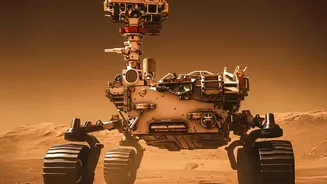
Long before the recent policy changes, one Bengaluru-based startup dared to dream of the moon. TeamIndus, a name that became synonymous with private Indian space ambition, was formed in 2010 to compete for the Google Lunar XPRIZE. The goal was to land a privately funded rover on the moon, travel 500 metres, and transmit high-definition images back to Earth. The team, comprising professionals from diverse fields, managed to secure a launch contract with ISRO's commercial arm and designed one of the lightest lunar rovers ever conceived. Though the competition ended in 2018 without a winner and TeamIndus faced its own set of financial and contractual hurdles, its journey was invaluable. It demonstrated to an entire generation of engineers and investors that a private Indian moon mission was not science fiction but an achievable engineering challenge, laying the psychological and technical groundwork for the startups that followed.
Building the 'Taxi Service' to Space
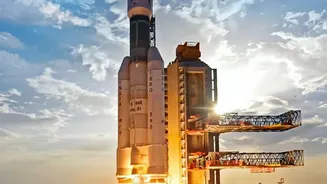
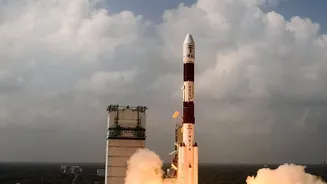
A rover, no matter how advanced, is useless without a ride to its destination. This is where companies like Skyroot Aerospace are proving to be critical enablers. The Hyderabad-based startup recently made history with the successful orbital launch of its Vikram-1 rocket, marking a milestone for India's private sector. Skyroot's vision is to become a 'cab service to space,' offering frequent, dedicated launches for smaller satellites and payloads. To achieve this at a low cost, the company has embraced cutting-edge manufacturing techniques. Its Raman engines are 3D-printed, a process that significantly reduces production time and complexity. The rocket's body is constructed from lightweight carbon composites, making it cheaper and faster to build than traditional rockets. By creating an affordable and accessible launch service, Skyroot is solving a major bottleneck for the entire ecosystem, making it commercially viable for other startups to plan their lunar payload missions.
An Ecosystem of Innovation
The new space economy extends far beyond just launchers and rovers. A whole ecosystem of startups is emerging to build the sophisticated payloads these missions will carry. For example, Hyderabad's Cosmoserve Space is developing a robotic arm demonstrator, a key technology for future applications like satellite servicing and debris removal. Bengaluru-based Grahaa Space is developing nanosatellites for tasks like monitoring solar radiation. The payloads on Skyroot's first successful mission even included an international component from a German firm, showcasing the global appeal of India's low-cost launch capabilities. This diversification shows a maturing market where startups are not just focused on the big-ticket items of landing and roving, but are also building the specialised scientific and commercial tools that will define the future of lunar exploration and industry.