







Beyond The Basics: What Is Multi-Omics?
You’ve probably heard of genomics, which looks at your DNA. But that’s only one piece of the puzzle. Multi-omics is a revolutionary approach that combines information from multiple biological layers to create a complete, dynamic picture of your health.
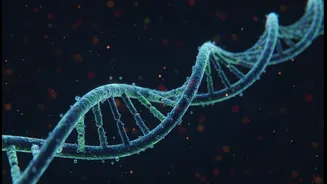
Think of it like this: if your DNA (genomics) is the master blueprint for a building, the other 'omes' show how that building is actually functioning in real-time. Transcriptomics shows which parts of the blueprint are being actively used. Proteomics looks at the proteins, the actual workers and materials constructing and maintaining the building. And metabolomics measures the energy and waste products, showing how efficient the whole operation is. By layering all this data together, scientists get an incredibly detailed and holistic view of what’s happening inside your cells at any given moment.
Why Our Muscles Hold The Key
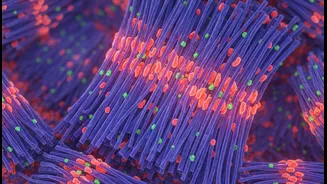
So, where do you look to get the best snapshot of your fitness? Scientists are focusing on skeletal muscle. Your muscles aren't just for lifting, running, and moving; they are the largest organ in your body and act as a massive communication hub. When you exercise, your muscles release molecules that travel throughout your bloodstream, influencing everything from your metabolism and inflammation levels to the health of other organs. This makes skeletal muscle an ideal window into the body's response to physical activity. By analyzing muscle tissue, researchers can see precisely how your body adapts to different types of training, what it uses for fuel, and where its strengths and weaknesses lie. It’s like having a direct conversation with your body about what it needs to perform better.
Your Future Fitness Blueprint
This is where theory gets practical and exciting. By applying multi-omics to your muscles, the one-size-fits-all fitness model becomes obsolete. Instead, you could get a truly personalized fitness blueprint. New fields like 'enduromics' and 'resistomics' are emerging to do just that. Imagine finding out that your muscle-fibre composition and metabolic profile make you exceptionally suited for endurance sports like running marathons, or that you have a genetic advantage in power and strength for activities like weightlifting. This analysis could also reveal how your body responds to nutrients, allowing for a perfectly tailored diet to maximize energy and muscle repair. Furthermore, it could identify molecular signatures that suggest a higher risk for certain injuries, enabling you to build a pre-emptive strengthening and mobility routine to stay healthy and active for longer.
From The Lab To Your Living Room
This might sound like science fiction, but it's closer than you think. Multi-omics analysis is already being used by elite athletes and in large-scale research studies, like the Molecular Transducers of Physical Activity Consortium (MoTrPaT), to decode the benefits of exercise. The challenge now is making this technology accessible and affordable for everyone. The next wave of innovation will likely involve integrating this deep biological data with the wearable technology many of us already use. Picture a future where your smartwatch or fitness tracker doesn't just count your steps and heart rate, but also gives you feedback based on your unique molecular profile, suggesting when to push harder, when to rest, and exactly what your body needs to recover. This would transform fitness from a series of prescribed workouts into a dynamic, responsive partnership with your own body.