

The Problem with the 'Goldilocks' Analogy
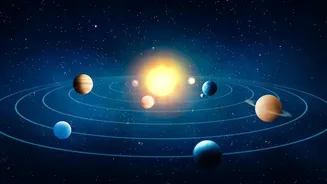
The habitable zone is a useful first filter for astronomers, defining the orbital range where a planet's surface could support liquid water, a key ingredient for life as we know it. If a planet is too close to its star, its oceans would boil away; too far,
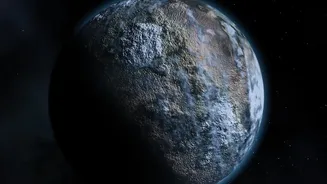
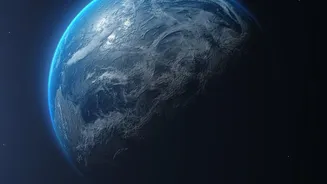
and they would freeze solid. This has led to the popular 'Goldilocks' nickname, suggesting everything is 'just right.' However, this simple concept only considers the distance from the star. Many other critical factors determine whether a planet with a seemingly perfect location is actually a paradise or a barren wasteland. In reality, being in the zone is just the first step on a long checklist for habitability.
An Unfriendly Atmosphere
A planet's atmosphere is a crucial life-support system. It needs to have the right composition and pressure. An atmosphere that is too thin, like Mars, cannot effectively trap heat or shield the surface from harmful radiation. On the other hand, an atmosphere that is too thick and full of greenhouse gases can lead to a runaway greenhouse effect, creating scorching temperatures like those on Venus. Even if a planet forms with a perfect atmosphere, it must be able to hold onto it. A planet that is too small, for example, may not have enough gravity to prevent its atmosphere from being stripped away into space.
A Volatile Star
The type of star a planet orbits matters immensely. About three-quarters of the stars in our galaxy are red dwarfs. While they have extremely long lifespans, they are notoriously volatile, especially in their youth. These stars can unleash powerful flares and coronal mass ejections that are far more intense than our Sun's. A planet orbiting a young red dwarf could have its atmosphere blasted away and its surface sterilized by intense radiation, making it difficult for life to get a foothold. Even more stable, Sun-like stars change over time, getting brighter as they age, which can shift the habitable zone and bake a once-temperate world.
The Missing Magnetic Shield
Earth is protected by a powerful magnetic field, an invisible shield that deflects the most harmful charged particles from the solar wind and cosmic rays. Without this magnetosphere, the constant barrage of radiation would not only be lethal to surface life but could also strip away the planet's atmosphere over millions of years. Mars is a cautionary tale; it once had a thicker atmosphere and liquid water but lost them after its internal dynamo shut down and its magnetic field vanished. Therefore, a rocky planet in the habitable zone without a protective magnetic field is likely to be an airless, irradiated rock.
Rotation and a Rocky Foundation
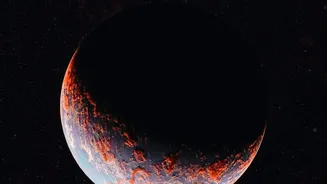
How a planet spins also plays a role. Many planets orbiting close to red dwarfs are expected to be 'tidally locked,' meaning one side always faces the star while the other is in permanent darkness. This creates a world of extreme temperatures, with a scorching hot dayside and a frozen nightside. While a thick enough atmosphere could potentially circulate heat, the conditions would still be challenging. Furthermore, the simple definition of a habitable zone assumes a rocky planet. Many planets discovered in this zone are actually gas giants or 'mini-Neptunes,' which lack a solid surface for life to emerge upon.