





An Ambitious Green Target
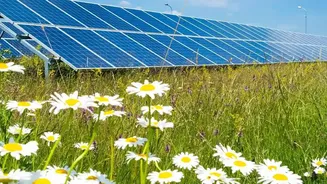
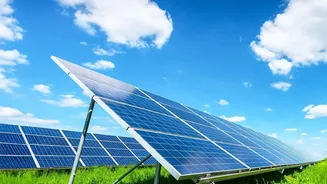
India has set one of the world's most ambitious renewable energy targets, aiming for 500 gigawatts (GW) of non-fossil fuel capacity by 2030. As of mid-2026, the country's solar installed capacity had already soared to over 164 GW, making it the third-largest
solar power producer globally. This rapid expansion is central to India's climate goals and its strategy to power a growing economy. However, building generation capacity is only half the battle. The other, more complex half is ensuring that the electricity can actually be used when and where it's needed.
The Problem of Curtailment
The heart of the issue is a practice called "curtailment." This is when grid operators intentionally instruct a solar (or wind) power plant to reduce its output or shut down completely, even when the sun is shining brightly. This isn't due to a fault at the plant; it's a measure to protect the electricity grid from being overloaded. In the second quarter of 2026 alone, India curtailed over 8,100 gigawatt-hours (GWh) of solar power to maintain grid security. In the 15 months leading up to September 2026, nearly 11 terawatt-hours of solar generation were wasted — enough to power around 10 million homes. This represents a significant loss of clean energy and revenue for power producers.
A Grid Built for a Different Era
A primary cause of curtailment is that India's power grid was designed for predictable, centralised fossil fuel plants, not for the fluctuating nature of renewables. Solar power generation peaks at midday, but often the highest consumer demand is in the evening, after sunset. This mismatch creates what is known as the "duck curve," where a surplus of solar power floods the grid during the afternoon, followed by a steep ramp-up in demand that conventional power sources must rush to meet in the evening. The existing grid infrastructure often lacks the flexibility and capacity to manage these sharp swings, forcing operators to discard excess solar power to prevent instability and blackouts.
Transmission Bottlenecks
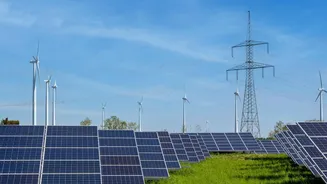
Another major hurdle is the lag between building power plants and the transmission lines needed to carry their electricity. Solar farms can be constructed in about two years, but new high-voltage transmission lines can take three years or more due to challenges in land acquisition and obtaining clearances. This creates bottlenecks, particularly in renewable-rich states like Rajasthan and Gujarat, which host a large share of India's solar capacity. The power is generated, but the 'highways' to transport it to demand centres in other states are congested or incomplete. Projects like the Green Energy Corridor are underway to address this, but they have faced delays.
The Economics of Distribution
The financial health of state-owned power distribution companies, or Discoms, also plays a role. For years, many Discoms have been financially strained, though recent government reforms have led to some improvements. Historically, their financial instability has made them hesitant to sign long-term agreements for new renewable power, and they sometimes prioritise cheaper conventional power to manage costs, even when clean energy is available. Although the financial situation is improving, the legacy of debt and operational inefficiencies continues to impact the sector's ability to smoothly integrate large volumes of renewables.
The Missing Link: Energy Storage
The most direct solution to solar's intermittency is large-scale energy storage, primarily through batteries. Storage systems can absorb the excess solar power generated at noon and release it during the evening peak, smoothing out the supply and making renewable energy available 24/7. However, India's grid-scale battery capacity is still nascent. As of mid-2026, the country had only about 3 GW of battery storage against a projected need of roughly 74 GW by 2032 to support its renewable targets. Without cost-effective storage at scale, the problem of wasted midday solar power will persist.