

India's Next Interplanetary Frontier
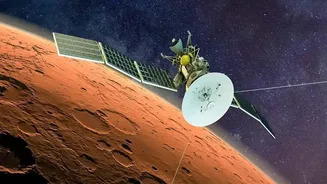
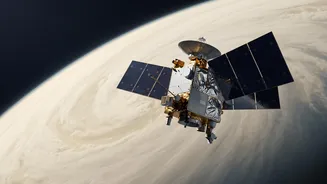
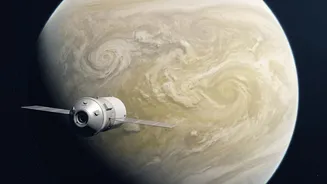
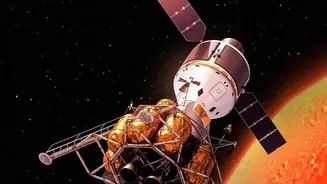
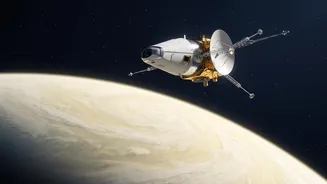
Following the historic successes of the Chandrayaan missions to the Moon and the Mangalyaan mission to Mars, ISRO has its sights set on Venus. The Shukrayaan orbiter represents India's first dedicated mission to the second planet from the Sun, a significant
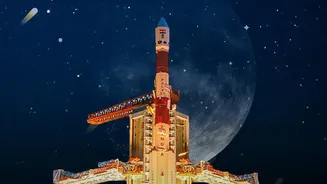
leap in the nation's deep-space exploration capabilities. Formally approved by the Indian government, the mission is a point of national pride and a major scientific undertaking. The spacecraft is currently scheduled for a March 2028 launch aboard the powerful LVM-3 rocket, the same launch vehicle that successfully carried Chandrayaan-3. After a journey of about four months, it will enter a large elliptical orbit around Venus, ready to begin its scientific investigations.
The Mysteries of a Hellish World
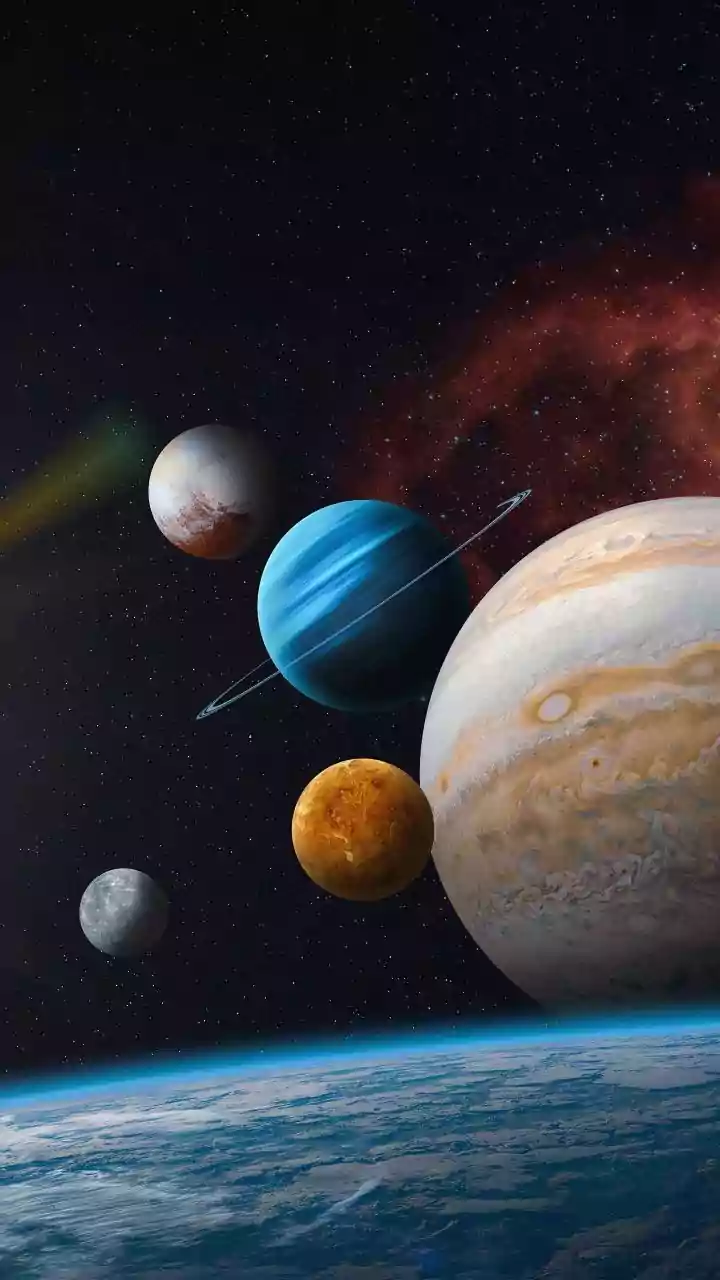
Venus is a planet of extreme contrasts. It's similar in size and mass to Earth, yet it's a hellish world with a runaway greenhouse effect. The surface temperature hovers around a scorching 460°C, hot enough to melt lead, and the atmospheric pressure is over 90 times that of Earth's. The planet is perpetually shrouded in thick, opaque clouds of sulfuric acid, which hide its surface from view. Scientists are deeply interested in understanding how two planets that likely started so similarly could have such divergent evolutionary paths. Studying Venus offers a natural laboratory for climate science, providing a cautionary tale about how dramatically a planet's climate can change.
A Toolkit for a Toxic Sky
To peer through Venus's thick atmospheric veil, Shukrayaan will be equipped with a sophisticated suite of nineteen scientific instruments. The flagship instrument is a high-resolution Synthetic Aperture Radar (SAR), an improved version of the one used on Chandrayaan-2. This radar can pierce through the dense clouds to map the planet's surface with unprecedented detail, revealing geological features and volcanic activity. In a world-first for Venus exploration, the orbiter will also carry a ground-penetrating radar to study the planet's shallow subsurface, offering insights into its geological layers and history. Other instruments will focus on the atmosphere itself. A Venus Thermal Camera aims to understand cloud dynamics by mapping thermal emissions. A range of spectrometers will analyze the chemical composition of the atmosphere across different wavelengths.
Decoding the Cloud Dynamics
Investigating Venusian 'cloud dynamics' is a central goal of the mission. This involves studying the structure, composition, and movement of the planet’s thick cloud layers. These clouds are a key driver of the planet's extreme climate. International collaborations are vital to this effort. The VIRAL (Venus Infrared Atmospheric Gases Linker) instrument, co-developed with Russia and France, will analyze atmospheric gases. Sweden is contributing the Venusian Neutrals Analyser (VNA), designed to study how the solar wind interacts with the planet's atmosphere, a process crucial for understanding atmospheric escape. These tools will work together to create a holistic picture of Venus's weather systems, chemical cycles, and the forces that shape its toxic, super-rotating atmosphere.
The Road Ahead and Global Collaboration
The journey to Venus is complex. Upon arrival, ISRO plans to use a technique called aerobraking for the first time. This involves using the friction from the planet’s upper atmosphere to gradually slow the spacecraft and lower its orbit into the ideal position for scientific observations, saving precious fuel. The initial 500 km by 60,000 km orbit will be carefully adjusted to a more circular 200 km by 600 km science orbit. The mission underscores ISRO’s growing role as a leader in space exploration, attracting partnerships with space agencies from Sweden, Russia, France, and Germany. By combining its own advanced technology with international expertise, India is poised to deliver groundbreaking insights into our enigmatic planetary neighbour.