



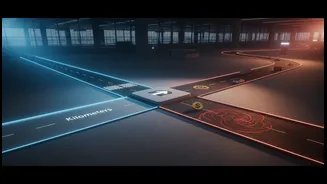


The Last-Mile Conundrum
In urban planning, 'last-mile connectivity' refers to the final leg of a person's journey, from a public transport hub like a metro station to their ultimate destination. For a growing number of commuters in cities like Delhi, Bengaluru, and Hyderabad,
it also includes the 'first mile'—the journey from home to the station. While some can walk or take a short auto-ride, many who live in suburbs or areas poorly serviced by feeder buses find that driving their personal car or two-wheeler to the nearest metro station is their only viable option. This dependency on private vehicles is a significant hurdle. Studies have shown that poor last-mile connectivity is a primary reason why metro ridership in some cities falls short of projections. A study on the Delhi Metro, for instance, found ridership was less than 52% of what was expected, with connectivity issues being a major culprit.
A Tale of Two Commutes
Imagine two commuters. One lives 800 metres from a metro station. Their daily journey is a predictable, stress-free walk to the station, followed by a comfortable ride. The second commuter lives ten kilometres away. Their day starts with a frustrating search for a safe place to park their vehicle near the same station. They circle crowded lots, navigate illegally parked cars on approach roads, and worry about their vehicle being towed or damaged. This tale isn't fictional; it's the daily reality for a huge segment of the urban population. Research from Bengaluru highlights this gap, with one study finding that 30% of commuters who currently park and ride would stop using the metro altogether if parking wasn't available. This indicates that for many, parking isn't a mere convenience but a fundamental requirement for using public transport.
Parking: The Forgotten Infrastructure
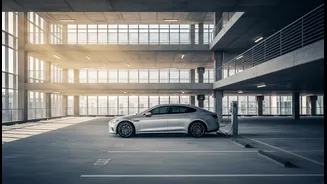
While thousands of crores are rightfully invested in laying tracks and building state-of-the-art stations, the supporting infrastructure for parking often seems like an afterthought. Many metro stations, especially on older or land-constrained lines, were built with little to no dedicated parking. Even where lots exist, they are frequently saturated, forcing commuters to spill out onto surrounding roads and public spaces, which worsens traffic congestion for everyone. The core of the issue is that India’s urban transport policy has historically aimed to 'move people, not vehicles'. However, the reality is that a large percentage of households own private vehicles, and until public transport is seamlessly integrated with first- and last-mile options, cars and two-wheelers will remain a crucial part of the commute for many. The failure to plan for this creates a vicious cycle: inadequate parking pushes people to drive the entire distance, undermining the very purpose of the metro system.
The High Cost of Inconvenience
The lack of adequate and affordable parking does more than just frustrate commuters; it has tangible economic and environmental costs. Commuters often spend more on the last-mile connection—whether via expensive auto rides or the operational cost of their own vehicle—than on the actual metro fare itself. This erodes the affordability that is supposed to be a key benefit of public transport. Furthermore, the time spent searching for a parking spot is a hidden productivity loss. When potential metro users decide it's easier to just drive to their final destination, they contribute to the very traffic congestion and pollution that metro systems are designed to alleviate. This paradox was highlighted in a study that found 70% of potential metro users in Bengaluru avoided the system due to inconvenient access.
Smarter Solutions on the Horizon
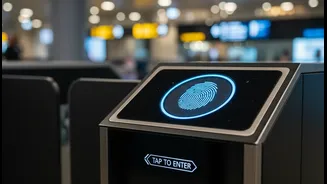
The good news is that authorities and tech companies are beginning to address the problem. The push for Transit-Oriented Development (TOD) in policy aims to create better-integrated facilities around transit hubs. In cities like Delhi and Mumbai, multi-level and automated tower parking systems are being explored to maximise capacity on small land parcels. Technology is also playing a key role, with app-based services that allow commuters to find and book parking spots in advance. Some initiatives, like one at Noida's Sector 51 station, are digitising entry, exit, and payments to reduce delays and chaos. These solutions, combined with more reliable feeder bus services and safer infrastructure for walking and cycling, represent a more holistic approach to urban mobility.