





The New Frontier is Inflatable
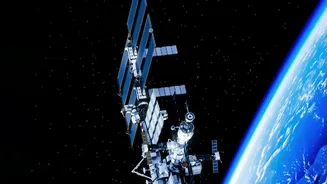
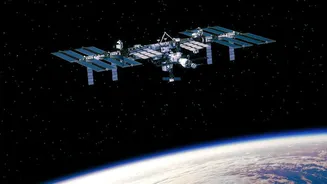
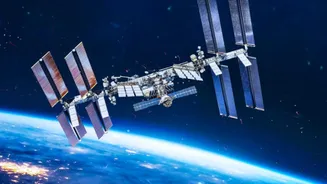
When you think of a space station, you probably picture rigid, metal cylinders assembled piece by piece in orbit, like the International Space Station (ISS). But the future of orbital habitats looks very different. Imagine a module that launches in a compressed
state, fitting snugly inside a rocket fairing, and then expands to the size of a multi-story building once in space. This is the promise of inflatable, or expandable, habitats. These are not simple balloons; they are sophisticated structures made from multiple layers of high-tech, flexible materials. The outer layers, often made of durable fabrics like Vectran or Kevlar, are incredibly strong and designed to withstand the internal pressure needed for a breathable atmosphere. They also provide protection against micrometeoroid impacts and the extreme temperatures of space. Inside, a bladder layer ensures the habitat remains airtight. This design approach, pioneered by companies like the now-defunct Bigelow Aerospace, whose BEAM module has been attached to the ISS for years, is now being advanced by a new wave of commercial players.
More Space, Less Mass
The primary advantage of inflatable modules is their incredible efficiency. Compared to traditional rigid structures, they offer a much greater volume of living and working space for a given mass. This superior volume-to-mass ratio is a game-changer for space exploration. Launching anything into orbit is expensive, with costs dictated heavily by weight and size. By packing a large habitat into a smaller, lighter package, companies can significantly reduce launch costs. Once deployed, these modules provide expansive interiors that can be configured for a variety of uses, from crew quarters and exercise areas to state-of-the-art laboratories. This flexibility is crucial as commercial space stations aim to serve a diverse clientele, including national space agencies, private researchers, and potentially even tourists.
The Companies Building Our Future
Several companies are racing to build the successors to the ISS, which is scheduled for retirement around 2030. Sierra Space is a major player with its Large Integrated Flexible Environment (LIFE) habitat. The LIFE module is a three-story structure designed to comfortably house four astronauts, with dedicated space for science labs, robotics, and even a garden. Following a series of successful full-scale burst pressure tests, Sierra Space is targeting a launch for a pathfinder version of LIFE as soon as late 2026. These modules are planned as key components of Orbital Reef, a commercial space station concept being developed with Blue Origin. Another key company, Axiom Space, is building the world's first commercial space station by initially attaching its modules to the ISS before they detach to fly independently. While its initial modules are rigid, Axiom has also been contracted to manufacture an inflatable module designed as a media and entertainment venue, showcasing the versatility of the technology.
A Laboratory in the Stars
The transition to commercial stations, enabled by technologies like inflatable modules, is set to democratise access to microgravity research. For decades, the ISS has been a unique lab for studying phenomena that are masked by gravity on Earth. In weightlessness, scientists can grow more perfect crystals for semiconductors, develop new alloys, and study fluid dynamics in ways that are impossible on the ground. The low-gravity environment is also a powerful tool for biomedical and pharmaceutical research, offering new insights into cell biology, disease progression, and drug development. Commercial stations like those planned by Sierra Space and Axiom are being designed from the ground up to support these activities. They will offer dedicated research facilities to clients ranging from universities to pharmaceutical companies, creating a thriving economy in low-Earth orbit. The larger volumes offered by inflatable modules mean more room for experiments, manufacturing facilities, and the equipment needed to push the boundaries of science.