



The Universe in a Haystack
Modern space exploration faces a paradoxical problem: success. Telescopes, probes, and satellites send back a firehose of data, with archives now exceeding 150 petabytes. For decades, scientific discovery involved researchers meticulously examining observations.
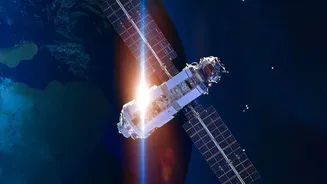
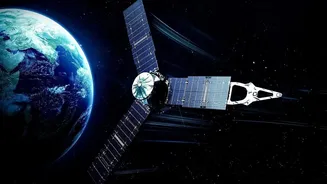
But the sheer volume of information from missions like the James Webb Space Telescope and various Earth-observing satellites has overwhelmed traditional methods. Finding a key discovery, like a distant exoplanet or the faint signal of a geological change, has become like searching for a specific needle in a haystack that grows larger every second. This data deluge means that some discoveries might remain hidden for years, or be missed entirely, simply because there aren't enough human hours to analyze everything.
Enter the AI Co-Scientist
To solve this, NASA is embracing artificial intelligence not as a replacement for human ingenuity, but as a powerful partner. As part of a whole-of-government effort called the Genesis Mission, NASA is developing and deploying sophisticated AI tools. These are primarily machine learning models trained on vast archives of existing data. They learn to spot patterns, anomalies, and features that would be time-consuming or impossible for humans to find. For instance, the ExoMiner deep learning system has already identified over 300 new exoplanets by analyzing old data from the Kepler telescope. These AI systems act as a first-pass filter, flagging interesting events or objects for human scientists to investigate further, dramatically narrowing the search space.
From Data Points to Discovery
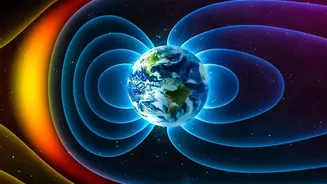
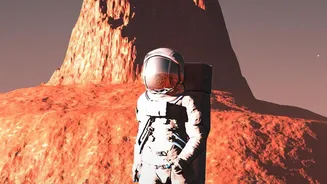
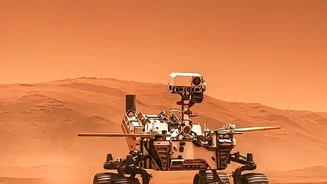
The applications of this AI-driven approach are broad. On Mars, the Perseverance rover uses AI to navigate the terrain autonomously, selecting rocks for chemical analysis without direct human input. For Earth science, NASA has collaborated with IBM on foundation models like Prithvi, which can analyze satellite imagery to track deforestation, map floodwater, and identify the aftermath of wildfires. Other AI tools are being developed to help forecast space weather, which is crucial for protecting satellites and power grids on Earth. A technology called Dynamic Targeting even allows satellites to make real-time decisions, identifying and focusing on short-lived phenomena like volcanic eruptions without waiting for commands from the ground.
An Open and Collaborative Future
A key part of NASA's strategy is its Open-Source Science Initiative. The agency is committed to making its data, algorithms, and AI models publicly available. This includes tools like the Science Discovery Engine, a centralized search portal that allows anyone to sift through NASA's vast and distributed data archives. By making these powerful tools open source, NASA aims to foster a more inclusive and collaborative scientific community. It allows researchers from any institution, and even citizen scientists, to contribute to the discovery process, potentially bringing diverse perspectives that can lead to unexpected breakthroughs. This collaborative spirit is central to initiatives like the Genesis Mission, which unites expertise from more than 15 federal agencies.