





The Capital of British India
The primary reason for the comparison is historical. From 1772 to 1911, Kolkata, then known as Calcutta, served as the capital of British India. As the administrative headquarters of the East India Company and later the British Raj, the city was the epicentre
of power, politics, and commerce for the entire subcontinent. For over a century, it was considered the second most important city in the British Empire, surpassed only by London itself. This status meant that the British invested heavily in creating an urban landscape that reflected their imperial might, intentionally modelling its grandeur on their own capital.
An Architectural Mirror
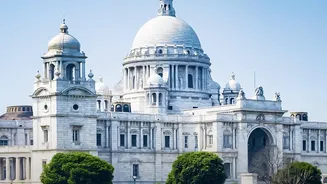
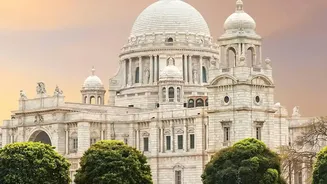
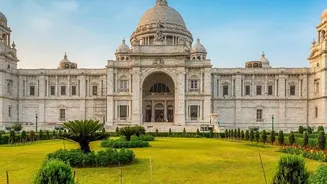
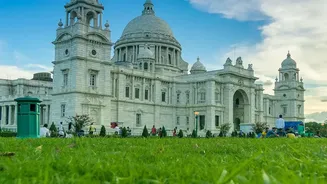
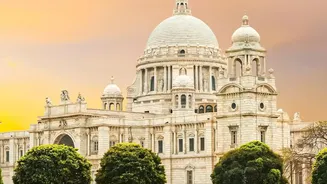
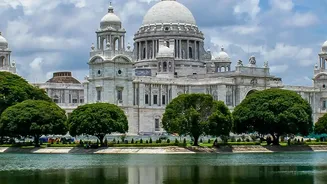
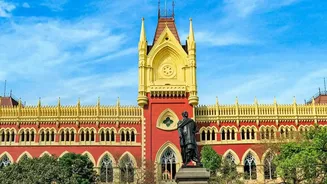
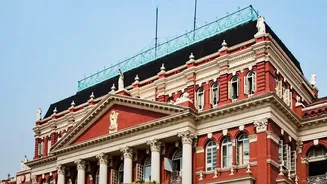
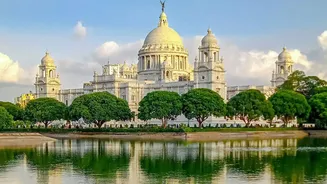
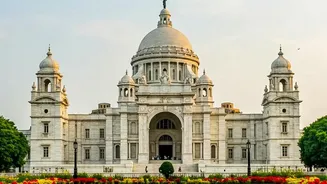
A walk through central Kolkata is like stepping into a different era, with architecture that strongly echoes European styles. The British constructed magnificent buildings in Neoclassical, Gothic Revival, and Victorian styles, which gave parts of the city a distinctly London-like feel. Iconic landmarks such as the Victoria Memorial, a grand white marble monument to Queen Victoria; the Calcutta High Court, designed in a Gothic Revival style; and the General Post Office with its striking dome are all testaments to this colonial architectural legacy. These grand structures were intended to project imperial authority and create a cityscape that could rival any in Europe.
A Tale of Two Rivers
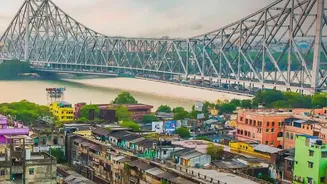
Another striking similarity is the importance of each city's river. Just as London developed along the banks of the Thames, Kolkata's growth is intrinsically linked to the Hooghly River, a major distributary of the Ganges. The Hooghly served as a vital channel for trade and communication, allowing Kolkata to flourish as a bustling port and commercial hub for the East India Company. The ghats and promenades along the river, flanked by colonial-era buildings, create a visual parallel to London's riverside landscape, reinforcing the connection between the two cities.
The Intellectual and Cultural Hub
Beyond buildings and riverbanks, the nickname also stems from a shared cultural and intellectual vibrancy. During the colonial period, Kolkata was the nucleus of education, law, science, and the arts in India. The establishment of universities and cultural institutions fostered a unique fusion of Indian philosophies and European traditions, leading to the Bengal Renaissance. This intellectual ferment, which produced renowned figures like Nobel laureate Rabindranath Tagore, drew comparisons to London's status as a global centre for thought and culture.
Is the Nickname Still Relevant?
Today, the 'London of India' label is viewed with a mix of pride and complexity. While the architectural heritage is undeniable, the name is a reminder of a colonial past. Many residents feel that the city, which officially reverted from Calcutta to its Bengali name Kolkata in 2001, has forged its own unique identity. Nicknames like 'The City of Joy', popularised by Dominique Lapierre's 1985 novel, are often seen as better capturing the spirit and soul of the modern metropolis. While the colonial influence is an inseparable part of its history, Kolkata today is a city that, while preserving its past, is defined by its own rich Bengali culture, resilience, and forward momentum.