






A Visitor from Another Star
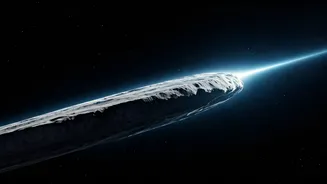
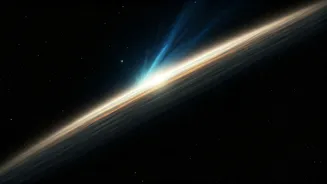
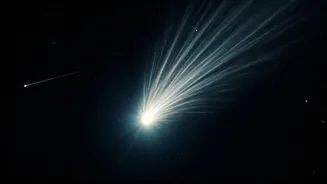
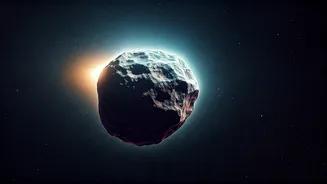
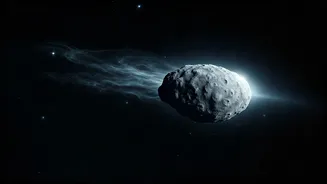
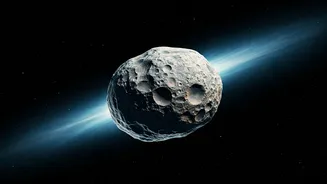
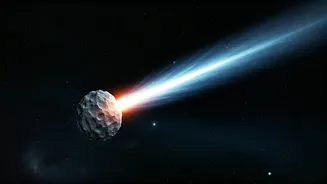
The object causing all the buzz is an interstellar comet named 3I/ATLAS. Discovered in July 2025, it's only the third such object humanity has ever confirmed is visiting from outside our solar system. Unlike the comets we know, which are leftovers from our own
system's formation 4.6 billion years ago, 3I/ATLAS is a tourist. Its high speed and trajectory show that it was born around another star and has been wandering through the Milky Way for billions of years before its brief pass through our cosmic neighbourhood. As it neared our sun, its ancient ices began to vaporise, creating a glowing atmosphere, or coma, that astronomers could study in unprecedented detail. This gave scientists a rare chance to analyse a piece of another planetary system right on our doorstep.
Unlocking Secrets with Webb
So, what's new? The excitement stems from recent findings from the James Webb Space Telescope (JWST). As 3I/ATLAS began its journey away from the sun in late 2025, astronomers pointed the powerful telescope at it to analyse the chemical makeup of its coma. They found a chemical fingerprint unlike anything seen in our own solar system. Specifically, the comet contains an exceptionally high amount of 'heavy water,' where a hydrogen atom is replaced by its heavier version, deuterium. The water ice in 3I/ATLAS has about 30 times more deuterium than any comet from our system. This suggests the comet formed in an extremely cold environment, long ago and far away.
A Cosmic Carbon Clock
The other major clue is its carbon. Webb's instruments detected that 3I/ATLAS has very little of the heavier carbon isotope, carbon-13, compared to the more common carbon-12. The amount of carbon-13 in the galaxy increases over cosmic time, as generations of stars are born, create heavier elements, and then die. Our own solar system is relatively young and therefore richer in carbon-13. The low level of carbon-13 in 3I/ATLAS acts like a clock, suggesting it formed when the galaxy itself was much younger. Based on these chemical clues, scientists estimate the comet could be up to 12 billion years old, potentially predating the formation of our own sun and solar system by billions of years.
Why an Old Comet Matters Now
This isn't just an astronomical curiosity; it's a window into the past of our entire galaxy. Studying an object this old and well-preserved is like finding a fossil from the dawn of the Milky Way. It tells us about the chemical conditions that existed billions of years ago, when the building blocks of planets—and perhaps life—were first forming. By comparing this visitor to our own comets, we can learn more about how unique, or how common, our solar system might be. The presence of prebiotic compounds in such visitors hints at the possibility that the ingredients for life could be widespread throughout the cosmos. The fact that modern telescopes can now analyse these fleeting visitors in such detail is a scientific achievement in itself, turning ancient ice into front-page news.