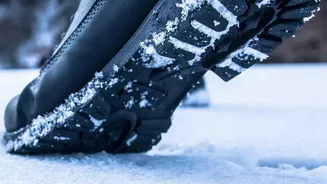







The crisp, cool air of autumn can be invigorating, making it the perfect time for an outdoor run or workout. But as temperatures drop, your trusty running shoes might be hiding a secret: their grip isn't what it used to be. Here’s how to check.
Why Your Grip Fails in the Cold
That secure
feeling you have on warm pavement can become dangerously misleading in the cold. The reason lies in the materials of your shoe's midsole and outsole. Most running shoes use foams like Ethylene Vinyl Acetate (EVA) for cushioning. As temperatures approach freezing, these materials naturally harden and become less flexible. A stiff sole can't conform to the microscopic imperfections of a surface, which is essential for creating friction and grip. The rubber on your outsole also stiffens, reducing its tackiness. A shoe that feels cushioned and forgiving in mild weather can feel hard and unresponsive on a cold day, significantly compromising its ability to hold fast to the ground.
The Concrete Grip Check
Pavement and concrete become significantly more hazardous when cold and damp. For these hard surfaces, your primary concern is the condition of your shoe's tread. Flip your shoes over and perform a visual inspection. Are the grooves, especially in high-impact areas like the outer heel and forefoot, worn down? Bald spots are a major red flag. Good running shoes for wet, cold roads often feature softer rubber compounds and intricate patterns with small slits, known as 'siping', designed to channel water away and maintain contact. If your shoe's outsole is primarily exposed foam instead of durable rubber, its grip on slick surfaces will be minimal. Also, perform a simple flexibility test. Try to bend and twist the shoe. If it feels unusually rigid, the materials have likely hardened from a combination of cold and age, meaning it's time for a replacement.
The Turf Traction Test
Training on artificial turf presents a different challenge. Unlike concrete, where surface area contact is key, grip on turf relies on the ability to bite into the surface. This is especially true when the turf is damp or frosty. Standard running shoes with flat outsoles can slide easily on slick turf fibers. For this environment, you need footwear with more aggressive traction. Look for shoes with 'lugs'—deeper, more pronounced tread patterns similar to what you'd find on a trail running shoe. These lugs are designed to dig into soft surfaces. Some footwear, often called 'Astro' or 'dimple' trainers, have many small, molded studs that provide excellent grip on synthetic grass. If your regular trainers feel slippery, consider investing in a pair of trail runners or turf-specific shoes for your workouts on these surfaces to prevent injury.
Know the Telltale Signs of Wear
Beyond specific surface checks, general wear and tear is a critical indicator of failing grip. Place your shoes on a flat table and view them from behind. Do they lean to one side? An uneven tilt points to a compressed and worn-out midsole, which compromises both stability and the outsole's contact with the ground. Look for wrinkles and creases in the midsole foam; these are signs that the material has lost its ability to absorb shock and rebound effectively. Also, inspect the bond between the upper part of the shoe and the sole. Any separation can let in moisture, which not only leads to cold, uncomfortable feet but can also hasten the breakdown of the shoe's internal structure. Regularly using your shoes helps delay the hardening process, known as hydrolysis, so a pair that has been sitting in the closet for a year might be more brittle than you expect.
When to Add External Grip
If your shoes are in good condition but you're still facing icy patches, consider temporary traction aids. Removable ice cleats or grips with small carbon steel studs can be stretched over your existing shoes to provide a secure bite on ice and packed snow. These are excellent for runners and walkers who encounter variable conditions and need a reliable solution for the most treacherous spots on their route. For less severe conditions, adhesive grip pads or anti-slip sprays can also offer a shortterm boost in traction, though they are not a substitute for shoes with proper tread. These options are best for extending the life of a shoe that is still structurally sound but could use a little extra help on slick days.