







1. World-Building That Breathes
A true spectacle isn't just a collection of stunning shots; it's an immersive world with its own rules, history, and atmosphere. James Cameron is a master of this, spending years developing the ecosystems of Pandora for 'Avatar'. He doesn't just show
us alien flora and fauna; he designs them with a logic that makes the world feel inhabited and real. Similarly, S.S. Rajamouli’s 'Baahubali' films created the kingdom of Mahishmati with such detail—from its architecture to its cultural rituals—that the setting became a character in itself. This deep world-building provides a rich canvas for larger-than-life stories, making the impossible feel plausible and giving audiences a world they want to visit again and again.
2. The Power of Practical Effects
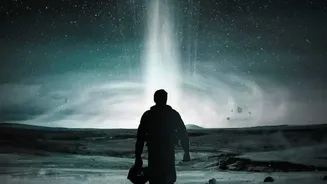
In an age of digital wizardry, some of the most impactful moments are startlingly real. Christopher Nolan is a staunch advocate for practical effects, believing that cameras can tell the difference between reality and CGI. For 'The Dark Knight', he genuinely flipped a truck on a city street. For 'Tenet', he crashed a real Boeing 747. This commitment to tangible reality gives his action sequences a weight and texture that digital effects often struggle to replicate. The actors' reactions are genuine because they are responding to real events, and that authenticity translates directly to the audience. Even S.S. Rajamouli, known for his visual effects, prefers to capture as much as possible in-camera, using CGI to enhance, not replace, reality.
3. An Emotional Core That Connects
Spectacle without story is just noise. Steven Spielberg, arguably the father of the modern blockbuster, understands this better than anyone. 'Jaws' isn't just about a shark; it's about a community’s fear and one man's struggle to protect his family. 'E.T. the Extra-Terrestrial' uses the wonder of an alien visitor to tell a profound story about friendship and loneliness. Spielberg’s genius lies in his ability to anchor jaw-dropping visuals with a deeply human and relatable emotional journey. He ensures that even amidst the most extraordinary events, the audience is invested in the characters, making the spectacle matter on a personal level.
4. Soundscapes That Define a Universe
What we hear is as important as what we see. Legendary filmmakers use sound to build tension, define character, and immerse the audience completely. Think of the iconic, menacing hum of a lightsaber in George Lucas’s 'Star Wars'. Sound designer Ben Burtt created that effect by blending the motor whine of an old film projector with the buzz from a television set. This wasn't just a sound; it was an auditory signature for an entire mythology. Christopher Nolan and composer Hans Zimmer used the Shepard Tone in 'Dunkirk'—a sound illusion of a perpetually rising pitch—to create a relentless sense of anxiety that traps the audience in the soldiers' experience. These auditory worlds are as meticulously crafted as the visuals.
5. Pacing That Commands Attention
Great spectacles are not a constant barrage of action; they are a symphony of tension and release. S.S. Rajamouli is a master of this rhythm, structuring his films to deliver a 'clap-worthy' moment every 10 to 15 minutes. His screenplays follow a structure where major plot points build to a crescendo before resolving, keeping the audience perpetually engaged. This approach, rooted in epic storytelling traditions, ensures the film's energy never sags. It's a calculated pace that respects the audience's attention span, making a three-hour epic feel like a breathless sprint by alternating grand action set-pieces with powerful emotional beats, ensuring viewers are always leaning forward in their seats.