



Ghent, Belgium: Medieval Charm and Modern Art
Often overshadowed by nearby Bruges and Brussels, Ghent offers a more authentic, lived-in feel while sacrificing none of the fairytale charm. This vibrant Flemish university city boasts a pedestrian-friendly core, making it a pleasure to explore on foot.
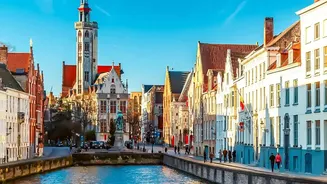
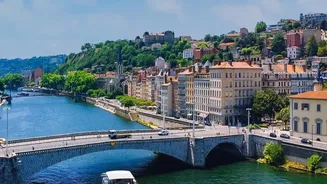
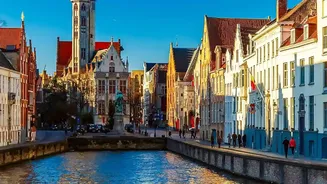
The historic centre is a stunning panorama of medieval and Renaissance architecture, best viewed from the St. Michael's Bridge, from where you can see the city's three iconic towers in a row: St. Nicholas' Church, the UNESCO-listed Belfry, and St. Bavo's Cathedral. The cathedral itself houses a world-renowned masterpiece, the 'Adoration of the Mystic Lamb' by the Van Eyck brothers. For a dose of medieval history, the imposing Gravensteen, or Castle of the Counts, provides a formidable glimpse into the past with its preserved ramparts and eerie torture chambers. Beyond its history, Ghent has a thriving contemporary arts scene, with excellent museums like the MSK (Museum of Fine Arts) and a surprising amount of street art. A boat tour along the canals offers a different perspective on the beautiful guild houses lining the Graslei and Korenlei quays.
Porto, Portugal: Tiles, Wine, and Riverside Views
As Lisbon's moodier, more compact northern sibling, Porto provides a rich cultural tapestry against the backdrop of the Douro River. The city's soul can be found in its visual details, from the iconic blue-and-white 'azulejo' tiles that adorn churches and even the São Bento train station, to the colourful, tumbling houses of the Ribeira district, a UNESCO World Heritage site. A walk across the Dom Luís I Bridge to Vila Nova de Gaia on the opposite bank is essential. This is the historic heart of the port wine trade, and a tasting in one of the many cellars is a quintessential Porto experience. For book lovers, a visit to the stunning Livraria Lello is a must, though be prepared for crowds. The city is not just about its past; a contemporary creative energy buzzes in the art galleries and independent shops around the Rua Miguel Bombarda. For panoramic views, climbing the Baroque Clérigos Tower rewards the effort with a breathtaking perspective of the city's terracotta rooftops and winding river.
Bologna, Italy: The Capital of Food and Learning
While tourists flock to Florence and Venice, Bologna offers a more authentic slice of Italian life, earning it the nickname 'La Dotta, La Grassa, La Rossa' (The Learned, The Fat, The Red). 'The Learned' refers to its university, the oldest in the Western world, which infuses the city with youthful energy. 'The Fat' celebrates its status as one of Italy's culinary capitals, home to the original tagliatelle al ragù. Exploring the Quadrilatero, the city's ancient food market district, is a feast for the senses, with its stalls of fresh pasta, cheese, and cured meats. 'The Red' points to the warm colours of its terracotta-roofed buildings. The city is famous for its nearly 40 kilometres of porticoes (covered walkways), which make it easy to explore in any weather. Start in Piazza Maggiore, the city's vast central square, before climbing the Asinelli Tower for a stunning view. For a deeper dive into the city's past, the Museo della Storia di Bologna offers an engaging overview of its evolution.
Krakow, Poland: A Journey Through History
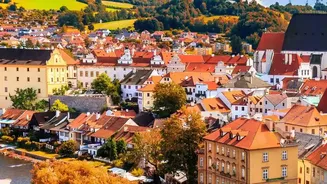
As Poland's historic capital, Krakow's Old Town emerged from the Second World War remarkably unscathed, and its entire historic centre is a UNESCO World Heritage site. The city's heart is Rynek Główny, one of Europe's largest and most beautiful medieval market squares. Dominating the square is the Cloth Hall (Sukiennice), a Renaissance-era market that still hosts stalls selling amber and local crafts, and St. Mary's Basilica, famous for its magnificent wooden altarpiece and the hourly bugle call from its tower. A short walk away, Wawel Hill is the historic seat of Polish kings, where the Royal Castle and Wawel Cathedral stand as powerful symbols of national identity. For a more modern, yet equally profound, historical experience, the former factory of Oskar Schindler has been converted into a powerful museum detailing the city's experience under Nazi occupation. The former Jewish quarter, Kazimierz, is now a vibrant district filled with synagogues, quirky cafes, and art galleries.