



The Plank: Your Foundation for Stability
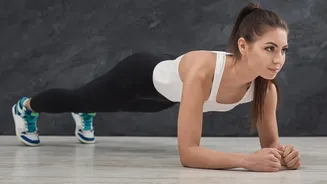
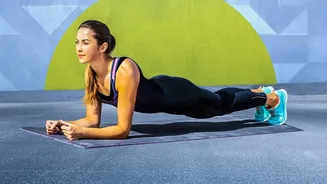
The plank is a fundamental core exercise for a reason. It engages multiple muscle groups at once, including your deep abdominal muscles, back, and shoulders, teaching them to work together to stabilize your spine. This builds endurance that translates
directly to maintaining good posture throughout the day, whether you're sitting at a desk or standing in line. To perform a plank, get on the floor on your forearms and toes, keeping your body in a straight line from your head to your heels. Avoid letting your hips sag or rise too high. Engage your abs as if you're bracing for a light punch and squeeze your glutes. Hold for 30 seconds, rest, and repeat, focusing on quality over quantity.
The Dead Bug: Master Coordinated Control
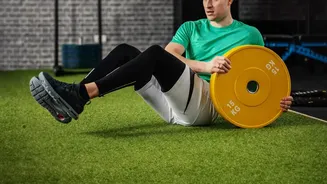
The Dead Bug is excellent for enhancing the connection between your brain and your core muscles. It trains your abs to brace and stabilize your spine while your limbs are in motion, a key component of functional strength. This helps prevent lower back strain during activities like lifting or reaching. To do it, lie on your back with your arms extended toward the ceiling and your knees bent at a 90-degree angle over your hips (tabletop position). Slowly lower your right arm and left leg toward the floor simultaneously, going only as low as you can without arching your lower back. Exhale as you lower, and inhale as you return to the start. Repeat on the other side.
The Glute Bridge: Powering from the Posterior
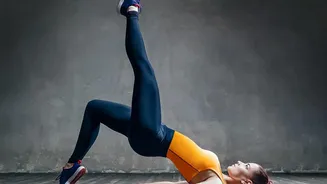
While it sounds focused on the glutes, the bridge is a powerhouse for the entire posterior chain, which includes your glutes, hamstrings, and lower back—all part of your functional core. Strong glutes support a healthy pelvis and can alleviate strain on the lower back, especially for those who sit for long periods. Lie on your back with your knees bent, feet flat on the floor hip-width apart, and heels a few inches from your glutes. Squeeze your glutes and lift your hips off the floor until your body forms a straight line from your shoulders to your knees. Hold for a second at the top, then slowly lower back down.
The Bird-Dog: A Lesson in Balance
The Bird-Dog exercise challenges your stability by forcing your core to prevent your torso from rotating as you move your opposite arm and leg. This improves balance, coordination, and strengthens the deep muscles that support your spine. Start on all fours, with your hands directly under your shoulders and your knees under your hips. Engage your core and keep your back flat. Extend your right arm straight forward and your left leg straight back, keeping them parallel to the floor. Hold for a moment without letting your hips or shoulders tilt, then return to the starting position and repeat on the other side.
Bicycle Crunches: Dynamic Abdominal Toning
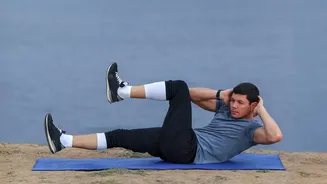
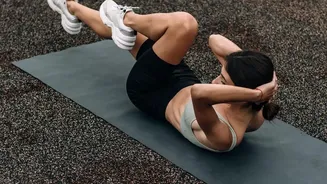
The bicycle crunch is a classic for a reason: it targets all major abdominal muscles, including the rectus abdominis (the 'six-pack' muscle) and the obliques on your sides. This dynamic movement improves muscular endurance and rotational control. Lie on your back with your hands gently behind your head and your knees bent. Lift your shoulders off the floor and bring your right elbow toward your left knee while extending your right leg straight. Alternate sides in a smooth, 'pedaling' motion. Focus on a controlled twist from your torso rather than pulling on your neck.
Standing Side Leg Raises: Functional Balance
Core work isn't just for the floor. Standing exercises force your core to stabilize your body from the ground up, activating deep muscles in a way that mimics everyday life. Standing side leg raises specifically target your obliques and hip abductors, which are crucial for maintaining stability when walking or climbing stairs. Stand tall with your hands on your hips. Shift your weight onto your left leg and, keeping your core tight, slowly lift your right leg out to the side as high as you can without leaning your torso. Lower with control and repeat before switching sides.