





Our Invisible Dependence
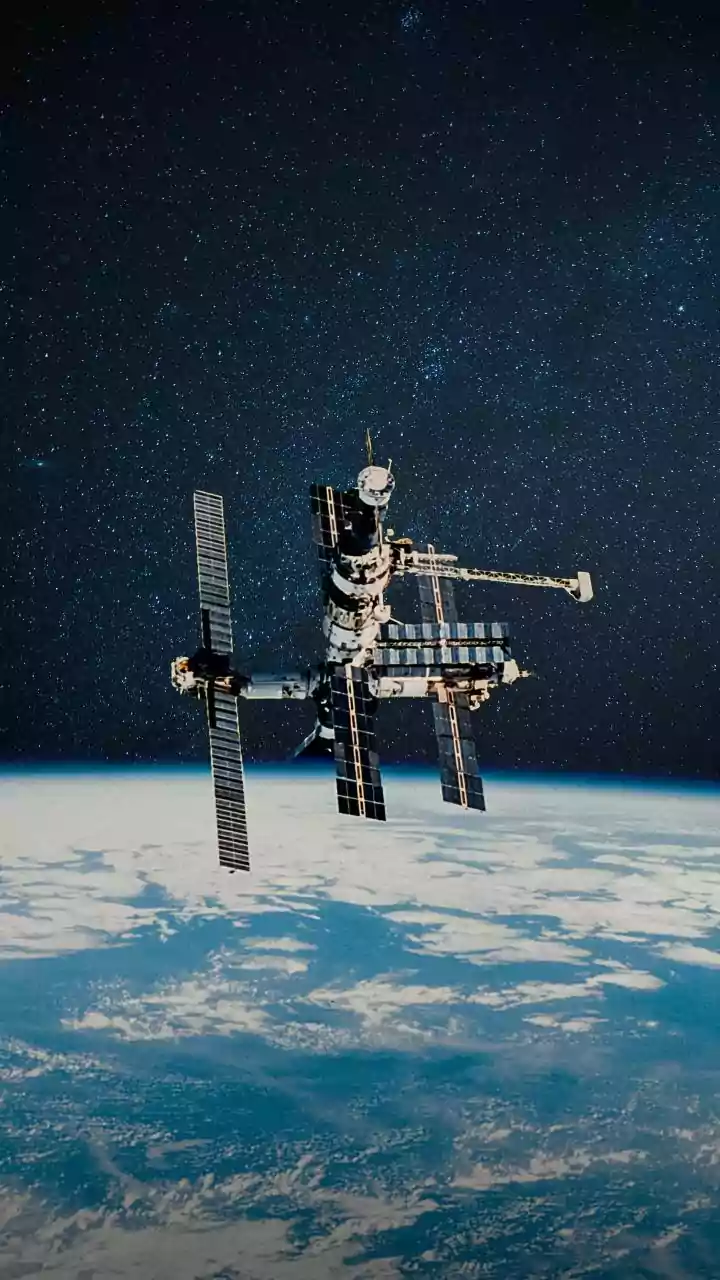
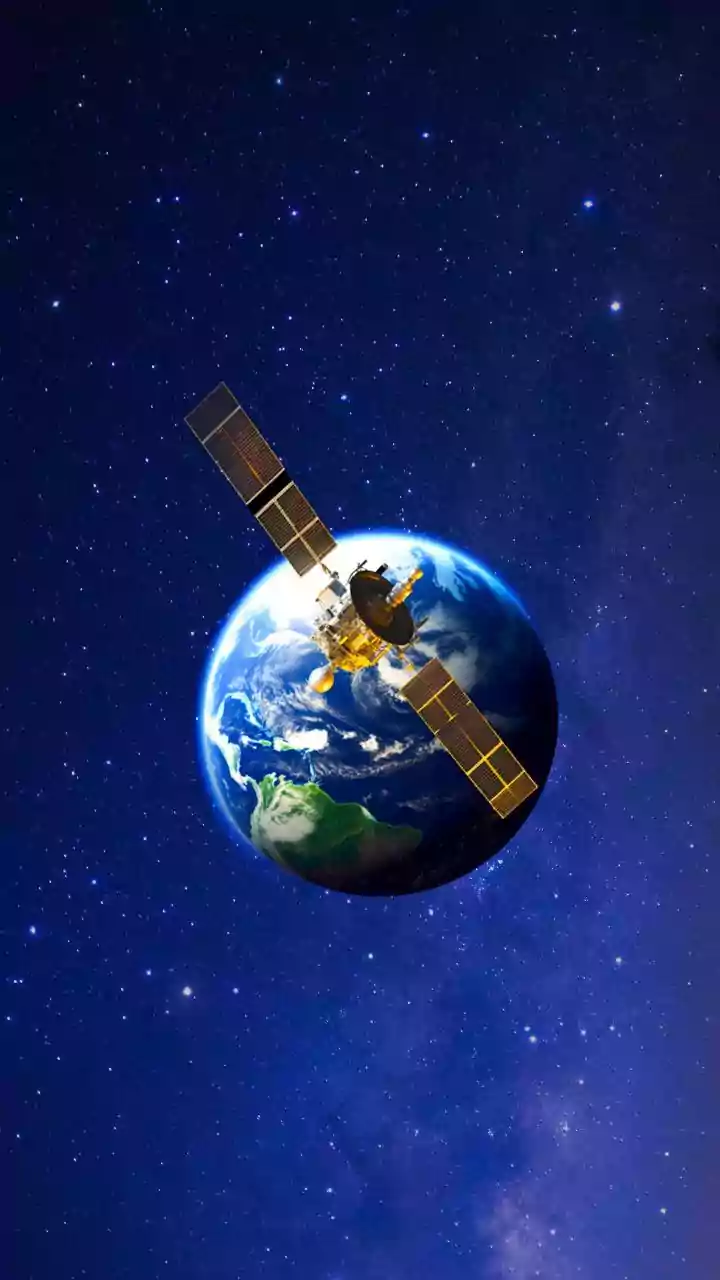
It’s easy to forget how deeply intertwined our modern society is with the fleet of machines orbiting silently above us. In India, the Unified Payments Interface (UPI) system, which facilitates billions of transactions, relies on precise timing signals
often synchronized by GPS satellites. The monsoon forecasts that are vital for agriculture, the navigation apps guiding us through traffic, and the communications that connect remote areas all depend on the seamless operation of satellite networks. This reliance makes them a point of critical infrastructure, and any threat to their function is a threat to the national economy and daily life. The services provided by these satellites are so integrated into our world that a significant disruption could have cascading effects on everything from banking and logistics to emergency services.
The Sun’s Turbulent Outbursts
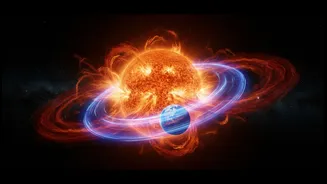
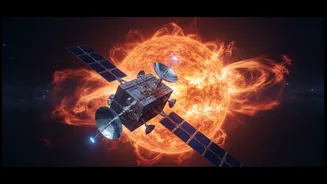
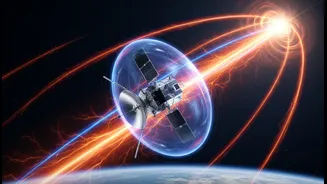
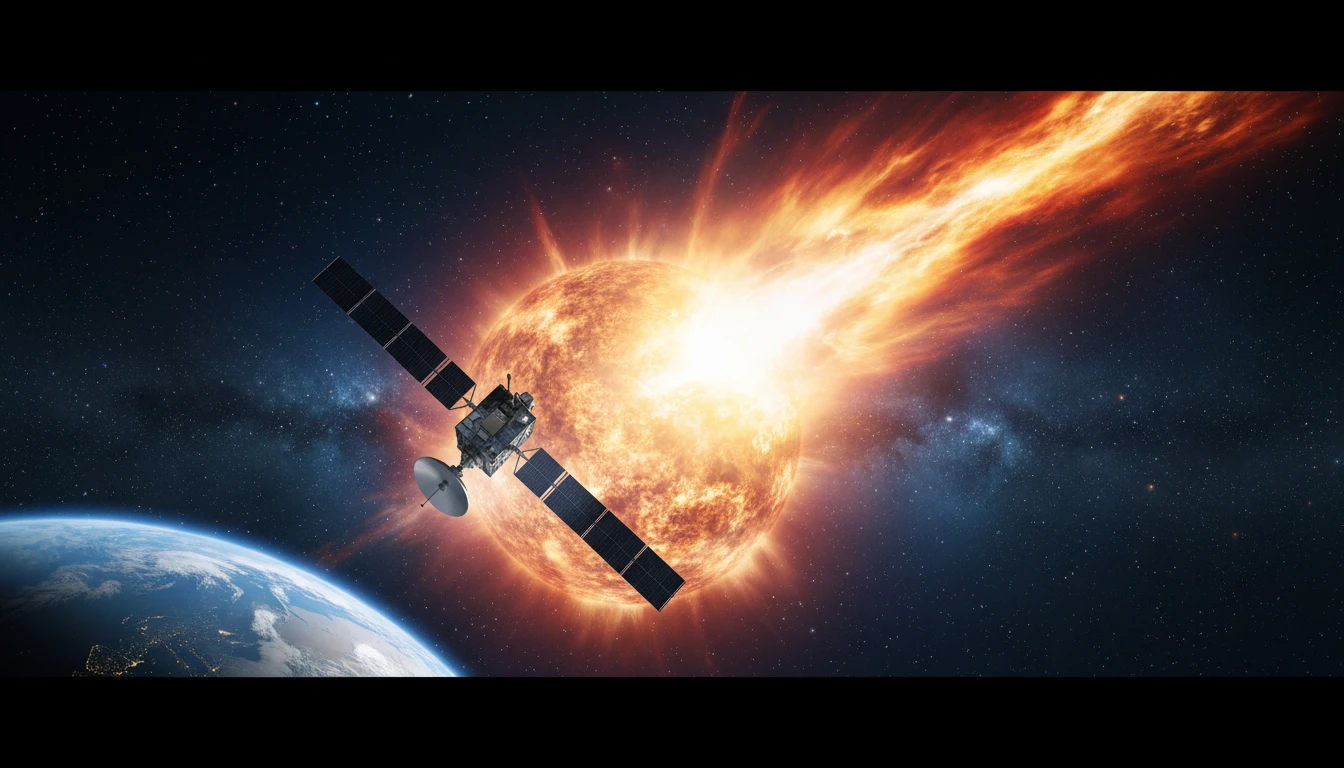
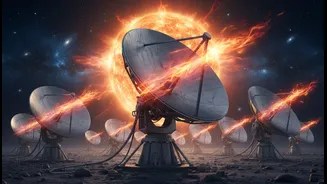
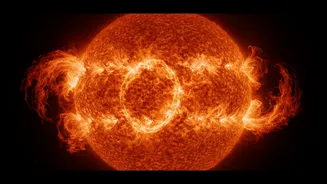
The sun, our source of light and life, has a violent side. It periodically releases massive bursts of energy and particles in events known as solar flares and coronal mass ejections (CMEs). A solar flare is an intense eruption of radiation, while a CME is a giant cloud of charged particles hurled into space. When directed at Earth, these events create what is known as space weather. High-energy particles can penetrate and damage the sensitive electronics of satellites, effectively frying their circuits. Furthermore, this solar activity heats and expands Earth's outer atmosphere. This expansion increases the atmospheric drag on satellites in low-Earth orbit, causing them to slow down and lose altitude, potentially shortening their operational lifespan or even causing them to be destroyed. In 2022, a minor solar storm was blamed for the loss of 40 newly launched Starlink satellites, highlighting the very real and present danger.
What New Research Reveals
Recent studies from mid-July 2026 have intensified concerns. One NASA-led paper suggests that previous assumptions about a 'ceiling' on the impact of solar storms may be wrong. Scientists had believed that Earth's response to solar wind—the stream of charged particles from the sun—tapered off after a certain intensity. However, new analysis shows that the electrical currents in our upper atmosphere, which disrupt satellites and communications, may continue to increase in direct proportion to the strength of the solar wind, with no known upper limit. This implies that a rare, extreme solar storm could have a far more devastating impact than previously modeled. Separately, another study presented at the Royal Astronomical Society highlights a new method for predicting the strength of solar cycles years in advance, offering a longer lead time for satellite operators and grid managers to prepare for heightened periods of risk.
The High Cost of an Outage
The potential consequences of a severe space weather event are enormous. A major disruption to satellite services could trigger significant economic damage. Sectors that rely on Global Navigation Satellite Systems (GNSS) for positioning, navigation, and timing—including aviation, shipping, high-frequency financial trading, and precision agriculture—would be immediately impacted. Communications could be blacked out, power grids could fail due to induced ground currents, and supply chains could be thrown into chaos. Experts have warned that a sufficiently powerful solar storm could become a 'trillion-dollar storm,' not from wind or water, but from its crippling effect on our technology-dependent society. The financial losses from business interruption alone could run into the hundreds of billions of dollars globally.
The Race for Better Forecasts
Given the stakes, monitoring the sun is not just a scientific pursuit but a critical security imperative. This is where missions like India's Aditya-L1 come in. Launched by ISRO, Aditya-L1 is India's first dedicated solar observatory, positioned 1.5 million kilometers from Earth at a special vantage point called Lagrange Point 1 (L1). This orbit allows it to continuously observe the sun without any eclipses or occultations, providing real-time data on solar flares, CMEs, and solar wind. By studying the sun's atmosphere and dynamics, its seven distinct payloads gather crucial information to understand and predict space weather. This data is vital for providing advance warnings, allowing satellite operators to take protective measures, such as temporarily shutting down sensitive electronics or adjusting orbits to minimize drag. As our world becomes ever more connected, the work of solar observatories like Aditya-L1 is our first line of defense against the unpredictable fury of the sun.