
The Hostile World Next Door
For centuries, Venus was imagined as a potential paradise, a sister world to Earth. The reality, as revealed by previous missions, is far more terrifying. The Venusian surface is a hellscape with temperatures hot enough to melt lead, around 475 degrees
Celsius. The atmospheric pressure is over 90 times that of Earth at sea level, equivalent to being nearly a kilometer deep in our ocean. This crushing atmosphere is primarily carbon dioxide with dense, swirling clouds of corrosive sulfuric acid. These conditions make exploring Venus incredibly difficult, and they’ve destroyed every probe that has dared to land within hours, if not minutes. More than just a physical challenge, the thick, hazy clouds create a profound visual one, scattering light and making it nearly impossible to see the ground from above. It’s like trying to navigate through a dense, permanent, and toxic fog.
A Mission to See the Unseen
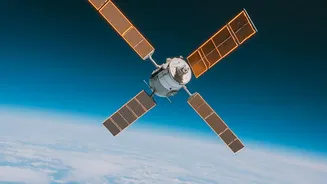
Despite the challenges, NASA is preparing to return. The DAVINCI mission—short for Deep Atmosphere Venus Investigation of Noble gases, Chemistry, and Imaging—is scheduled for launch in the early 2030s. Its goal is to do what hasn't been done in decades: send a sophisticated probe plunging through the atmosphere to analyze its composition and, for the first time, capture high-resolution images of the surface as it descends. The probe will take about an hour to fall to the surface, collecting precious data on its journey down. One of its key targets is a rugged highland area called Alpha Regio, a type of terrain known as a 'tessera' that is thought to be an ancient continent. Scientists believe these formations could hold clues to whether Venus once had oceans and was potentially habitable, like Earth.
Finding Venus in Utah
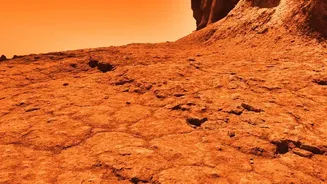
How do you ensure a multi-million-dollar camera system will work in an alien environment you can't fully replicate? You find the next best thing on your home planet. After a global search, the DAVINCI team identified Crater Island in northern Utah as a prime earthly analogue for Venus's Alpha Regio. This remote, mountainous complex rises dramatically from the surrounding salt flats, presenting a similar kind of rugged geology that the probe is expected to encounter. While Utah lacks the extreme heat and pressure of Venus, its landforms and variety of rock types provided the perfect training ground to test the mission's most critical visual technology. The challenge wasn't just to see the landscape, but to understand it from a completely new perspective: a rapid descent through a hazy column of air.
A Helicopter-Powered Dress Rehearsal
In a series of tests in June 2026, the DAVINCI team conducted a full dress rehearsal for the probe's imaging sequence. They attached a prototype of the mission's camera system, which includes infrared imagers, to a helicopter. The helicopter then performed multiple slow, near-vertical descents over Crater Island from high altitudes, mimicking the probe's final plunge toward the Venusian surface. During these 40-minute descents, the instruments snapped thousands of pictures. Back at a base camp, imaging specialists worked quickly to download the data and stitch the images together. Their task was to create detailed 3D topographic maps showing the terrain's features and, crucially, to identify the different types of rocks based on their infrared signatures. This process directly simulates the visual challenge of interpreting data from a moving probe looking through an obscuring atmosphere.
Confidence for a Cosmic Plunge
The results of the Utah tests were a resounding success. The maps generated from the helicopter's descent imagery were a near-perfect match for the highly detailed official maps created over many years by the U.S. Geological Survey. This confirmation was critical. It proved that the team's technology and techniques can accurately reconstruct an unknown landscape from a series of descent images alone. Furthermore, the test confirmed the infrared camera's ability to distinguish between different rock compositions. This capability will be essential on Venus to search for granitic rocks, which on Earth form in the presence of water. By using a remote corner of Utah to stand in for Venus, the DAVINCI mission is now one major step closer to being ready to unveil the secrets hidden beneath the clouds of our enigmatic neighbor.