





A Cosmic Fingerprint Match
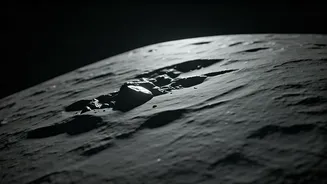
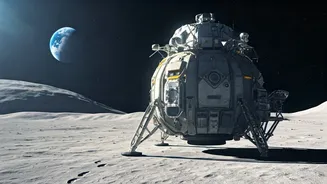
Scientists from the Physical Research Laboratory (PRL) in Ahmedabad have announced a significant finding based on data from the Pragyan rover. Analysis of the lunar soil, or regolith, at 'Shiv Shakti Statio' landing site shows it has a geochemical composition
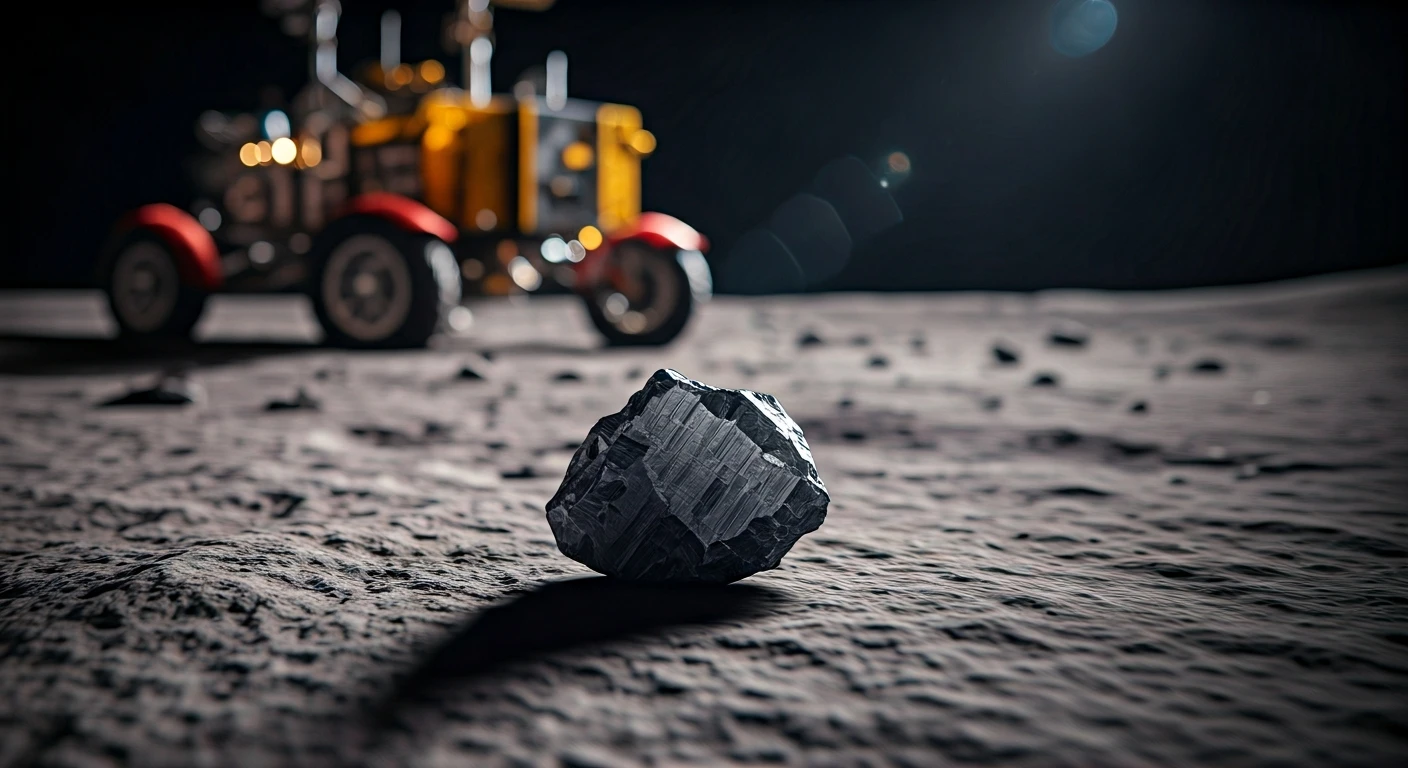
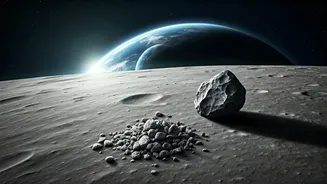
that closely resembles a meteorite known as ALHA 81005. This specific meteorite, discovered in Antarctica's Allan Hills region in 1981-82, was the very first rock confirmed to have originated from the Moon. The new study, published in the journal 'npj Space Exploration', reveals that both the lunar soil and the meteorite contain nearly identical amounts of certain key compounds, including aluminium oxide, iron oxide, and magnesium oxide. This doesn't mean the exact rock found on Earth came from the landing site. Instead, it strongly suggests that both samples represent a similar, and rather unusual, type of magnesium-rich lunar crust.
The Science Behind the Discovery
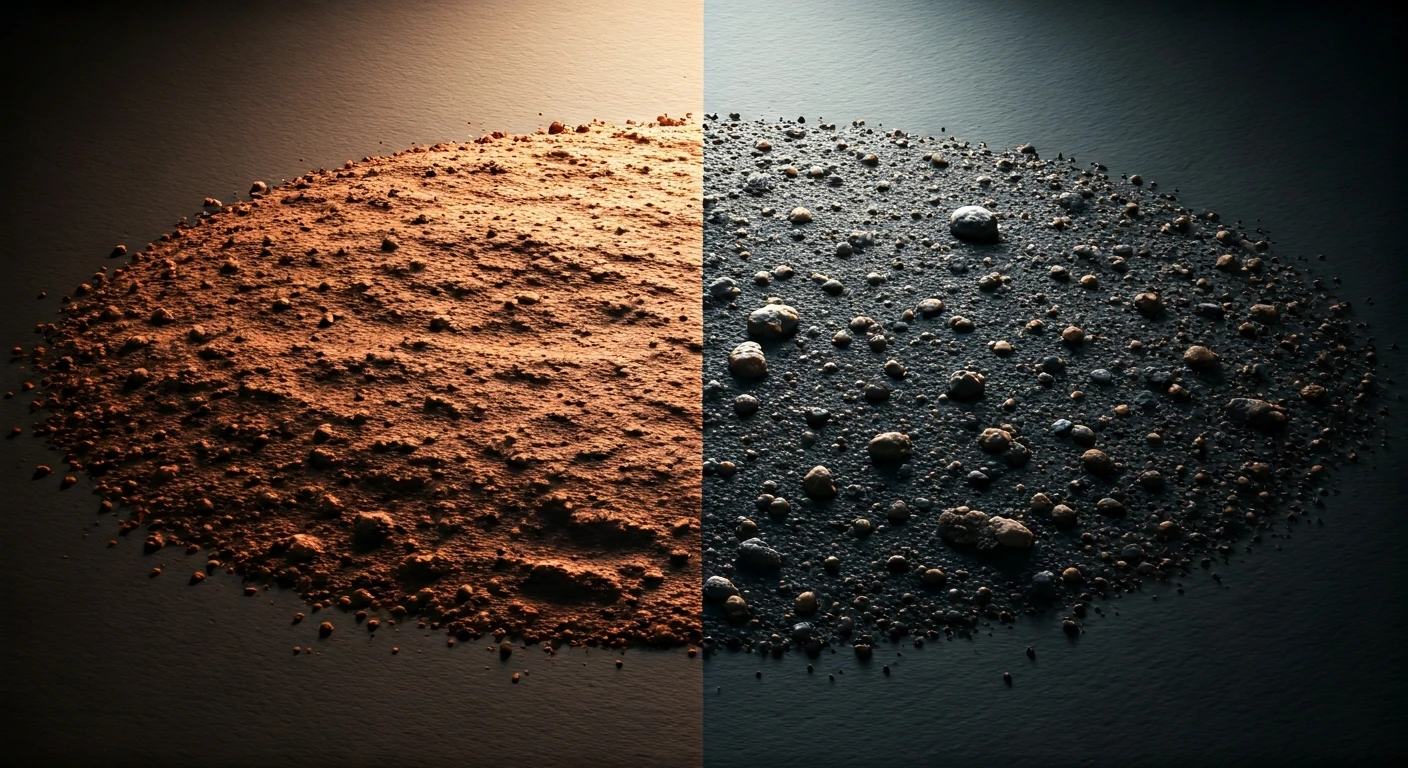
The discovery was made possible by the Alpha Particle X-ray Spectrometer (APXS) instrument aboard the Pragyan rover. This sophisticated tool conducted on-the-spot measurements of the chemical elements present in the Moon's topsoil. By firing alpha particles and X-rays at the surface, the APXS can identify the elemental makeup of the material it examines. Researchers compared this fresh data from the lunar south pole with the known compositions of 66 different lunar meteorites found on Earth. Among them all, ALHA 81005 stood out as the closest match. The soil at Shiv Shakti Statio was found to have lower levels of aluminium and higher amounts of iron and magnesium compared to what was found in the highland regions explored by previous missions like Apollo. This unique signature places both the landing site and the meteorite in a rare compositional category, bridging two major types of lunar rock.
How Do Moon Rocks Reach Earth?
The very existence of lunar meteorites on Earth is a testament to the violent history of our solar system. The Moon lacks a protective atmosphere, making it vulnerable to constant bombardment by asteroids and comets. When a large enough object strikes the lunar surface, the force of the impact can be so immense that it ejects rocks and debris into space with enough velocity to escape the Moon's gravity. Some of these ejected fragments then travel through space and, on rare occasions, are captured by Earth's gravitational pull, eventually falling to the surface as meteorites. The soil at Chandrayaan-3's landing site is itself a mixture of materials, likely containing not just surface crust but also deeper rock excavated by ancient, powerful impacts. Scientists believe some of this deeper material may have been thrown across the surface during the formation of the massive South Pole-Aitken basin, one of the largest known impact craters in the solar system.
A Landmark for Indian Science
This finding represents more than just a fascinating geological connection; it is a major validation of India’s space program and its scientific capabilities. By providing the first-ever ground-truth data from the lunar south pole, Chandrayaan-3 has delivered a crucial piece of the puzzle that scientists have studied for over 40 years through meteorites alone. The ability to directly link a sample on Earth to a specific type of terrain on the Moon opens up new avenues for planetary science. It reinforces the value of in-situ measurements and demonstrates ISRO's capacity to conduct high-level science on other worlds. This discovery also bolsters the Lunar Magma Ocean hypothesis, a leading theory that the Moon was once covered in a sea of molten rock. The unique chemical composition found supports the idea of how different minerals separated and solidified to form the Moon's crust and mantle.