






Overcoming the Urban Glow
The biggest challenge for any city-based stargazer is light pollution. The glow from streetlights, buildings, and cars washes out all but the brightest celestial objects, making the night sky seem empty. This can be discouraging for beginners who aren't
sure what to look for. Modern stargazing apps help solve this problem. Some have features that can show you the level of light pollution in your area or adjust their maps to only display the stars and planets that are bright enough to be visible from your specific location, cutting through the visual noise.
A Planetarium in Your Palm
The core feature of these apps is their ability to act as a portable planetarium. Using your phone's built-in GPS and motion sensors, an app knows exactly where you are and which direction you're pointing your device. When you hold your phone up to the sky, it displays a real-time, labeled map of what you're looking at. Many use augmented reality (AR) to overlay this star map directly onto your camera's view, creating a seamless link between the sky above you and the information on your screen. This turns a confusing pattern of stars into an identifiable landscape.
Connect the Dots with Confidence
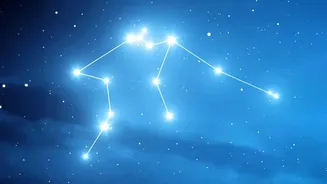
For centuries, humans have found patterns in the stars, creating constellations that tell stories of mythology and history. But for a beginner, spotting a lion or a hunter among the stars is nearly impossible without help. Stargazing apps make this easy and educational. They overlay the outlines of constellations, often with beautiful artwork, helping you visualise the shapes. This feature accelerates the learning curve, allowing you to confidently identify major constellations like Ursa Major or Orion within minutes of stepping outside.
Information at Your Fingertips
Once you've identified a bright star or planet, your curiosity naturally takes over. What is that object? How far away is it? What is it made of? The best apps are vast encyclopedias of astronomical knowledge. By simply tapping on a star, planet, or nebula on your screen, you can access detailed information about its history, scientific data, and cultural significance. Apps like Star Walk 2 and SkySafari contain databases of hundreds of thousands of celestial objects, complete with high-quality images and 3D models.
Never Miss a Celestial Event
The night sky is dynamic. Meteor showers, eclipses, and planetary alignments happen regularly, but they're easy to miss if you don't know when to look. Many stargazing apps act as your personal astronomical calendar. They can send you notifications for upcoming events that will be visible from your location. Some even have a "Time Travel" feature that allows you to scroll forward or backward in time to see what the sky looked like on a historical date or what it will look like in the future, which is perfect for planning a stargazing session.
Finding Your Guide to the Galaxy
With so many options available, choosing an app can feel overwhelming. For beginners, it's often best to start with a popular, user-friendly free version. Apps like SkyView Lite, Star Walk 2, and the open-source Sky Map are excellent starting points. These provide the core features of AR mapping and object identification without requiring a subscription. As you become more familiar with the sky, you might consider more advanced apps like Stellarium Mobile Plus or SkySafari, which offer larger object catalogs and even the ability to control a telescope.